 How-to
7 Reasons New Sod Turns Yellow and How to Fix It
Last Updated: November 12, 2026
Quick Summary
Yellow sod in a new lawn usually means the grass is still alive and reacting to a fixable problem, most often water penetration or poor soil contact. Check whether water reaches the soil under the sod and whether the sod is touching that soil at all, since both problems starve roots and look identical from above. Fix those first before reaching for fertilizer or fungicide.
- Walk your lawn in the morning and work through the diagnostic checks in order, which takes about ten minutes.
- Yellowing in week one or two is usually transplant stress, while yellowing in weeks three to six points to water, soil contact, or root issues.
- Water in the early morning to limit fungus pressure, and water deeply rather than often once the sod knits in.
- Round, expanding patches with a ring point to fungus, while irregular yellowing near concrete and full sun points to chinch bugs.
- Call a professional when more than a third of the lawn is yellow or brown or sod lifts easily after week four.
Table of Contents
- Start With a Diagnostic Walk-Through of Your Yellow Patches
- Transplant Stress: Why Fresh Sod Yellows in the First Two Weeks
- How to Fix Yellow Sod by Checking Water Penetration and Soil Contact
- Your New Sod Watering Schedule in Florida: First 30 Days
- When New Sod Is Not Rooting: Verifying Root Establishment
- Fungus, Pests, and Fertilizer Burn: Ruling Out the Other Causes
- Will Yellow Sod Turn Green Again? Recovery Timeline and When to Call a Pro
- Book an On-Site Sod Inspection in North Miami
- Frequently Asked Questions
Start With a Diagnostic Walk-Through of Your Yellow Patches
Yellow patches in new sod rarely mean the grass is dead. In most cases, the sod is still alive and responding to a fixable problem. Across North Miami, the same three or four culprits show up again and again.
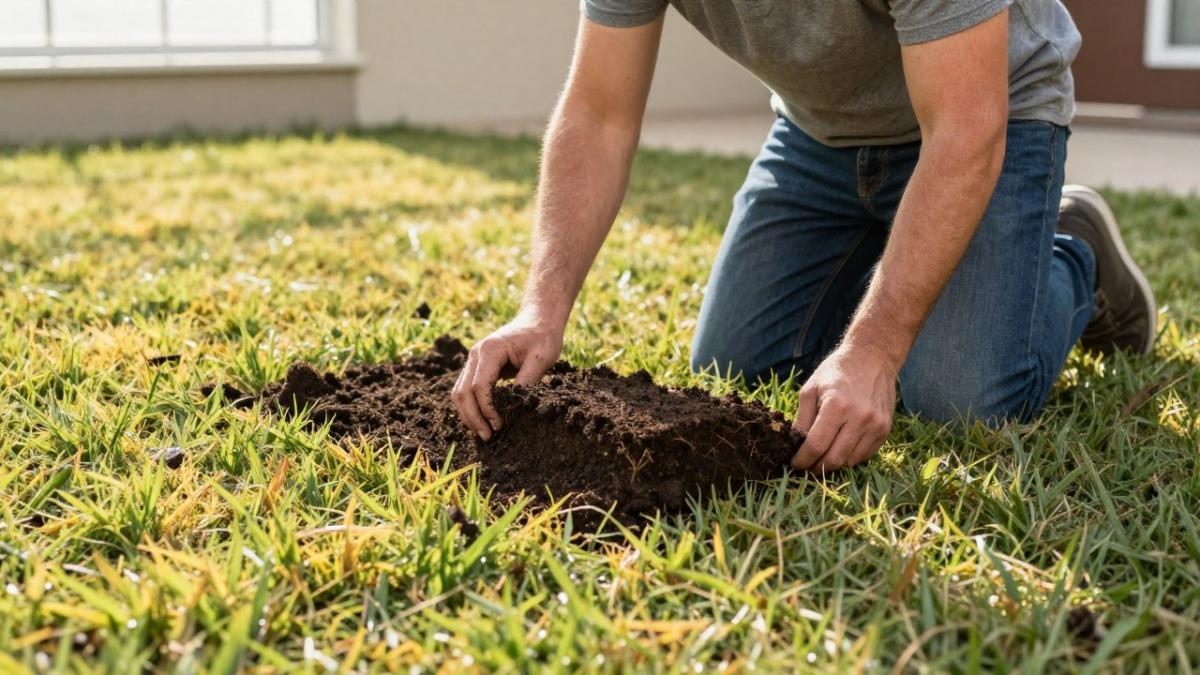
You can diagnose most cases in about ten minutes with your own eyes and hands. Walk your lawn in the morning, before the sun gets high, and work through the checks below in order. Each check narrows the list of causes instead of guessing at one.
Step 1: Read the patch pattern.
- Round, coin-to-plate-sized spots that expand outward usually point to fungus or pests.
- Long streaks, bands, or a dry strip between two wet zones point to sprinkler coverage gaps.
- Yellowing that follows the seams between sod rolls points to poor sod-to-soil contact or a dry seam.
- Yellowing concentrated along concrete edges, driveways, and full-sun slopes can be a chinch bug signature.
- Uniform yellow-green across the whole lawn in week one is usually transplant stress, not a patch problem at all.
Step 2: Check the timing. Yellowing in week one or two is usually transplant stress. Yellowing that appears in weeks three to six, after the sod should be rooting, points to water, soil contact, or root issues.
Step 3: Feel the sod and the soil. Spongy, soggy sod that squishes underfoot means too much water or poor drainage. Dry, curling blades and a lawn that springs back slowly mean too little.
Step 4: Try the tug test. Grab a corner of sod and pull gently. Real resistance by week three means roots are knitting in.
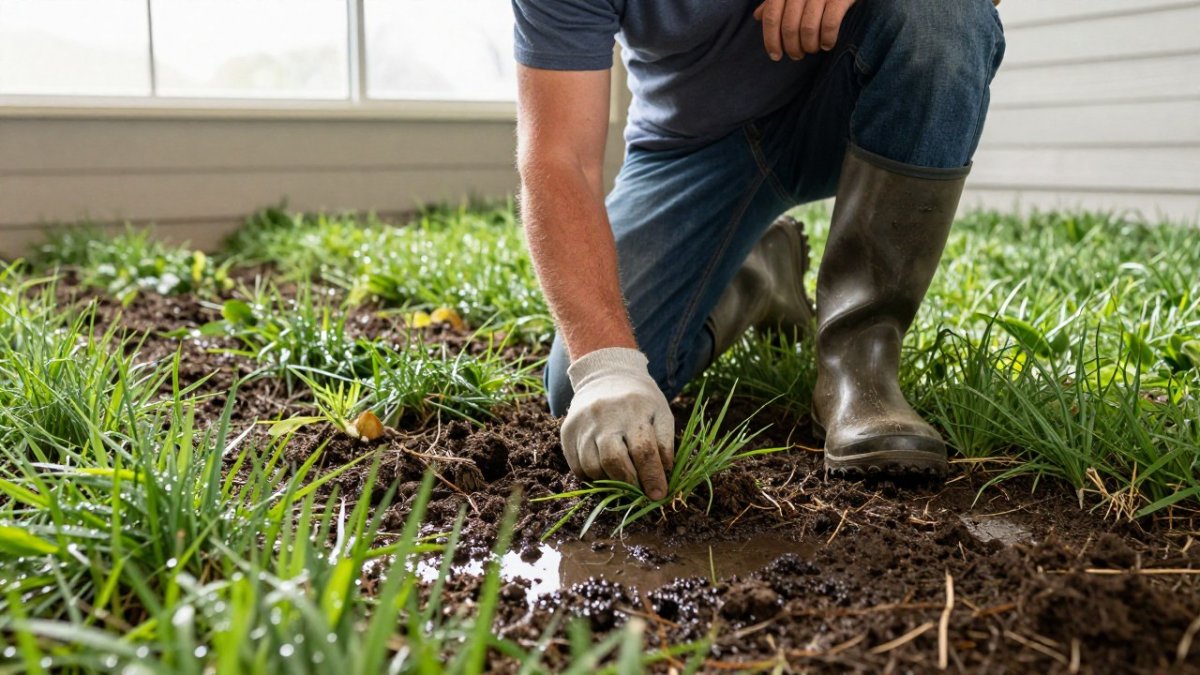
Step 5: Look under the patch. Pull up a handful of grass at the edge of a yellow patch. Look for tiny insects, white grubs, or a thatch layer that stays wet.
That walk-through tells you which of the seven causes below to chase first. Here is the full list, from most common to least.
Watch out: do not skip straight to fertilizer or fungicide. Most yellow patches in new sod are a water or soil-contact problem, and feeding or spraying a lawn that is not yet rooted usually makes the patch worse, not better.
Transplant Stress: Why Fresh Sod Yellows in the First Two Weeks
Fresh sod yellows in the first two weeks because it is in shock. Harvesting cuts the roots short, and the grass loses its connection to the soil it grew in. Until new roots form, the sod cannot take up water or nutrients well, so blades fade to yellow-green.
This is normal, and it is temporary. Most sod shows some color loss in the first week and starts greening up by week two or three. The trick is telling normal stress from a real problem.
Watch out: heavy foot traffic on new sod during this window crushes the crowns and turns mild stress into dead patches. Stay off the lawn except to water and inspect.
What helps during transplant stress:
- Keep the soil consistently moist but not soaked
- Water in the early morning so blades dry before evening
- Skip fertilizer until roots knit into the soil
- Avoid mowing until the sod resists a gentle tug
How to Fix Yellow Sod by Checking Water Penetration and Soil Contact
To fix yellow sod, check two things first: whether water is reaching the soil under the sod, and whether the sod is touching that soil at all. Both problems starve roots, and both look identical from above.
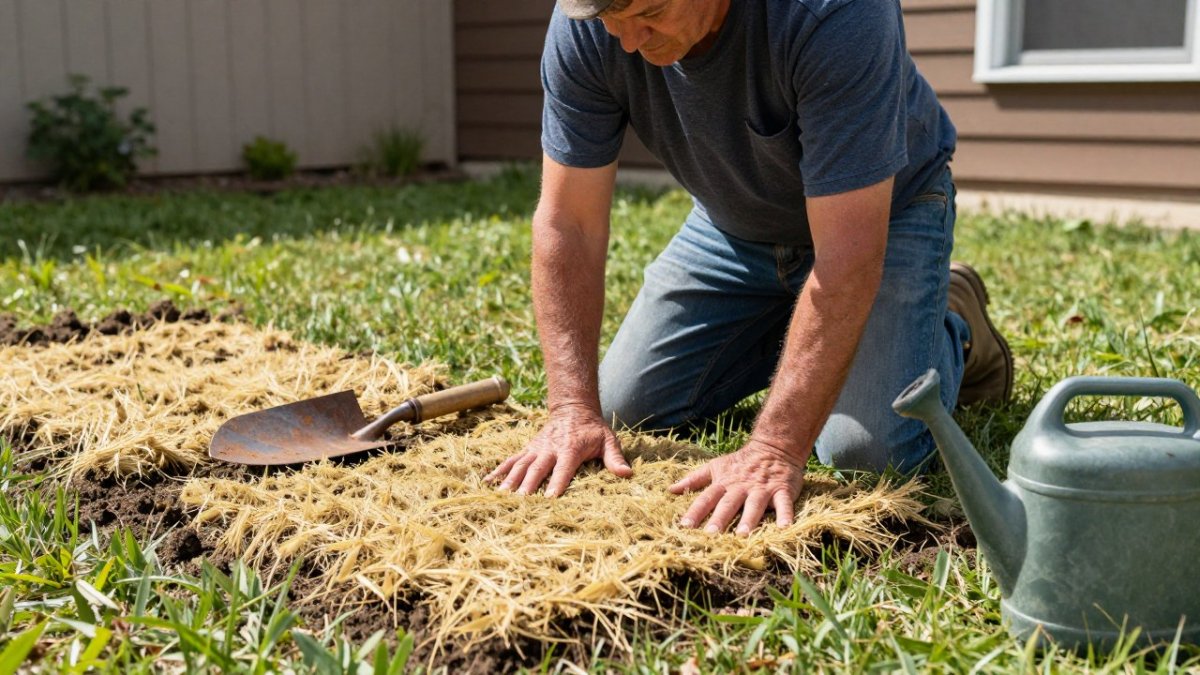
Start with the tug test. Grab a corner of sod and pull gently. If it lifts like a carpet, roots have not knit in and soil contact is poor. Press it back down firmly and water it in.
Next, check water penetration. Push a screwdriver into the sod. If it slides in easily, moisture is getting through. If it stops short, the soil is dry underneath even though the surface looks wet. That is a classic sign of light, frequent watering that never soaks deep.
If you are unsure whether your watering is actually reaching the roots, our guide on how to tell if new sod is getting enough water walks through the screwdriver test and what to do with the results.
Your New Sod Watering Schedule in Florida: First 30 Days
South Florida heat and sandy soil make watering the single biggest factor in whether new sod takes. The first 30 days decide the outcome.
A practical establishment schedule looks like this:
| Week | Watering Frequency | Amount Per Session | Goal |
|---|---|---|---|
| Week 1 | 2-3 times daily | Light, 10-15 minutes | Keep surface and root zone moist |
| Week 2 | Once daily | 20-30 minutes | Push moisture deeper |
| Week 3 | Every other day | 30-40 minutes | Encourage roots to chase water |
| Week 4 | 2-3 times weekly | 40-45 minutes | Transition to normal watering |
Two rules matter more than the numbers. Water in the early morning to limit fungus pressure. And water deeply rather than often once the sod knits in, because shallow daily watering keeps roots near the surface where heat dries them fast.
North Miami's afternoon storms can also dump more water than your sod needs. After heavy rain, skip the next scheduled watering and check for standing water in low spots.
New Sod Watering Amount Per Session by Week
When New Sod Is Not Rooting: Verifying Root Establishment
New sod that is not rooting will lift easily at the corners and stay yellow past week three. Root establishment is the process of new roots growing from the sod into the soil beneath it, and it usually takes two to four weeks in warm weather.
To verify rooting, try these checks:
- Tug test: gentle pull should meet real resistance by week three
- Corner lift: sod should stay attached to the soil, not peel away
- Root check: dig a small plug and look for white roots crossing into the soil below
If your sod is behind schedule, our complete timeline for how long new sod takes to root explains what normal progress looks like week by week.
Fungus, Pests, and Fertilizer Burn: Ruling Out the Other Causes
Once water and rooting are ruled out, look at fungus, pests, and fertilizer burn. Each leaves a distinct signature, and the pattern of the patch usually tells you which one you are dealing with before you ever see the culprit.
Fungus. Turf fungus thrives in saturated soil and humid air, which is why South Florida's warm, wet stretches are prime time for large patch disease and other warm-season turf diseases. Look for circular yellow patches that expand outward, sometimes with a brown or darkened ring at the edge and green grass in the center.
Pests. Chinch bugs and grubs cause irregular yellowing that turns brown. Chinch bug damage often starts near concrete edges, driveways, and full-sun slopes, where the grass is hottest and driest. Grub damage shows up as spongy patches that lift easily because the roots have been eaten.
Fertilizer burn. Fertilizer burn shows up as yellow or brown streaks where granules landed too heavy or too close together. It usually appears within a few days of feeding and follows the spread pattern of the spreader.
How to tell them apart. Round, expanding patches with a ring point to fungus. Irregular yellowing near concrete and full sun points to chinch bugs. Spongy, lifting patches point to grubs. If your symptoms overlap several causes, our breakdown of why new sod dies after installation and the fixes that work helps you compare patterns side by side.
Watch out: do not apply a fungicide, insecticide, or fertilizer on the same day you are still diagnosing, because each product can mask the symptom you are trying to read.
Will Yellow Sod Turn Green Again? Recovery Timeline and When to Call a Pro
Yellow sod usually turns green again if the crowns are alive and the cause is fixed. Recovery takes one to three weeks for mild stress, and four to six weeks for sod that lost significant root contact.
Test for life before you give up. Pull a yellow blade and roll it between your fingers. If the base is green or white and firm, the plant is alive. If it is brown, mushy, or pulls out with no resistance, that section is gone.
Call a professional when:
- More than a third of the lawn is yellow or brown
- Patches keep spreading despite corrected watering
- Sod lifts easily after week four
- You see fungus rings, pest activity, or standing water that will not drain
If your yellowing is spreading into larger dead zones, our guide on fixing brown patches in South Florida lawns covers what that progression means and how fast to act.
Book an On-Site Sod Inspection in North Miami
Some yellow sod problems are easy to fix. Others need eyes on the ground, especially when several causes overlap or the sod was poorly installed to begin with.
P&P Landscaping and Tree Service is a family-owned business serving homeowners, landlords, and commercial property managers across Miami-Dade and Broward County.
When you are ready to stop guessing, book an on-site estimate to get a professional assessment of your lawn.
Yellow sod in a new lawn is a puzzle, but it is a solvable one. The difference between a lawn that recovers and one that fails usually comes down to catching the cause early and correcting water, soil contact, or root establishment before the damage spreads. P&P Landscaping and Tree Service brings more than twenty years of experience, with tailored service for each client's unique needs. Get started with P&P Landscaping and Tree Service and give your new sod the best chance to root, green up, and stay healthy.
Frequently Asked Questions
Why is my brand new sod turning yellow?
New sod usually yellows because it is using energy to push roots into the soil instead of growing blades. That transplant stress is normal in the first two weeks. The other common culprits are moisture imbalance (too little or too much water), poor sod-to-soil contact, or a sudden cold snap. Check the soil beneath a yellow patch first: if it is bone dry, water more deeply; if it is soggy, cut back and inspect drainage.
How can I tell whether yellow patches in new sod need more water or less water?
Lift a corner of sod in the yellow area and feel the soil underneath. Dry, crumbly soil means underwatering, so water deeply and check sprinkler coverage. Soggy, waterlogged soil with a spongy feel means overwatering or poor drainage, so skip a cycle and check for low spots. Yellowing that follows the sprinkler pattern points to coverage gaps, while yellowing in shaded, low-lying areas points to too much water.
How long does it take yellow sod to turn green again?
Most yellow sod shows new green growth within 2 to 4 weeks once the cause is corrected. Full recovery, where roots are firmly anchored and color is even, usually takes 4 to 6 weeks. If the sod has not rooted after 30 days, or if patches keep spreading, that is the point to call a professional for an on-site inspection.
How often should I water new sod in North Miami?
During the first week, water lightly two to three times a day to keep the sod and top inch of soil moist. In weeks two and three, shift to one deep watering per day in the morning. By week four, water two to three times per week deeply enough to reach the root zone. Local heat, rainfall, and any Miami-Dade watering restrictions will change the exact frequency, so adjust based on soil moisture, not a fixed timer.