 How-to
How to Build an Organic Lawn in North Miami
Last Updated: November 19, 2026
Quick Summary
Organic lawn care in North Miami means feeding soil life instead of grass, so turf grows deep roots and dense blades that resist weeds and pests. Start with a soil test, choose a warm-season grass like St. Augustine, and mow high, water deeply and infrequently, and top-dress with compost.
- Never cut more than one-third of the blade in a single mow, and set St. Augustine at 3 to 4 inches.
- One good soak per week beats daily sprinkling, and switch irrigation off when afternoon storms arrive.
- Spread a quarter-inch layer of finished compost each spring to add organic matter to sandy soil.
- Steep roughly one part compost in five parts water for 24 to 48 hours to make compost tea.
- Keep pets and children off the lawn until any product has watered in and dried.
Table of Contents
- Why Organic Lawn Care Works in North Miami's Heat and Humidity
- Choosing the Right Grass Species for North Miami Yards
- Mowing, Watering, and Aeration Basics That Build Turf Density
- The Best Organic Lawn Fertilizer for South Florida Soil
- Natural Grass Fertilizer Homemade Options You Can Mix at Home
- Organic Lawn Care Products Worth Keeping in the Shed
- Natural Fertilizer for Grass Safe for Pets and Kids
- A North Miami Seasonal Calendar for Organic Lawn Maintenance
- Frequently Asked Questions
Why Organic Lawn Care Works in North Miami's Heat and Humidity
Organic lawn care is the practice of feeding soil life, not just grass, so turf grows strong without synthetic chemicals. In North Miami, that approach fits the climate better than the bagged-and-sprayed routine many homeowners inherit. Soil first, grass second is the principle that matters most here. Below, we'll show you exactly how to build a lawn that holds up through heat, rain, and hurricane season.
The logic is simple. Heat and humidity push grass to grow fast, then stress it hard. A chemically fed lawn grows soft and shallow. An organically fed lawn grows deep roots and dense turf. That density is your best weed and pest defense.
Choosing the Right Grass Species for North Miami Yards
Start with the right grass or you will fight the climate forever. Warm-season turfgrasses suit South Florida. Cool-season grasses do not survive here. If you want a side-by-side comparison before you pick, our rundown of the 5 best grass types for South Florida lawns covers what performs in local yards.
Warm-Season Grasses That Handle Humidity
St. Augustine grass is the South Florida standard. It tolerates salt, shade, and heavy rain, and it spreads thick enough to crowd out weeds. Bahia grass costs less and handles drought and poor soil, but it grows a looser turf and needs more mowing. Zoysia and Bermuda are options for full-sun yards with irrigation. If you're torn between the two most common choices, our comparison of St. Augustine vs Bahia grass for Florida lawns breaks down the trade-offs.
Reading Your Soil Before You Plant
Test before you plant. A basic soil test from your local extension office tells you pH, nutrient levels, and drainage behavior. South Florida soils tend to be sandy, fast-draining, and low in organic matter, so they hold few nutrients. That is why compost matters more here than bagged fertilizer. If your soil is poor, start with our guide to improving soil quality for tropical plants before you lay a single plug of sod.
Mowing, Watering, and Aeration Basics That Build Turf Density
Mow high, water deep, aerate when compacted. Those three habits do more for turf density than any product on a shelf. They also cut your water bill and your weed problems at the same time.
The 1/3 Rule and Mowing Height
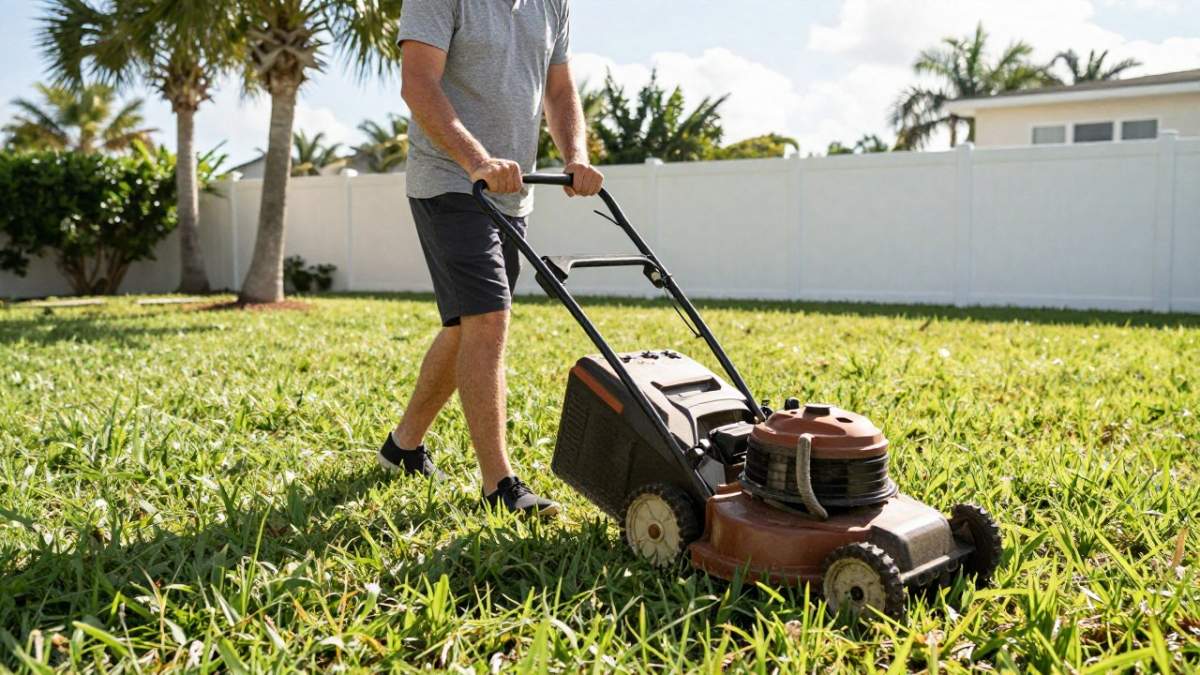
Never cut more than one-third of the blade in a single mow. Set St. Augustine at 3 to 4 inches and keep the mower blade sharp. Dull blades tear grass and invite disease. Mow weekly in the growing season, less in cooler months. Leave the clippings on the lawn. They return nitrogen and organic matter for free, which is natural lawn care at its simplest.
Deep, Infrequent Watering and South Florida Rainfall
Water deeply and infrequently so roots chase moisture downward. One good soak per week beats daily sprinkling. North Miami's wet season usually supplies most of that rain, so switch irrigation off when the afternoon storms arrive. In the dry months, water early in the morning to limit evaporation and disease. Watch for runoff: sandy soil drains fast, so short repeat cycles soak in better than one long blast. Fix soil compaction with annual aeration, and overseed bare spots before weeds claim them.
The Best Organic Lawn Fertilizer for South Florida Soil
The best organic lawn fertilizer for South Florida soil depends on your soil test and your grass rather than on a single brand. North Miami yards often sit on sandy, fast-draining soils that hold few nutrients and leach quickly after heavy rain, so a slow-release, compost-based or manure-based fertilizer with a low nitrogen number and meaningful organic matter is generally a better fit than a high-nitrogen turf builder.
Start with a soil test before you buy anything. Local extension offices can typically run a basic soil test that reports pH, nutrient levels, and organic matter. Read the results this way: South Florida soils are often alkaline (pH above 7), which locks up iron and manganese and causes the yellow striping St. Augustine owners mistake for disease. If phosphorus is already high (common in older yards with a fertilizer history), choose a product with a low middle number so you are not paying for nutrients your soil does not need.
Match the product to the grass. St. Augustine responds to compost top-dressing and slow organic nitrogen; Bahia tolerates leaner soil and needs less; Zoysia and Bermuda in full-sun yards with irrigation can take a slightly higher feeding rate. Water the product in lightly after application so it reaches the soil rather than sitting on blades.
Watch out: organic does not mean unlimited. Over-applying compost or manure-based fertilizer in heat can burn turf and waste money, and piling compost too thick smothers St. Augustine runners. Follow the label rate and keep top-dressing to about a quarter inch at a time.
If you want to build soil and feed turf in one move, we deliver mulch, soil, rock and fresh sod across the area, and our team can advise on quantities for your yard size.
Natural Grass Fertilizer Homemade Options You Can Mix at Home
Homemade natural grass fertilizer is cheap and useful, but in North Miami's sandy soil it works best as a supplement to compost top-dressing, not a replacement for a soil test. Here are the options that actually move the needle locally, with the mechanics and the limits.
Compost tea is the easiest starter. Steep finished compost in water, roughly one part compost to five parts water, for 24 to 48 hours, strain it, and spray it over the lawn in the morning. The tea carries soluble nutrients and microbes, but the nutrient concentration is low, so treat it as a soil-life boost rather than a full feeding. Apply it after rain or irrigation so the microbes land on moist soil, not dry thatch.
Grass clippings left in place are a genuine slow-release feed. Clippings return nitrogen and organic matter for free, and on a St. Augustine lawn mowed at 3 to 4 inches they break down within a couple of weeks. The catch in South Florida is that clippings on a wet, humid lawn can mat and invite disease, so mow when the grass is dry and never leave clumps thicker than a light scattering.
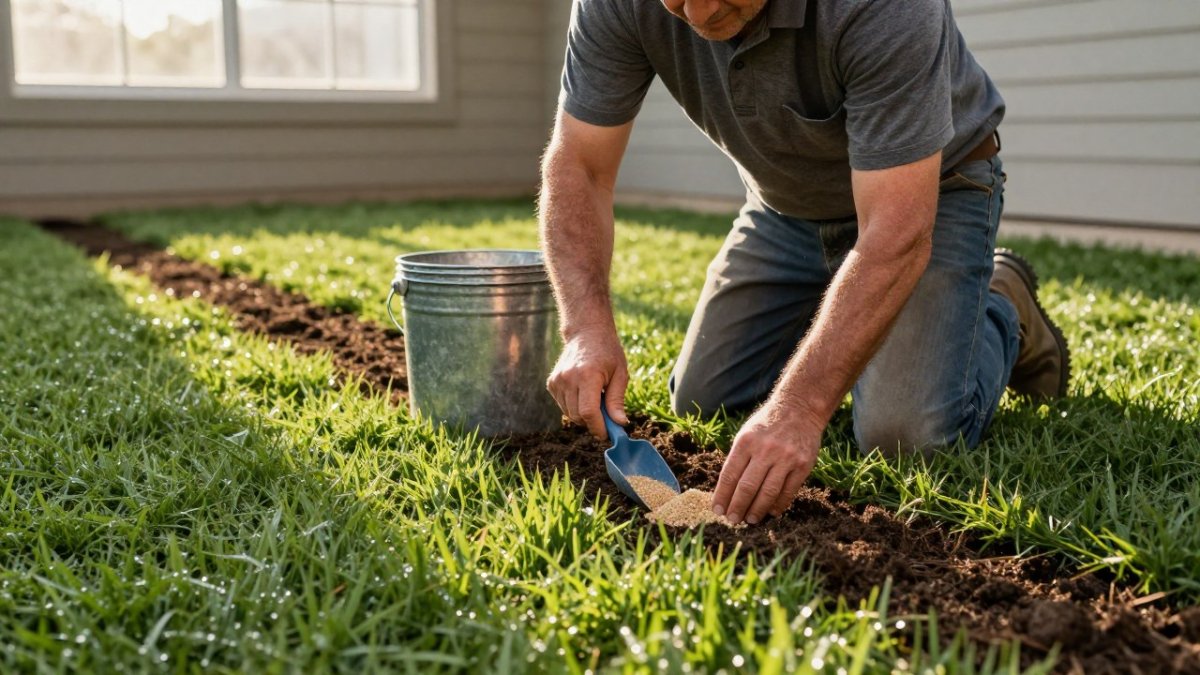
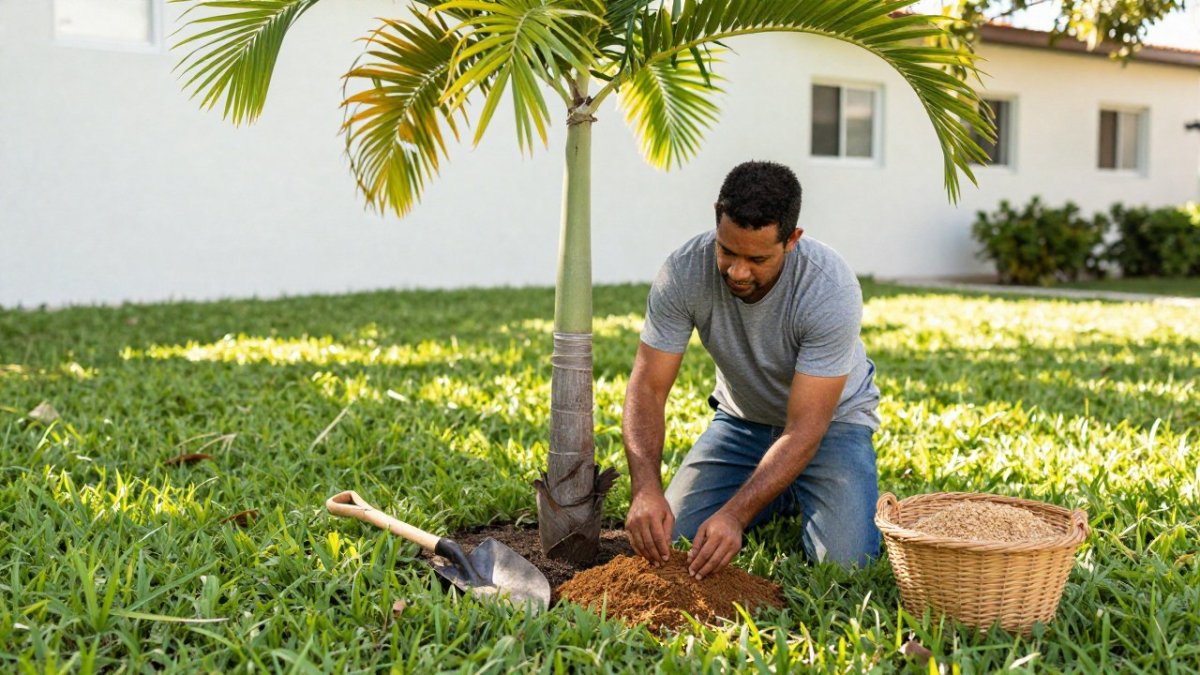
Compost top-dressing is the highest-value homemade move for sandy soil. A quarter-inch layer of finished compost each spring adds organic matter, improves water-holding, and feeds microbes. Do not pile it against St. Augustine runners or smother the crown; spread it thin and water it in.
A simple homemade weed-and-feed is not worth mixing. Horticultural vinegar (20 percent acetic acid) spot-treats weeds on sunny days, but it is non-selective and will kill grass it touches, so use it as a spot tool, not a broadcast spray. Keep it away from pets and kids until dry.
Watch out: homemade feeds are easy to overdo in heat. Too much compost tea or a heavy top-dressing in summer can burn turf or trap moisture, and homemade mixes have no label rate to guide you, start light and watch the lawn for a week before repeating.
Organic Lawn Care Products Worth Keeping in the Shed
A short list covers most needs. The organic lawn care products worth keeping are few: a sharp mower, a soil test kit, compost or compost tea, and a good hose-end sprayer. Add a hard rake for dethatching and a core aerator for compaction.
For weeds, hand-pull and spot-treat with horticultural vinegar on sunny days. For grubs and chinch bugs, integrated pest management means scouting first and treating only when pests cross a threshold. A pesticide-free yard is safer for pollinators and local waterways.
Natural Fertilizer for Grass Safe for Pets and Kids
Natural fertilizer for grass safe for pets and kids starts with ingredients you can name: compost, aged manure, kelp, and bone meal. These feed slowly and carry low burn risk. Even so, keep pets and children off the lawn until any product has watered in and dried. That is standard practice, not a red flag.
Skip synthetic weed-and-feed blends if pets use the yard. They carry label warnings for a reason.
A North Miami Seasonal Calendar for Organic Lawn Maintenance
Time your work to the local growing season. A typical seasonal rhythm for organic lawn maintenance looks like this:
| Season | Main Jobs | Watch For |
|---|---|---|
| Spring | Soil test, compost top-dress, first feed, sharpen blade | Chinch bugs, bare spots |
| Summer | Mow high, leave clippings, switch irrigation off in rains | Heat stress, disease, runoff |
| Fall | Second feed, aerate, overseed thin areas | Weeds filling bare spots |
| Winter | Mow less, skip fertilizer, plan spring repairs | Cold snaps, compaction |
Know the local pests before they show up. Our guide to common lawn pests in North Miami yards shows you what to scout for each season. After a hurricane, clear debris, aerate flooded turf, and wait for recovery before feeding.
Building an organic lawn in North Miami takes patience and local knowledge, and most homeowners run into trouble with sandy soil, heavy rain, and pests they didn't see coming. That is where we come in. P&P Landscaping and Tree Service brings over two decades of family-owned experience, tailored care for your specific yard, and full service from design to sod installation and tree maintenance. Get started with P&P Landscaping and Tree Service and build a lawn that stays healthy through every season.
Frequently Asked Questions
What is the best organic lawn treatment for a North Miami lawn?
Start with a soil test, then build organic matter with compost and a slow-release organic fertilizer suited to warm-season grass. Mow high, water deeply but less often, and aerate compacted areas. In North Miami's heat and humidity, the treatment that matters most is improving soil drainage and turf density so grass outcompetes weeds. P&P Landscaping and Tree Service can assess your soil and recommend a plan for your specific yard.
What is the 1/3 rule in lawn care, and how should homeowners use it?
The 1/3 rule means never cutting more than one-third of the grass blade in a single mowing. If your St. Augustine is 3 inches tall, set the mower to 2 inches at most. Cutting more stresses the plant and opens bare spots for weeds. In North Miami's growing season, that often means mowing every 7 to 10 days rather than every two weeks, and leaving the clippings on the lawn to return nutrients.
Are organic lawn care products safe for pets?
Most organic lawn care products, including compost, compost tea, and plant-based or manure-based fertilizers, are low-risk for pets once applied and watered in. Always read the label, keep pets off treated areas until the product dries, and store bags out of reach. Avoid cocoa mulch, which is toxic to dogs. A natural fertilizer for grass safe for pets should list its ingredients clearly so you know exactly what is going on your lawn.
Is organic lawn care worth it in South Florida?
It can be, especially given the region's sandy soil, heavy rainfall, and humidity, which leach synthetic nutrients quickly and encourage disease. Organic matter improves water retention and soil health over time, reducing runoff into canals and Biscayne Bay. Results take a full growing season or more, so expect gradual improvement rather than an overnight fix. For homeowners who want a lawn that holds up through heat stress and storms, the long-term payoff is usually worth it.