 how-to
How Long Does New Sod Take to Root? A Complete Timeline
Table of Contents
- How Long Does New Sod Take to Root? The Short Answer
- What You'll Need Before Installation Day
- The Rooting Timeline: Week by Week
- How to Tell If Sod Is Rooted: 4 Field Tests
- How Often to Water New Sod in Florida
- When to Mow New Sod (and When to Wait)
- New Sod Not Rooting? Common Causes and Fixes
- Conclusion: Give It Time, Then Check the Grip
- Frequently Asked Questions
Last Updated: October 19, 2026
How Long Does New Sod Take to Root? The Short Answer
New sod usually takes two to three weeks to start rooting, and four to six weeks to knit firmly into the soil. Full establishment takes longer. In South Florida's heat and rain, most lawns are secure enough to walk on in about three weeks, but the roots keep spreading for another month after that.
So how long does new sod take to root, really? It depends on water, soil contact, and heat. Homeowners in North Miami should plan on a 30-day window of careful watering before the lawn can take normal traffic.
Here's the part most guides get wrong. The calendar matters less than the grip. A lawn that gets shallow daily watering can look green for weeks and still lift off the ground in one piece.
Below, we'll show you exactly how to read the rooting timeline, test for grip, and fix a lawn that stalls.
What You'll Need Before Installation Day
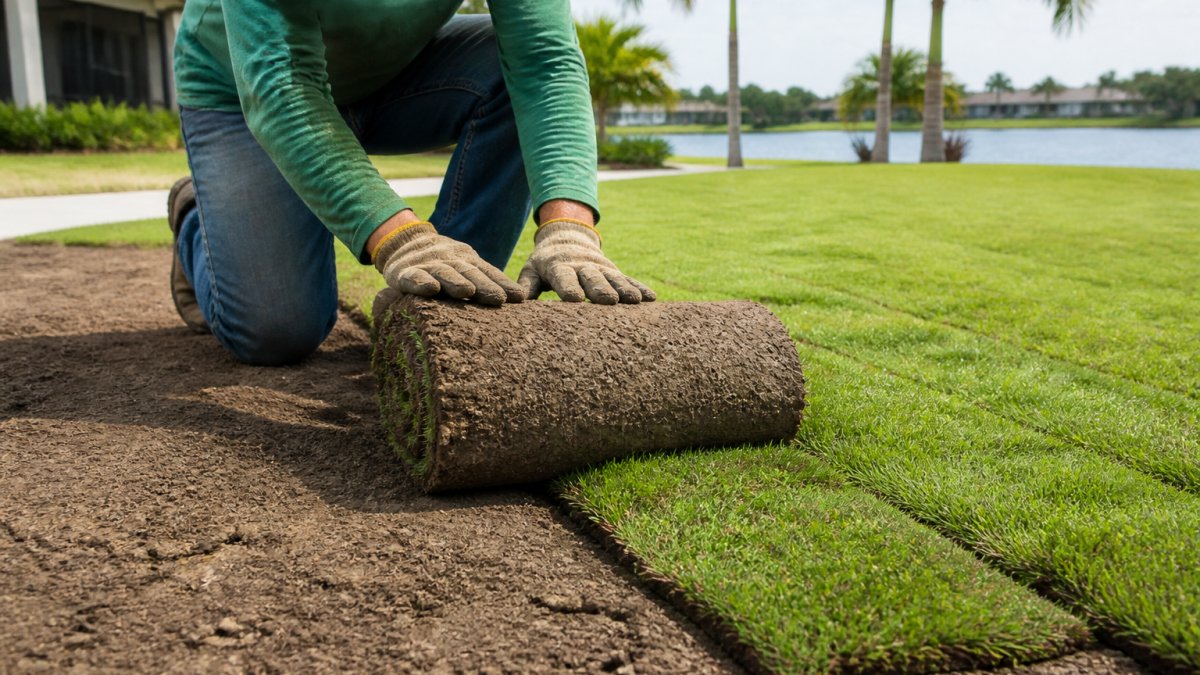
Good rooting starts before a single roll goes down. Sod roots into prepared soil, not onto dirt that was never loosened.
Here is what we check before installation:
- Bare, graded soil with the old lawn and weeds removed
- Loosened topsoil at least 4 to 6 inches deep so roots can push down
- A soil test from your county extension office to catch pH or nutrient problems early
- A starter fertilizer worked into the top layer, per label rates
- A sprinkler or hose setup that reaches every corner of the new lawn
- A lawn roller to press sod flat against the soil
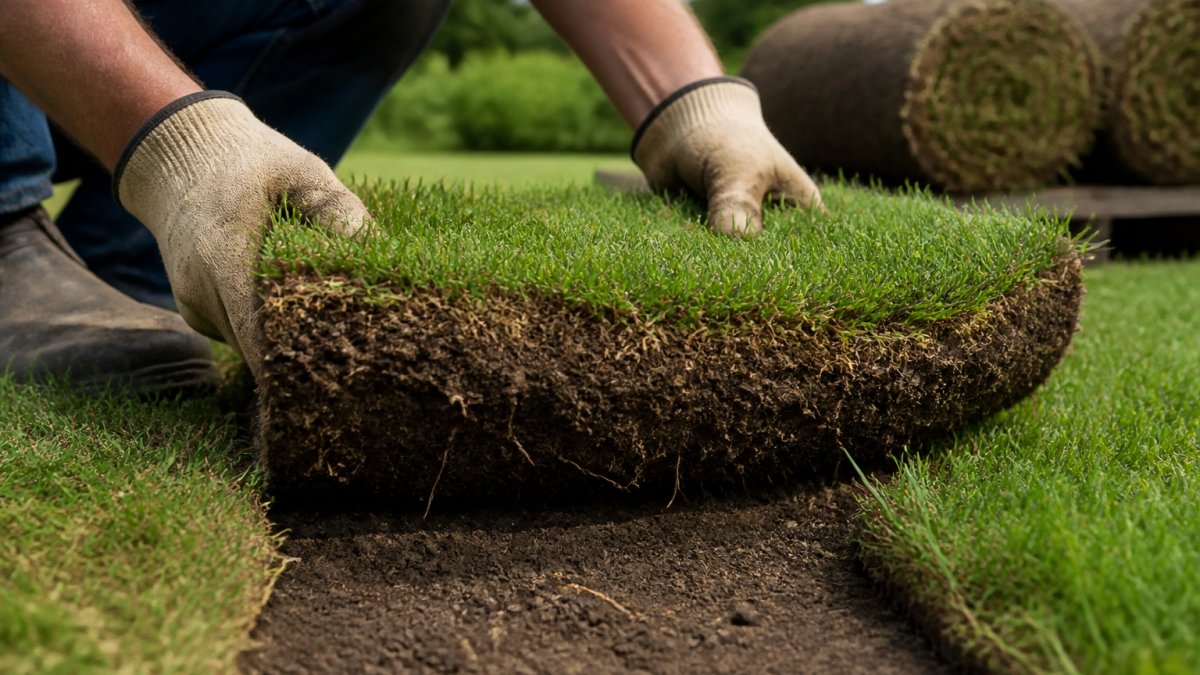
The University of Florida IFAS sod installation guidance is clear on one point: sod must have direct contact with the soil. Air pockets under a roll dry the roots out fast.
The Rooting Timeline: Week by Week
Root growth follows a predictable pattern. Here is what happens underground, week by week.
| Week | What's Happening | What You Should Do |
|---|---|---|
| Week 1 | Sod is settling; roots are just starting to push into soil | Water daily; stay off the lawn completely |
| Week 2 | New white roots reach into the topsoil | Keep watering; check edges for lifting |
| Week 3 | Roots begin gripping; seams start to close | Reduce watering slightly; light tug test |
| Week 4-5 | Roots knit across seams; lawn feels anchored | Mow at high setting if growth allows |
| Week 6+ | Lawn is established; normal care begins | Deep, less frequent watering |
Week one is the fragile stretch. The sod has no roots in your soil yet, so it survives on moisture in the pad and whatever you apply. Miss a day in hot weather and the edges curl.
By week three, you should feel resistance when you lift a corner. That resistance is the whole game.
How to Tell If Sod Is Rooted: 4 Field Tests
Knowing how to tell if sod is rooted saves you from guessing. Four simple checks give you a clear answer.
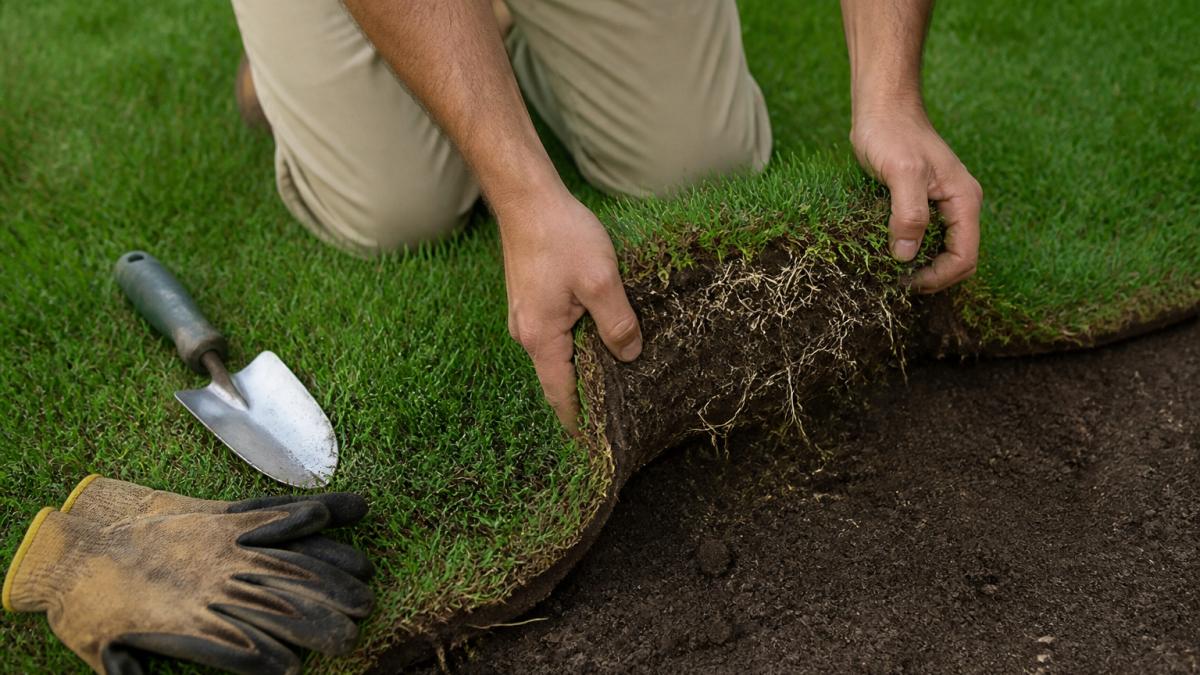
- The tug test. Grab a corner and pull gently. Rooted sod holds firm. Loose sod lifts like a rug.
- The lift check. Slide a trowel under one edge and lift. White roots reaching into the soil mean success.
- The walk test. Step firmly across the lawn. Soggy, shifting ground means roots haven't taken hold.
- The seam check. Look at the gaps between rolls. Closed, tight seams signal roots knitting across.
Run these tests at week three, then again at week four. A lawn that passes two or more is on track.
How Often to Water New Sod in Florida
Watering is the single biggest lever on rooting speed. In South Florida, heat and sandy soil make the schedule tighter than in cooler states.
For the first week, water every day, ideally in the early morning. Keep the sod and the soil beneath it damp, not flooded. In the dry spring months, a second short cycle in the afternoon helps.
Weeks two and three: water once daily, deeper. Roots follow moisture downward, so shallow sprinkling keeps them near the surface.
After week three: switch to two or three deep waterings per week. This trains roots to grow down.
The UF/IFAS Florida-Friendly Landscaping watering guidance recommends watering only when the lawn shows need, once establishment is complete. Overwatering causes just as many failures as drought.
When to Mow New Sod (and When to Wait)
Wait until the sod is rooted and the grass is tall enough to cut. For most lawns, that means week three or four, and never before the lawn passes the tug test.
Set the mower at its highest setting for the first cut. Never remove more than one-third of the blade height (ENH10/LH028: Mowing Your Florida Lawn). Sharp blades matter here; dull ones rip young grass out by the roots.
Skip the bag if you can. Grass clippings return nutrients and moisture to a new lawn.
One more rule: keep mower wheels off soggy ground. Compaction on a wet, unrooted lawn leaves ruts that last months.
If you'd rather hand the first month to a crew, our team handles sod installation in North Miami and the watering schedule that follows it. We also handle tree work, so a canopy that shades the new lawn can be trimmed.
New Sod Not Rooting? Common Causes and Fixes
A lawn that still lifts after four weeks has a specific problem. Here are the usual suspects.
- Dry soil under the sod. The pad is wet but the ground below is dust. Fix: water longer, not more often.
- Compacted base. Water pools or runs off. Fix: aerate around the edges and water in short cycles.
- Too much shade. Grass needs light to grow roots. Fix: thin the canopy or choose a shade-tolerant variety next time.
- Poor soil contact. Rolls were laid over clumps or debris. Fix: roll the lawn again while it's damp.
- Grubs or disease. Patches lift easily and roots are chewed. Fix: pull back a section and check the soil.
Conclusion: Give It Time, Then Check the Grip
Rooting a new lawn is a patience game with a clear finish line. Three weeks to grip, six weeks to knit, and a full season to look like it was always there.
The homeowners who succeed are the ones who water deeply, stay off the grass, and test for grip instead of trusting the calendar. If your lawn stalls, call in a second set of eyes before you tear anything out.
P&P Landscaping and Tree Service has over two decades of experience installing and maintaining lawns across Miami-Dade and Broward County. Our family-owned team handles soil prep, sod installation, and tree care. Book an on-site estimate and we'll walk your yard, check the soil, and give you a straight answer on what your lawn needs.
Frequently Asked Questions
How long does new sod take to root?
Most new sod develops a firm grip on the soil in two to four weeks when temperatures stay warm. St. Augustine and Zoysia often knit in about 14 to 21 days, while Bermuda can take three to four weeks. Full establishment, where the lawn can handle normal traffic and mowing without lifting, usually happens by week six. The exact timeline depends on watering consistency, soil contact, and heat, so check with a gentle tug rather than a calendar.
How can I tell if my new sod has rooted?
Try the tug test: grab a corner of one piece and pull up gently. If it resists and you feel roots holding, it has rooted. You can also press a screwdriver into the seam; if it slides in with light pressure and comes out with soil clinging, roots are knitting. Another sign is that seams start to disappear as the grass fills in. Wait until at least two weeks have passed before testing so you do not tear fresh roots.
How often should I water new sod in North Miami?
For the first week, water two to three times a day for 10 to 15 minutes per zone to keep the surface and underlying soil moist. In weeks two and three, cut back to once daily, preferably early morning. By week four, water two to three times per week deeply. South Florida heat and sandy soil dry out fast, so check moisture by lifting a corner; if the soil under it is dry, increase watering. Always follow any local watering restrictions.
Why is my new sod not rooting?
The usual culprits are too little water, too much water, poor soil contact, or shade. If the sod feels loose and the soil beneath is bone dry, watering is the issue. If it is soggy and smells sour, you are overwatering and roots may be rotting. Bumpy installation that leaves air pockets under the sod also stops roots from reaching soil. Fix drainage and watering first, then press down any loose pieces and give the lawn another two weeks before judging.