 how-to
How Do You Fix Brown Patches in South Florida Lawns?
Last Updated: November 2, 2026
Quick Summary
Fix brown patches in South Florida lawns by first confirming the cause, since fungus, chinch bugs, grubs and drought each need a different response. For brown patch fungus, stop evening irrigation, bag infected clippings, apply a labeled fungicide, and aerate once the ring stops expanding.
- Brown patch fungus spreads fastest when nights are warm and humid and grass stays wet too long.
- Shift irrigation cycles to finish by mid-morning so blades dry before dusk.
- Apply fungicide when you first see the ring, before the patch goes fully brown.
- Water roughly 1 inch per week, rain included, in one or two long cycles.
- Recheck and measure the ring in 7 to 10 days, rotating active ingredient if it spreads.
Table of Contents
- What Causes Brown Patches in a South Florida Lawn?
- Brown Patches in Lawn Pictures: A Visual Diagnostic Guide
- Does Brown Patch Fungus Kill Grass?
- How to Treat Brown Patch Fungus Step by Step
- Cultural Fixes: Watering, Mowing, and Airflow
- Organic vs. Synthetic Treatment: Which Fits Your Yard?
- Repairing the Damage: Sod, Soil, and St. Augustine Recovery
- Book an On-Site Estimate for Your Brown Patch Repair
- Frequently Asked Questions
What Causes Brown Patches in a South Florida Lawn?
Brown patches in South Florida lawns usually come from one of three culprits: fungus, insects, or drought stress. Learning how to fix brown patches in South Florida lawns starts with naming the cause correctly, because each one needs a different response.
Brown patch is a turfgrass infection caused by the fungus Rhizoctonia solani (Control of brown patch (Rhizoctonia solani) in tall fescue (Festuca arundinacea Schreb.)...). It spreads fastest when nights are warm and humid and the grass stays wet too long.
Fungus, Insects, or Drought: Telling Them Apart
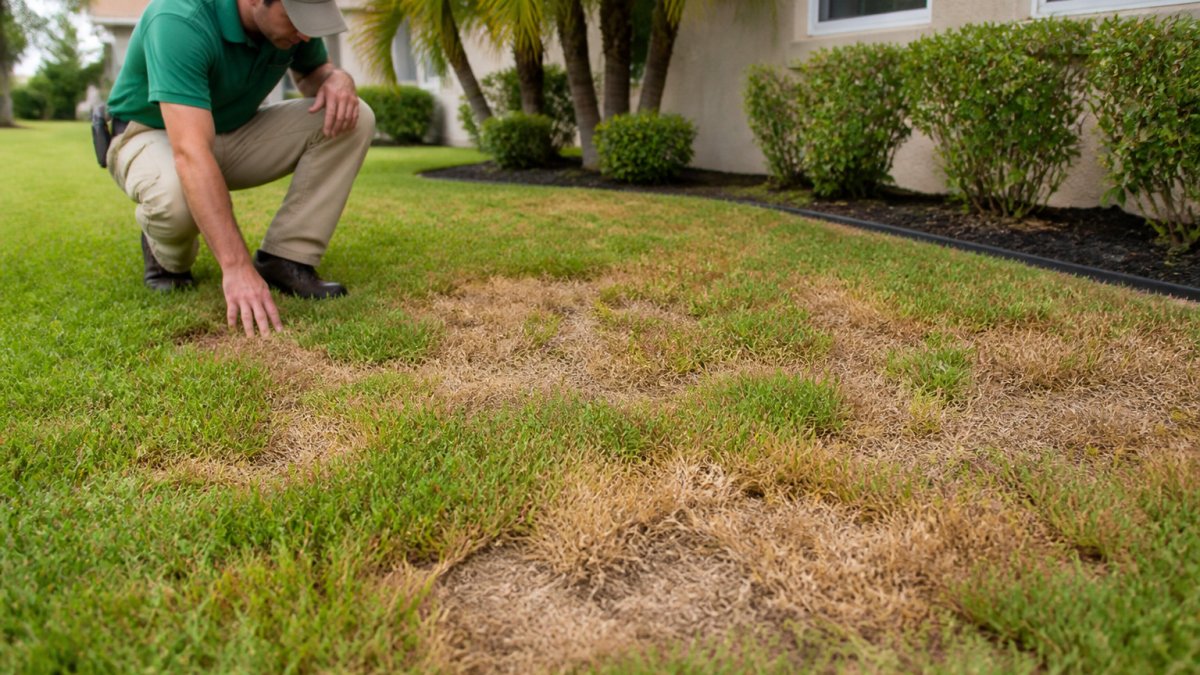
Fungus shows up as circular patches with a dark, water-soaked ring at the edge.
Insect damage, usually from chinch bugs or grubs, looks patchy and irregular. Grubs leave spongy turf you can peel back like carpet.
Drought stress follows a pattern too: high spots, edges near pavement, and spots the sprinkler misses. The blades fold and turn grayish-blue before browning.
Why North Miami's Humidity Makes It Worse
North Miami's summer nights stay warm and muggy, and that is perfect weather for fungal growth. Long stretches of rain keep leaf blades wet for hours. Add poor air circulation and compacted soil, and you have ideal conditions for brown patches to spread.
Brown Patches in Lawn Pictures: A Visual Diagnostic Guide
Use these visual clues to match what you see in your own yard. This quick guide covers the most common looks of brown patches.
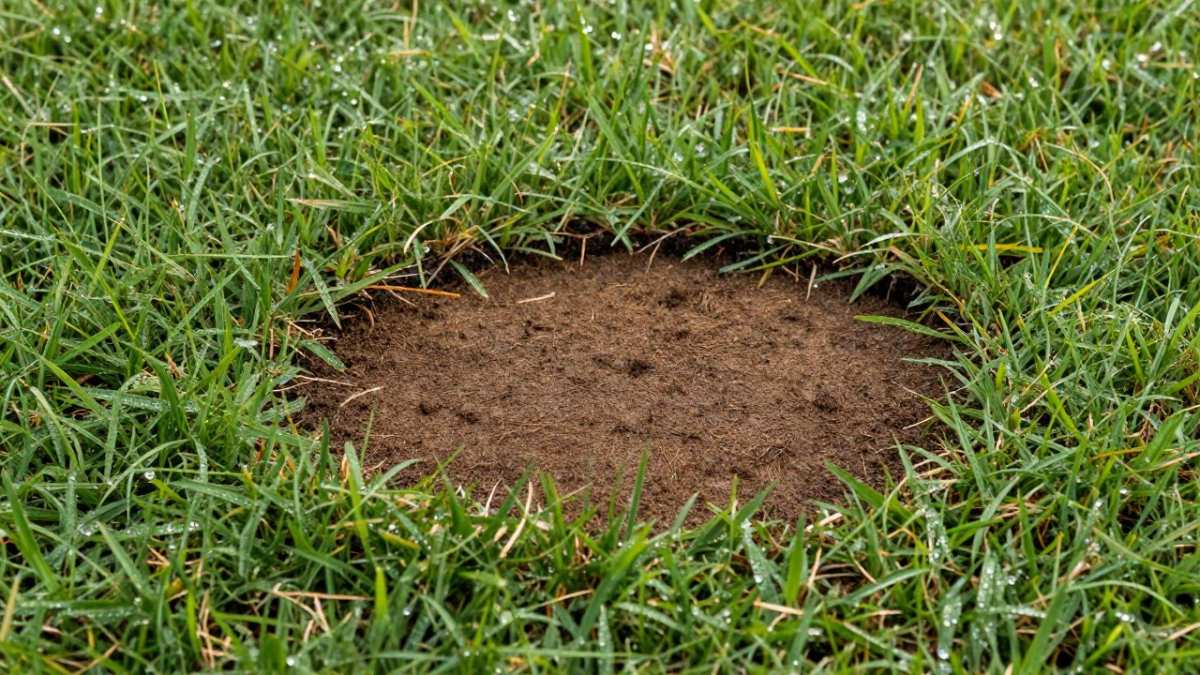
- Circular patch with a dark ring: classic brown patch fungus
- Irregular, spreading dead zones: likely chinch bugs
- Spongy turf that lifts up: grubs feeding on roots
Snap a photo of the patch and the surrounding grass. Compare it to these patterns before you spend money on treatment.
Does Brown Patch Fungus Kill Grass?
Brown patch fungus rarely kills St. Augustine grass outright, but it can weaken it badly.
Repeated infections season after season cause real decline. The bigger risk is secondary damage: root rot, soil compaction, and weeds moving into bare spots.
If you are weighing grass types, see how St. Augustine compares to Bahia for Florida lawns. Bahia handles some disease pressure better, though it has other trade-offs.
How to Treat Brown Patch Fungus Step by Step
Treating brown patch fungus means stopping the spread first, then fixing the conditions that caused it. Early action matters, so the first days after you spot a ring are important. Here is a general sequence for treating brown patches on South Florida lawns.
- Confirm the diagnosis before you spend a dollar. Rule out chinch bugs, grubs, and drought first. A simple check: tug a handful of grass at the edge of the patch. If it lifts easily from the soil with little resistance, that points to root or crown damage from fungus or grubs. If the blades fold and the soil is bone dry, it is drought. If you see tiny black-and-white insects at the soil line, it is chinch bugs.
- Stop evening irrigation immediately. Wet blades overnight are the single biggest driver of spread. Shift any run cycle to finish by mid-morning so the leaf surface dries before dusk.
- Bag and remove clippings from the infected zone. Mowing over an active ring scatters infected tissue. Bag those clippings, do not compost them on site, and clean the mower deck before cutting healthy grass.
- Apply a fungicide labeled for brown patch on your grass type. Match the product to St. Augustine, Zoysia, or Bahia, labels differ. Spray in the early morning or late afternoon when temperatures are below the label's maximum and wind is calm.
- Water the fungicide in only if the label says so. Some products need irrigation to reach the crown; others must dry on the leaf. Read the label, this is where most DIY applications fail.
- Aerate compacted soil after the outbreak slows. Core aeration improves airflow and water infiltration, which removes the conditions the fungus needs. Do not aerate while the ring is still actively expanding; you will spread infected soil.
- Recheck in 7 to 10 days. Measure the ring. If it is still expanding, rotate to a different active ingredient and retreat per label intervals.
Fungicide Timing and Active Ingredients
Timing matters more than the product.
Fungicide labels list active ingredients for brown patch. Check your product label, and rotate between different FRAC groups across the season to limit resistance.
A few general practical rules for South Florida lawns:
- Preventive timing beats curative timing. On lawns with a history of brown patch, some homeowners apply preventively as nights turn warm and humid, rather than waiting for symptoms.
- Calibrate your sprayer. Most granular and liquid products are labeled per 1,000 square feet. Measure the lawn, measure the product, and walk at a steady pace. Overapplying stresses the turf and wastes money; underapplying does nothing.
- Do not mow for 24 to 48 hours after application unless the label says otherwise. Mowing removes the protective residue.
Follow one product label at a time, and do not mix fungicides unless the labels allow it.
Here is the treatment sequence the article lays out, from confirming the diagnosis to rechecking the ring.
| Step | What to do | Timing or frequency |
|---|---|---|
| 1 | Confirm diagnosis; rule out chinch bugs, grubs, drought | Before spending on treatment |
| 2 | Stop evening irrigation; shift cycles to finish by mid-morning | Immediately |
| 3 | Bag and remove clippings from infected zone; clean mower deck | During active ring |
| 4 | Apply fungicide labeled for brown patch on your grass type | Early morning or late afternoon |
| 5 | Water fungicide in only if the label says so | Per label |
| 6 | Aerate compacted soil after outbreak slows | Not while ring is expanding |
| 7 | Recheck and measure the ring; rotate active ingredient if spreading | In 7 to 10 days |
Cultural Fixes: Watering, Mowing, and Airflow
Cultural practices decide whether brown patches return. Fungicide buys you time; culture changes the conditions that let Rhizoctonia solani thrive. In North Miami, that means managing humidity, salt exposure, and the sandy, often compacted soils typical of Miami-Dade yards, factors most generic Florida guides skip.
Watering for a Humid Coastal Climate
Water deeply but less often. The goal is roughly 1 inch per week, rain included, delivered in one or two long cycles rather than daily short ones. Shallow daily watering keeps the surface wet and the roots shallow, exactly what brown patch wants.
- Water in the early morning so blades dry before evening.
- Check sprinkler coverage by placing several straight-sided cans across a zone, running the cycle, and measuring.
- Account for rain. A typical summer afternoon storm can drop half an inch or more. Skip the next cycle if the soil is already moist.
Mowing Height and Frequency
Mow St. Augustine at a moderate height and avoid removing more than one-third of the blade at once. Scalping opens the turf canopy to sunlight and stress, which invites fungus.
- Keep the blade sharp. A dull blade tears grass, leaving ragged wounds that take longer to heal. Sharpen or replace it regularly.
- Mow dry. Cutting wet grass spreads spores and clogs the deck.
- Bag during an outbreak, mulch otherwise. Mulched clippings return nutrients; during active brown patch, bag and remove them.
Airflow, Thatch, and Soil
Poor airflow keeps blades wet longer. Thin shrubs and lift low tree limbs around the lawn, especially on the shaded north side of the yard where dew lingers.
- Dethatch when thatch becomes thick. A thick thatch layer can hold moisture against the crown.
- Aerate compacted soil once a year, ideally in late spring or early summer when the grass is actively growing. Core aeration opens the surface and improves infiltration.
- Correct drainage. Low spots that stay wet after rain are brown patch nurseries. Regrade or install drainage before replanting.
Fertilization That Does Not Feed the Fungus
Too much nitrogen, especially in summer, produces soft, lush growth that brown patch attacks first.
Watch out: applying high-nitrogen fertilizer to a lawn with an active brown patch ring usually makes it worse, not better. Fix the fungus first, then feed.
These cultural steps are not glamorous, but they are what keeps North Miami lawns from re-infecting every rainy season.
Organic vs. Synthetic Treatment: Which Fits Your Yard?
Organic options include compost topdressing, cornmeal products, and improved soil biology. They build long-term turf health but work slowly. Synthetic fungicides act faster and are more reliable during an active outbreak.
Our take: use synthetic fungicide to stop a spreading infection, then shift to organic practices for long-term soil health. Most North Miami yards need both, not one or the other.
Repairing the Damage: Sod, Soil, and St. Augustine Recovery
Once the fungus is under control, bare spots need new grass. St. Augustine recovers slowly on its own, so patching or re-sodding is often faster. Prepare the soil first: clear debris, loosen compaction, and correct the pH.
For a full walkthrough, see how to prepare soil for new sod in North Miami. If you would rather have it done right the first time, our sod installation service in South Florida covers removal, grading, and fresh St.
Watch out: laying sod over infected soil without treating it first usually means the new grass fails within weeks.
Book an On-Site Estimate for Your Brown Patch Repair
Diagnosing brown patches from a photo only goes so far. You can also see a few of our favorite yards from recent projects across South Florida. An on-site visit confirms the cause, checks your irrigation and soil, and gives you a plan.
P&P Landscaping and Tree Service is family-owned with over two decades of experience. We provide landscaping and sod installation services, and we tailor our work to each client's needs. If you have searched for lawn care "near me" in North Miami and want answers you can trust, we are ready to help.
Frequently Asked Questions
What is the best treatment for brown patches in a lawn?
Start by confirming the cause. If the patch has a dark ring and tan lesions on the leaf blades, it is likely brown patch fungus, and a fungicide labeled for brown patch, applied on a preventive schedule, is a common treatment. Pair that with corrected irrigation timing and mowing height. If the patch is irregular and pulls up easily, check for insects or root rot instead. Fungicide will not fix drought or grub damage, so diagnosis comes first.
Will a lawn recover from a brown patch?
St. Augustine grass usually recovers from brown patch fungus because the disease attacks the leaf blade, not the stolons running along the soil. Once conditions dry out and the fungus is treated, new growth pushes through the center of the patch. Recovery typically takes several weeks to a couple of months depending on turf stress and weather. If the stolons are rotted or the patch keeps expanding despite treatment, the area may need to be resodded.
What month should I apply fungicide to a South Florida lawn?
In South Florida, brown patch pressure peaks when nights are warm and humid, usually from late spring through fall. Preventive fungicide applications are best started before symptoms appear, often in late spring as humidity climbs, and repeated on the label interval through the rainy season. Curative applications work too but are less effective once the fungus has spread. Track your irrigation and morning dew patterns rather than a fixed calendar date.
Can overwatering cause brown patches in a South Florida lawn?
Yes. Brown patch fungus thrives when grass stays wet for long stretches, and overwatering or evening irrigation keeps the leaf blades wet overnight. Water deeply but less often, in the early morning, so the grass dries before dark. Also check for poor drainage and soil compaction, which trap moisture in low spots. Fixing irrigation scheduling and improving airflow often does more to stop brown patches than any single fungicide application.
Brown patches will keep coming back until the cause is fixed, not just the symptom. P&P Landscaping and Tree Service brings over two decades of family-owned experience, tailored treatment plans, and full sod installation to every job. Get started with P&P Landscaping and Tree Service and turn your patchy lawn back into healthy St. Augustine.