 How-to
How to Spot When South Florida Sod Needs More Water
Last Updated: November 7, 2026
Quick Summary
South Florida sod needs water when blades fold or roll lengthwise, footprints stay pressed into the turf for hours, and the color fades from green to dull blue-gray. Check in early morning, since grass naturally folds in afternoon heat and a midday check can mislead you.
- Push a screwdriver or soil probe 4 to 6 inches deep; if it slides in easily, moisture is reaching the roots.
- New sod usually needs water every day for the first week or two, then less often as roots take hold.
- Overwatered sod feels spongy, and waterlogged soil suffocates roots and leaves grass weak and disease-prone.
- Skip cycles after heavy rain, and check your city's current irrigation schedule before setting a timer.
- Reduce watering frequency gradually as sod knits rather than cutting straight from daily watering to twice a week.
Table of Contents
- Signs Your South Florida Sod Needs More Water
- Signs of Underwatered Sod: Color Changes, Brown Patches, and Shrinking Seams
- Signs of Overwatered Sod: Spongy Turf, Waterlogged Soil, and Root Suffocation
- How Often to Water New Sod in South Florida
- How to Check Moisture Under New Sod
- New Sod vs. Established Lawn: Why the Diagnosis Differs
- When Brown Sod Isn't a Watering Problem
- Book an On-Site Estimate for a Sod and Irrigation Check
- Frequently Asked Questions
Signs Your South Florida Sod Needs More Water
South Florida's sandy soil drains fast. Water moves through it quickly, which means a lawn can dry out faster than homeowners expect, especially in full sun.
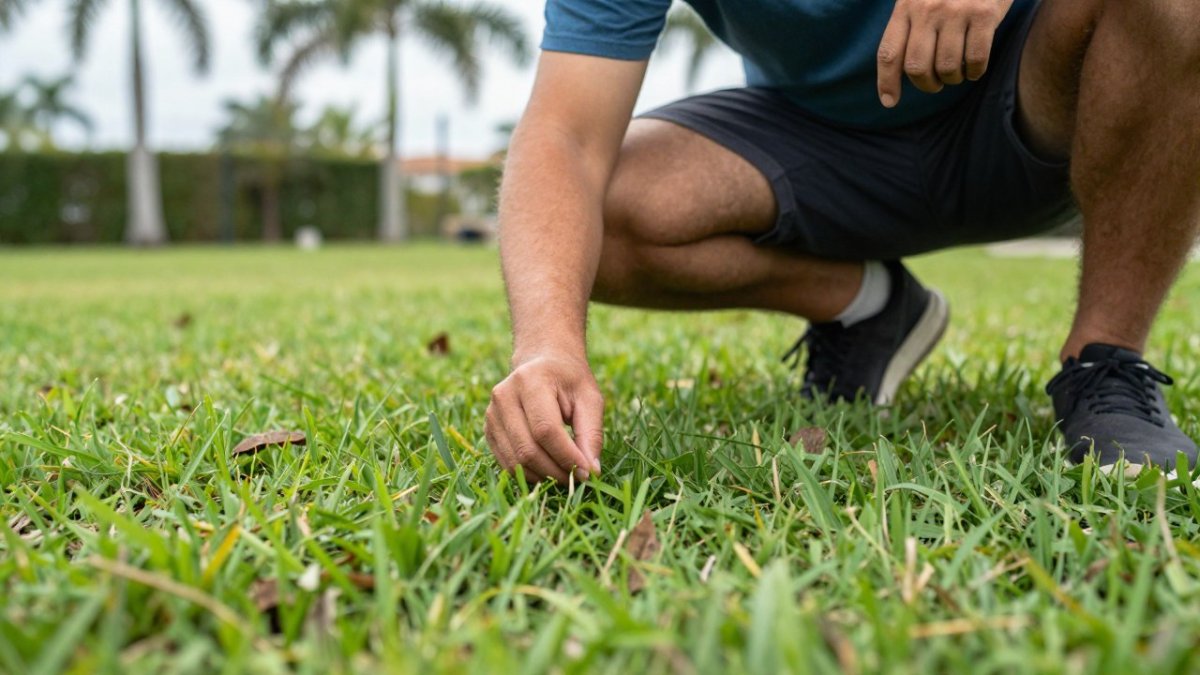
Folded, Rolling, and Wilting Grass Blades
Healthy grass blades stand upright and flat. Thirsty blades fold in half lengthwise or roll inward, a habit that helps the plant hold onto moisture. Wilting comes next: the blades droop and the lawn looks tired even in the morning.
Check the lawn in early morning, not midday. Grass naturally folds in afternoon heat, so a midday check can be misleading.
Footprints That Stay Visible After Walking
Walk across the lawn and look back. On a well-watered lawn, footprints spring back within minutes. On a dry lawn, they stay visible for hours.
This footprint recovery test is a simple check a homeowner can run. It needs no tools.
Signs of Underwatered Sod: Color Changes, Brown Patches, and Shrinking Seams
The clearest signs of underwatered sod are color loss, brown patches, and seams that pull apart. Grass under water stress fades from green to blue-gray, then to straw brown. New sod shrinks slightly as it dries, opening visible gaps at the seams between rolls.
Brown patches deserve a closer look before you assume drought. Check the pattern first:
- Even browning across the whole lawn: likely underwatering or a coverage problem
- Brown spots in one area: often a sprinkler gap or a soil issue
- Brown edges with green centers: could point to disease or root trouble
If brown patches are spreading in a South Florida lawn, the dedicated brown patch fix guide walks through the likely causes and repairs.
Signs of Overwatered Sod: Spongy Turf, Waterlogged Soil, and Root Suffocation
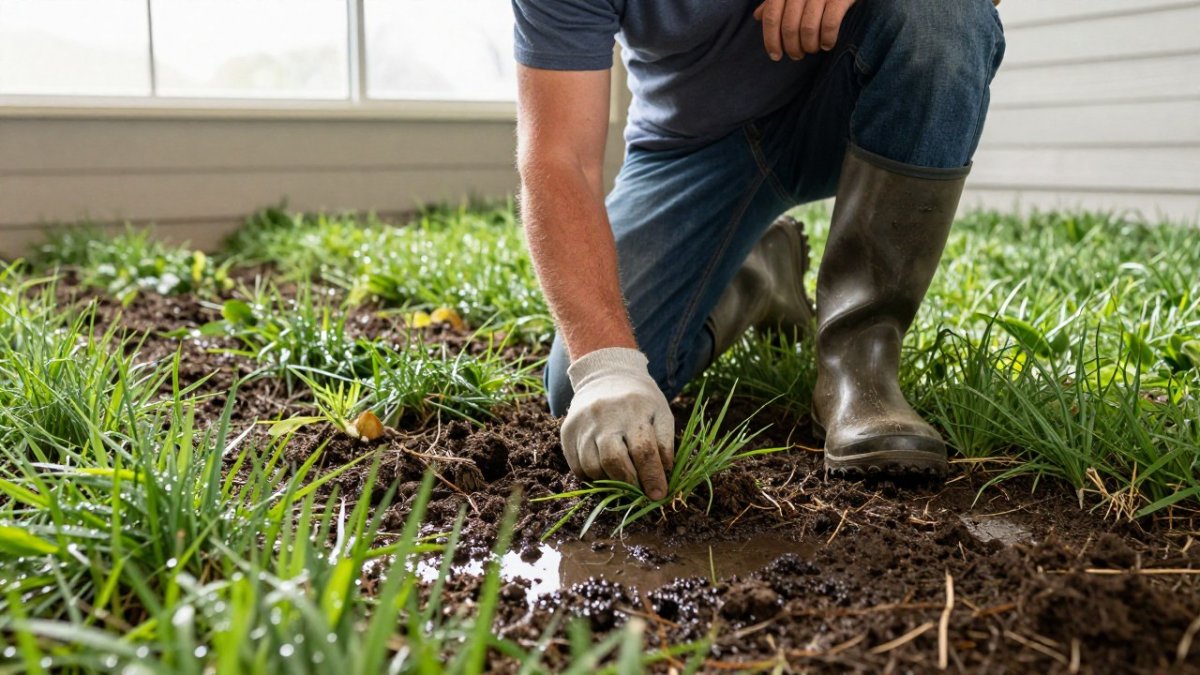
Overwatering looks a lot like underwatering from a distance, which is why so many homeowners make it worse by watering more. The tell is underfoot.
Watch for these signs of overwatered sod:
- A squishy feel when you walk on the turf
- Standing water or puddles hours after watering
- Soil that stays damp below the surface for days
- Yellowing that starts low on the blades
Overwatering kills new sod often enough that it deserves its own warning. Our guide on why new sod dies after installation covers the fixes when a fresh lawn starts failing.
How Often to Water New Sod in South Florida
The exact watering schedule for new sod depends on heat, rainfall, and sod type. There is no single number that fits every yard.
Watering Through the Establishment Window
The establishment window is when new sod knits to the soil. During this time, the roots are shallow and dry out fast. Water in the morning so the grass dries before evening.
How long rooting takes changes the whole schedule. Our timeline for how long new sod takes to root explains what to expect week by week.
Winter Watering and Heat Stress Adjustments
South Florida winters are mild, but shorter days and cooler nights slow growth. Lawns need less water in winter. In summer heat, the opposite applies: heat stress raises water demand, and a lawn that looked fine in March can struggle by July.
Adjust your schedule with the season instead of setting it once and forgetting it.
How to Check Moisture Under New Sod
A reliable way to check moisture under new sod is to test the soil at root depth, not the surface.
The Screwdriver and Probe Test
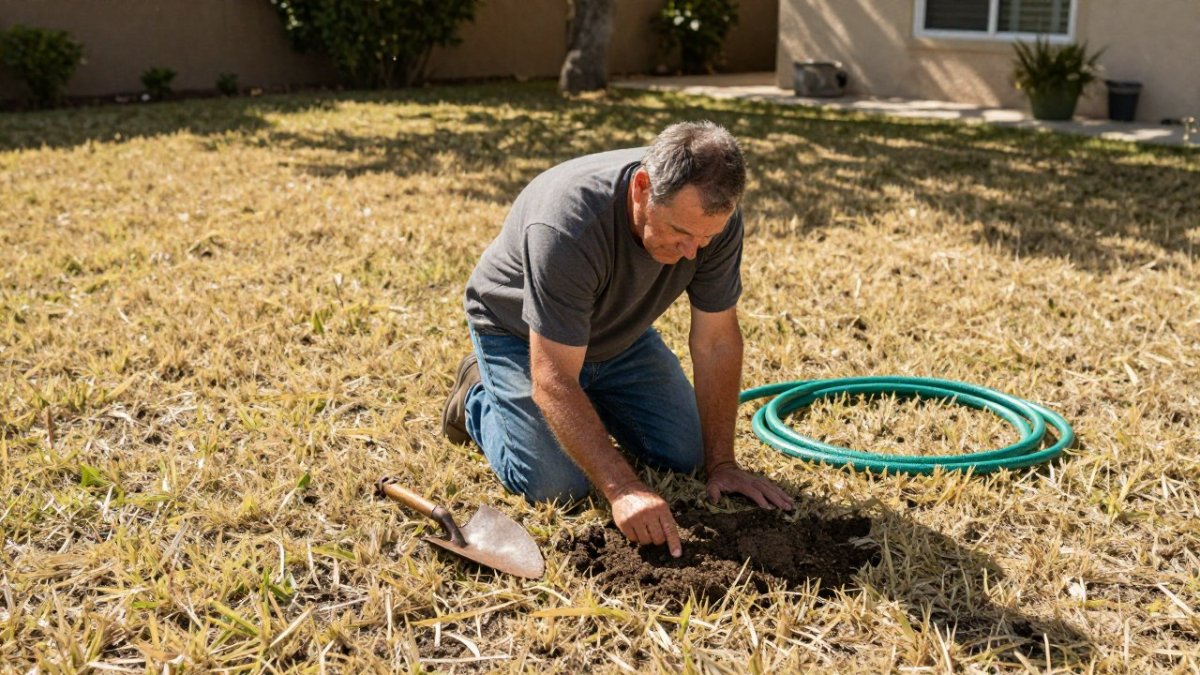
Push a long screwdriver or a soil probe 4 to 6 inches into the turf. That depth reaches the root zone of newly installed sod, which sits in the top few inches of soil. If the tool slides in with light pressure, moisture is reaching the roots. If it fights back or comes out with dry, dusty soil clinging to it, the lawn is dry below the surface.
The Lift-the-Edge Check
Gently lift a corner of sod at a seam and look at the soil underneath. New sod that is knitting to the ground should show damp soil and fine roots reaching into it.
Watch out: lifting the edge too roughly on freshly installed sod can tear the shallow roots before they have knit, so lift only an inch or two and press the corner back down.
Reading the Result in Sandy South Florida Soil
Sandy soil drains quickly and holds little water, so a probe that reads moist in the morning can read dry by afternoon in full sun. Check in early morning, before the day's heat pulls moisture out of the root zone.
For a fuller method, this guide to checking water under new sod goes deeper into moisture testing.
New Sod vs. Established Lawn: Why the Diagnosis Differs
New sod and an established lawn show water stress differently, and treating them the same causes mistakes. New sod has shallow roots that sit near the surface and dry out fast. An established lawn has deeper roots and can ride out short dry spells. The signs look similar from a distance, but the diagnosis and the watering response are not the same.
Establishment-Stage Symptoms
In the first few weeks after installation, sod is essentially a set of rolls laid on top of the soil, and its roots have not yet grown down into the ground. During that window, the sod depends on frequent, light watering to keep the root zone moist. Signs that new sod is short on water include:
- Seams that open up as the sod shrinks
- Sod that lifts easily at the edges
- Grass that wilts by mid-morning rather than late afternoon
- A dry, dusty layer directly under the sod
New sod usually needs water every day for the first week or two, then less often as roots take hold.
Mature-Lawn Drought Stress
An established lawn has roots that reach several inches into the soil and can draw on moisture below the surface. Its drought signs show up more gradually: blades that fold or roll, footprints that stay visible for hours, and color that fades from green to blue-gray before browning. Because the roots are deeper, an established lawn usually does better with deeper, less frequent watering that pushes roots down, rather than daily light cycles.
Matching the Response to the Stage
The practical difference is frequency and depth. New sod needs more frequent, lighter watering at first to keep the shallow root zone moist.
Watch out: the transition between the two schedules is where most lawns fail. Reduce frequency gradually as the sod knits, rather than cutting straight from daily watering to twice a week.
Shallow Roots, Sandy Soil, and Drainage in Miami-Dade Yards
Sandy soil in many South Florida yards drains quickly and holds little water, which means lawns can dry out fast after rain.
How long rooting takes changes the whole schedule. Our timeline for how long new sod takes to root explains what to expect week by week.
New sod and established lawns need different watering approaches, so match the response to the stage your lawn is in.
| Stage | Root depth | Watering approach | Key signs |
|---|---|---|---|
| New sod | Shallow roots near the surface | Frequent, light watering; every day for first week or two | Seams opening, sod lifting at edges, wilting by mid-morning |
| Established lawn | Roots several inches into soil | Deeper, less frequent watering | Blades folding or rolling, footprints staying visible, color fading to blue-gray |
| Sandy, fast-draining soil | Little water held | More frequent watering | Dries out fast after rain |
| Poor-draining low spots | Water pools | Less watering | Roots suffocate if overwatered |
When Brown Sod Isn't a Watering Problem
Not every brown lawn is thirsty. Sometimes the sprinklers are the problem, and sometimes the weather is. Rule out the non-water causes before you change your watering schedule.
Sprinkler Coverage, Runoff, and Irrigation Troubleshooting
Run the sprinklers and watch them. Look for heads that spray sideways, heads blocked by tall grass, and dry spots the water never reaches. Check for runoff: if water runs down the driveway minutes after the cycle starts, the soil is not absorbing it, and you are wasting water.
Signs of an irrigation problem:
- Dry spots in the same place every time
- Water running off instead of soaking in
- Sprinkler heads that do not pop up fully
- Wet spots right next to dry ones
Heat, Rain, Shade, and Local Watering Rules
South Florida's rainy season can water your lawn for you, so skip cycles after heavy rain. Shaded areas need less water than full-sun spots. The South Florida Water Management District publishes current restrictions for the region.
Heat stress and drought stress look alike but differ in cause. Heat stress fades by evening; drought stress does not.
Book an On-Site Estimate for a Sod and Irrigation Check
Reading the signs gets you part of the way. A trained eye on your actual yard gets you the rest.
If you are searching for sod help near me in North Miami, start with an on-site sod and irrigation estimate.
Your lawn is telling you what it needs. The question is whether you read the signs in time.
Frequently Asked Questions
How do I know if my new sod is getting enough water?
Lift a corner of one sod piece a few days after installation. If it resists and you feel roots gripping the soil, it is getting enough water. If it peels up easily or feels light and dry underneath, your sod needs water. Also watch the blades: folded or rolled blades and footprints that stay visible after walking mean the turf is under water stress. Check the soil under the sod with a probe or screwdriver; it should feel moist, not soggy, a few inches down.
How often should I water new sod in South Florida?
New sod needs short, frequent watering cycles until roots establish, with frequency tapering as roots take hold. Sandy South Florida soil drains fast, so light cycles that soak the sod layer beat one long soak that runs off. Follow any local watering restrictions in your city or county and adjust for rain, heat, and shade. An on-site estimate can confirm a schedule for your specific yard.
Is 30 minutes of watering grass enough?
It depends on your sprinkler output and soil, not the clock. Thirty minutes with a high-flow rotor may push water past the root zone in sandy soil, while 30 minutes with a low-flow head may barely wet the surface. Run a cycle, then check moisture 3 to 4 inches down with a probe. If it is dry at that depth, water longer or split the cycle. If water is pooling or running off, shorten it. Measure output with a few tuna cans placed around the zone.
How can I tell if brown sod is dry or already dead?
Tug gently on a brown patch. If the blades pull free easily and the sod lifts without resistance, the roots are gone and that section is likely dead. If the sod holds firm and the soil beneath is dry, it is probably underwatered and recoverable. Green shoots at the base of brown blades are a good sign. Overwatered sod can also brown, so check for spongy, waterlogged soil and a sour smell before adding more water.