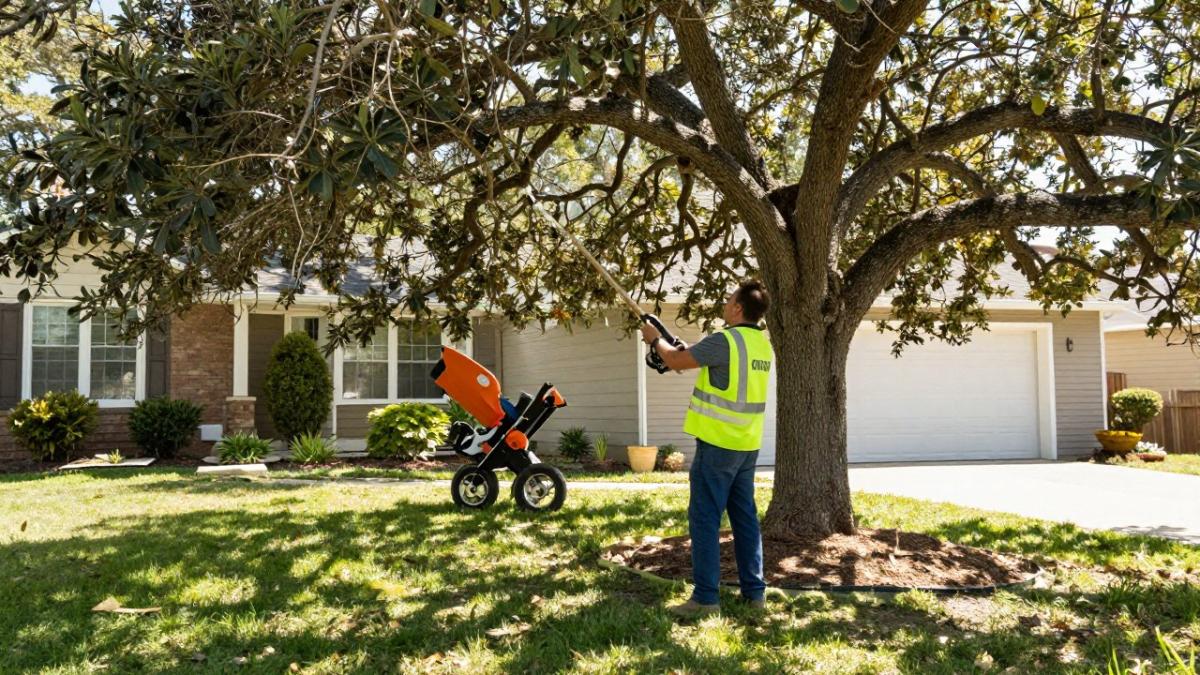
 How-to
How to Use Crown Thinning for Storm Safety
Last Updated: November 9, 2026
Quick Summary
Crown thinning improves storm safety by selectively removing interior branches so wind passes through the canopy instead of catching it, which reduces wind resistance and branch stress. It also removes dead, damaged, and crossing limbs before a storm finds them. Thinning lowers risk but does not erase it, and over-thinning can backfire.
- A thinner canopy lets wind flow through the crown rather than around it, cutting branch stress at attachment points.
- Crews remove dead, diseased, crossing, and crowded limbs, each cut made at the branch collar so the tree can seal the wound.
- In North Miami, inspect trees in late spring before the Atlantic hurricane season peaks from August through October.
- Skip thinning if the tree is already over-pruned, the trunk or roots are compromised, or a storm is days away.
- Topping and lion-tailing are harmful practices that force weak regrowth and should raise a red flag if a crew proposes them.
Table of Contents
- What Crown Thinning Is and How It Works
- 1. Reduced Wind Resistance and the Wind-Sail Effect
- 2. Lower Risk of Storm-Related Branch Failure
- 3. Better Air Circulation and Light Penetration
- 4. Removal of Dead, Damaged, and Crossing Branches
- Storm Damage Prevention for Trees: A Practical Inspection Checklist
- When Crown Thinning May Not Improve Wind Safety
- Safe Pruning Limits, ANSI A300 Standards, and When to Call for Hiring Local Tree Removal Experts
- Frequently Asked Questions
What Crown Thinning Is and How It Works
Crown thinning is the selective removal of interior branches to reduce canopy density without changing the tree's overall shape. For storm safety, that matters: a thinner canopy lets wind pass through instead of catching it. Crown thinning is one part of storm prep, not a cure-all, and the benefits of crown thinning for storm safety depend entirely on how much is removed and when.
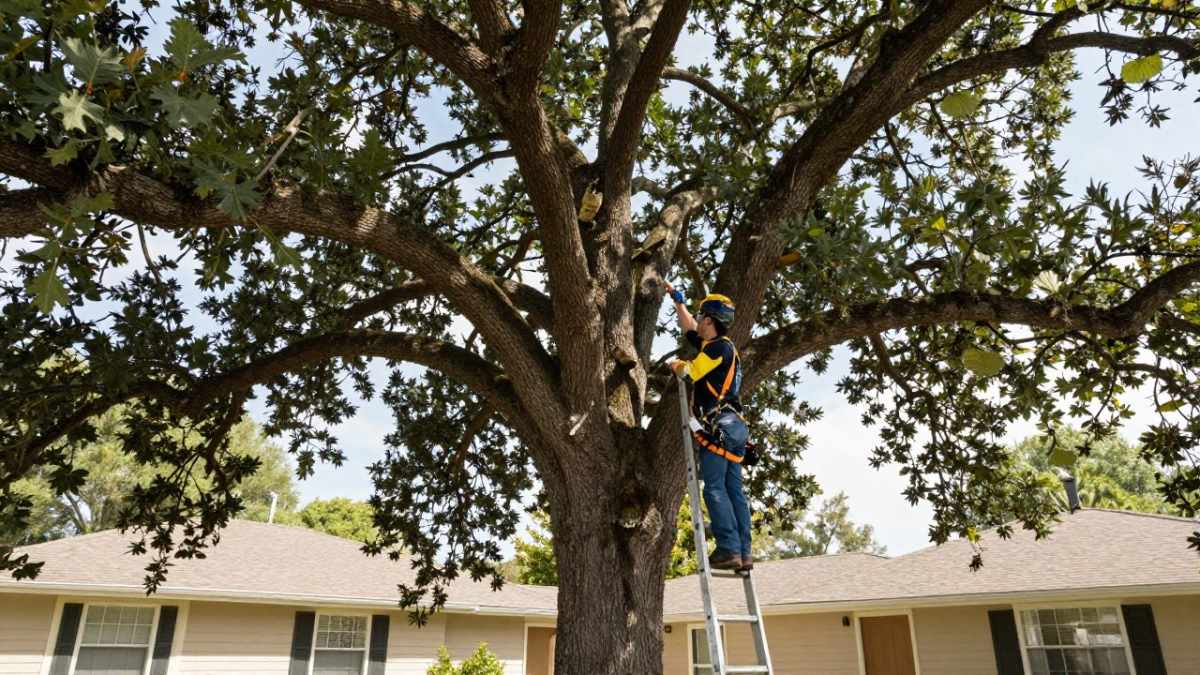
How Selective Branch Removal Changes the Canopy
A crew removes a set share of smaller interior limbs, leaving the main scaffold branches and the outer crown intact. The canopy stays full-looking from the street. What changes is density.
- Canopy density drops, so wind moves through.
- Canopy weight falls, easing stress on limbs.
- The tree keeps its shape, unlike topping or heavy reduction.
Done well, you cannot tell the tree was touched. Done badly, you get a stubby, stressed tree that grows back weaker. That line between the two is where most storm damage prevention goes wrong.
1. Reduced Wind Resistance and the Wind-Sail Effect
The wind-sail effect is what happens when a dense canopy acts like a sail and catches the full force of a gust. Every leaf and limb adds surface area. Strong winds hit that surface, and the load travels down into branches and the trunk.
Thinning shrinks the sail.
- Fewer interior branches mean less surface for wind to push against.
- Wind flow passes through the crown rather than around it.
- Branch stress at the attachment points drops.
Here's the honest part most guides skip: the wind-sail explanation is a useful model, not a guarantee. A thinner canopy helps, but it will not save a tree with a weak root system or a trunk already cracked. Thinning lowers risk, but it does not erase it.
2. Lower Risk of Storm-Related Branch Failure
Branch failure during a storm usually starts with a weak point that was already there. A dead limb. A narrow fork. A limb that grew across another and rubs in the wind.
Crown thinning targets those weak points directly. A crew removes the dead, damaged, and crowded limbs before a storm finds them. That cuts the odds of branch snapping and the structural failure that follows.
The payoff is simple. Fewer loose limbs overhead means fewer limbs on your roof, your car, or your fence. It also means less debris blocking storm drains when the rain comes hard.
3. Better Air Circulation and Light Penetration
A dense canopy traps still, humid air underneath. Dense canopies can trap still, humid air underneath, which can favor fungal growth. Thinning opens the crown so air moves and sunlight reaches the interior.
Opening the canopy can support healthier growth going into storm season, with fewer diseased branches. A healthy tree generally handles wind load better than a stressed one.
If you want the deeper case for opening up the interior, our guide on interior thinning benefits walks through how light and airflow change tree health over a full season.
4. Removal of Dead, Damaged, and Crossing Branches
This is the least glamorous benefit and the most important. Dead branches are the first thing to come down in a storm. They are also the easiest to spot and remove ahead of time.
A proper thinning pass clears out:
- Dead branches with no leaves and brittle bark.
- Diseased or infected branches showing cankers or rot.
- Crossing branches that rub and open wounds.
- Weak, crowded limbs competing for the same space.
Each cut is a pruning cut made at the branch collar, so the tree can seal the wound. Clean cuts heal. Torn stubs rot.
Storm Damage Prevention for Trees: A Practical Inspection Checklist
Storm damage prevention starts with knowing what you have before the first named storm of the season. In North Miami, that means inspecting in late spring, before the Atlantic hurricane season peaks from August through October. Walk your property with this checklist and note what you find:
- Dead branches in the upper canopy
- Limbs hanging over the roof, driveway, or power lines
- Cracks, splits, or seams in the trunk
- Mushrooms, conks, or soft spots at the base
- Branches crossing or rubbing each other
- A canopy so dense you cannot see sky through it
- New lean since the last storm
- Root damage from digging, paving, or construction nearby
- Included bark, a narrow V-shaped fork where two limbs meet
- Cavities or hollows in the trunk or major limbs
A checked box is not automatically a problem, and an unchecked box is not automatically safe. What matters is the pattern. A single dead twig is normal. A dead limb over the roof is a target. A crack in the trunk plus a lean is a tree that needs a professional assessment, not a pruning pass.
Here is how to read the most common findings:
- Dead branches are the first thing to fail in wind. They are also the easiest to remove ahead of time. If more than a few are scattered through the canopy, schedule thinning before storm season.
- Crossing and rubbing branches open wounds that never seal cleanly. Over time those wounds become entry points for decay. Removing the weaker of the two is a standard part of crown thinning.
- Included bark is a structural defect, not a pruning problem. Two limbs that grow together with bark trapped between them form a weak union that can split under load. Thinning around it does not fix the union; it may only change how the tree fails.
- Cracks, cavities, and fungal growth point to internal decay. A thinner canopy will not compensate for a compromised trunk. These trees need an on-site assessment before any cutting.
- A canopy so dense you cannot see sky through it is the classic sign that thinning may help. But density alone is not a reason to cut. Species, age, and structure matter.
Watch out: a tree that looks fine from the ground can have root damage or trunk decay that only shows on a close inspection. If you see mushrooms at the base, a new lean, or a crack that was not there last season, do not wait for a pruning crew, call for an assessment first.
Our companion guide on signs a tree is hazardous explains what each warning sign means and how urgent it is. If you are unsure how to read what you found, book an on-site estimate and we will walk the property with you.
When Crown Thinning May Not Improve Wind Safety
Thinning is not always the right call, and we would rather say so than sell a service you do not need.
Skip or delay thinning when:
- The tree is already over-pruned. Removing more weakens it.
- The trunk or roots are compromised. A thinner crown will not fix a failing base.
- The tree is a species that sprouts aggressively from pruning cuts, which can make the canopy denser within a season.
- A storm is days away. Fresh wounds and new exposure can do more harm than good.
Over-thinning is a real risk. Take too much interior growth and the tree pushes out weak water sprouts that snap easily. Our article on how over-pruning damages trees covers the recovery process and why heavy cuts backfire.
Thinning is not always the right call, so here is when to skip or delay it.
| Situation | Why thinning may not help |
|---|---|
| Tree is already over-pruned | Removing more weakens it |
| Trunk or roots are compromised | A thinner crown will not fix a failing base |
| Species sprouts aggressively from pruning cuts | Canopy can grow denser within a season |
| A storm is days away | Fresh wounds and new exposure can do more harm |
Safe Pruning Limits, ANSI A300 Standards, and When to Call for Hiring Local Tree Removal Experts
The ANSI A300 pruning standards set the industry baseline for how much can safely come off a tree and how cuts should be made.
Industry pruning guidance generally supports conservative pruning, with lighter removal for mature, stressed, or slow-growing trees. Crown thinning is a light-touch operation. It is not a reset button.
Two practices are widely considered harmful and should raise a red flag if a crew proposes them:
- Topping, cutting back large limbs to stubs. Topping forces weak, fast regrowth that attaches poorly and snaps easily in wind. It also opens large wounds the tree cannot seal.
- Lion-tailing, stripping all interior growth from a limb and leaving only a tuft at the end. This shifts weight to the tip, makes the limb whippier in wind, and can cause sunscald on suddenly exposed bark.
Over-thinning is the quieter version of the same mistake. Taking too much interior growth can prompt water sprouts, fast, weakly attached shoots that can grow back denser than the original canopy within a season.
Timing matters as much as the cut. Heavy pruning in the weeks right before a named storm can leave fresh wounds and newly exposed limbs with no time to adjust, and a tree is already under stress at that point.
After pruning, monitor the tree. Check the cuts over the following weeks for splitting, decay, or excessive sprouting.
Some jobs are not DIY. Call a professional when:
- Limbs are near power lines.
- The work requires climbing or a bucket truck.
- The tree is large and mature.
- There is visible decay, a split trunk, or a new lean.
- The tree is a species that sprouts aggressively from pruning cuts.
For homeowners weighing their options, our guide on questions to ask before hiring local tree removal experts covers licensing, insurance, and cleanup expectations.
If you want an honest read on your trees, book an on-site estimate.
Frequently Asked Questions
Is crown thinning the same as tree topping?
No. Crown thinning removes selected branches from throughout the canopy to improve airflow and structure while keeping the tree's natural shape. Topping cuts the main leaders back to stubs, which forces weak regrowth and can make a tree more dangerous in high winds. ANSI A300 pruning standards treat topping as unacceptable practice for mature trees. If a contractor suggests topping as storm preparation, ask for a different approach.
Can crown thinning prevent trees from falling during high winds?
It can lower some risks, but it is not a guarantee. Crown thinning reduces wind load on branches and improves airflow, which cuts the chance of branch failure and wind-sail stress. It cannot fix a compromised root system, trunk decay, or a tree planted in poor soil. A professional inspection should assess the whole tree, not just the canopy, before you count on pruning for storm safety.
Which trees in North Miami are most vulnerable to storm damage?
Fast-growing species with weak wood, shallow roots, or dense canopies tend to fail more often in high winds. Native live oaks are generally stronger but still need inspection for decay and crossing branches. A qualified arborist can evaluate your specific trees and recommend thinning, cabling, or removal where risk is high.
When is the best time of year to thin tree crowns in Florida?
Late winter to early spring, before the rainy and hurricane seasons, is usually best for most species. Pruning then gives wounds time to seal before heavy wind and rain arrive. Avoid heavy thinning during active hurricane season or right after a storm, when trees are stressed. Some species have specific timing needs, so confirm with a local arborist before scheduling work.