 listicle
Hire Local Tree Removal Experts: 7 Questions to Ask First
Table of Contents
- Why Hiring Local Tree Removal Experts Matters
- Questions to Ask Tree Removal Companies Before You Book
- Understanding the Average Cost of Tree Removal
- How to Vet Local Tree Removal Experts: Red Flags and Green Lights
- What to Expect on Tree Removal Day
- Conclusion: Book Your On-Site Estimate
- Frequently Asked Questions
Last Updated: September 6, 2026
A tree removal project is one of the most dangerous jobs you can hire for, yet many homeowners choose a contractor based on a single online review. When a tree threatens your home, the difference between a safe removal and a costly accident comes down to who you hire and the questions you ask before they start.
The stakes are higher than most property owners realize. A falling limb can easily weigh more than a car, and an incorrect cut can send a trunk through your roof. Professional tree removal requires specific training, insurance coverage, and the right equipment. Most guides focus on price before safety credentials, that order is backwards.
Why Hiring Local Tree Removal Experts Matters
Hiring local tree removal experts matters because they understand the specific risks of your region, from storm patterns to soil conditions, and they are accountable to your community. A local operation knows the local regulations and permit requirements, which can prevent fines and legal headaches after the work is done.
Local crews also respond faster when a storm has already caused damage. Emergency tree removal is not a service you want to wait days for, especially when a hazard tree is leaning toward your home. Nearby professionals bring site-specific knowledge, they have likely worked on similar properties and understand how hurricane season stresses the root system of your oldest oak.
Questions to Ask Tree Removal Companies Before You Book
Asking the right questions to tree removal companies is the only way to confirm they can do the job safely. The questions are about proof of insurance, crew training, and the specific plan for your tree. A professional will welcome these questions; a company that hesitates is showing you a red flag.
Start with logistics: Are you bonded and insured? Do you have worker's compensation? Will you obtain the necessary permits? From there, move to the technical side: How will you protect my lawn? What equipment will you use? Will you remove the stump and debris? The answers tell you whether you are hiring a professional operation or a two-man crew with a rented chipper.
Insurance and Liability Verification: A Homeowner's Checklist
Insurance and liability verification is the single most important step in the hiring process, yet it is also the step most homeowners skip. You need proof of both general liability insurance and worker's compensation coverage. General liability protects you if the crew damages your house or a neighbor's car. Worker's compensation protects you if a crew member is injured on your property. Without it, you could be sued for their medical expenses. As noted by the Insurance Information Institute on liability coverage, standard homeowners policies typically do not cover tree removal accidents if the contractor is uninsured.
Here is the verification process that separates a protected homeowner from a vulnerable one:
- Ask for the certificate of insurance (COI) directly from the contractor's insurance agency, not a photocopy from the truck. A legitimate COI will list the agency's contact information. Call that agency to confirm the policy is active. This takes five minutes and eliminates the risk of a forged or expired document.
- Confirm the policy covers the work date. Policies lapse. A COI from last month may not cover the crew that shows up next week. Ask the agency to confirm the policy is in force for your scheduled removal date.
- Verify the policy limits. A minimum general liability policy of $1 million per occurrence is the industry standard for residential tree work (isa-arbor.com). If the limit is lower, or if the contractor cannot explain what the limit means, consider that a red flag.
- Request to be named as an additional insured on the policy. This is a common endorsement that extends coverage to you for the specific project. It means the contractor's insurer will defend you if a claim arises from the work. Not every contractor will agree, but asking signals that you understand the risk.
- Check for exclusions related to tree work. Some general liability policies exclude damage caused by falling trees or limbs. Ask the agency whether the policy specifically covers tree removal operations, not just general landscaping.
Crew Credentials and Equipment
The crew credentials and equipment question determines whether the job is done safely or dangerously. Ask if the crew includes an ISA certified arborist. This certification demonstrates formal training in tree biology, hazard assessment, and safe removal techniques, and can tell you whether your tree actually needs removal or if a targeted trimming will solve the problem.
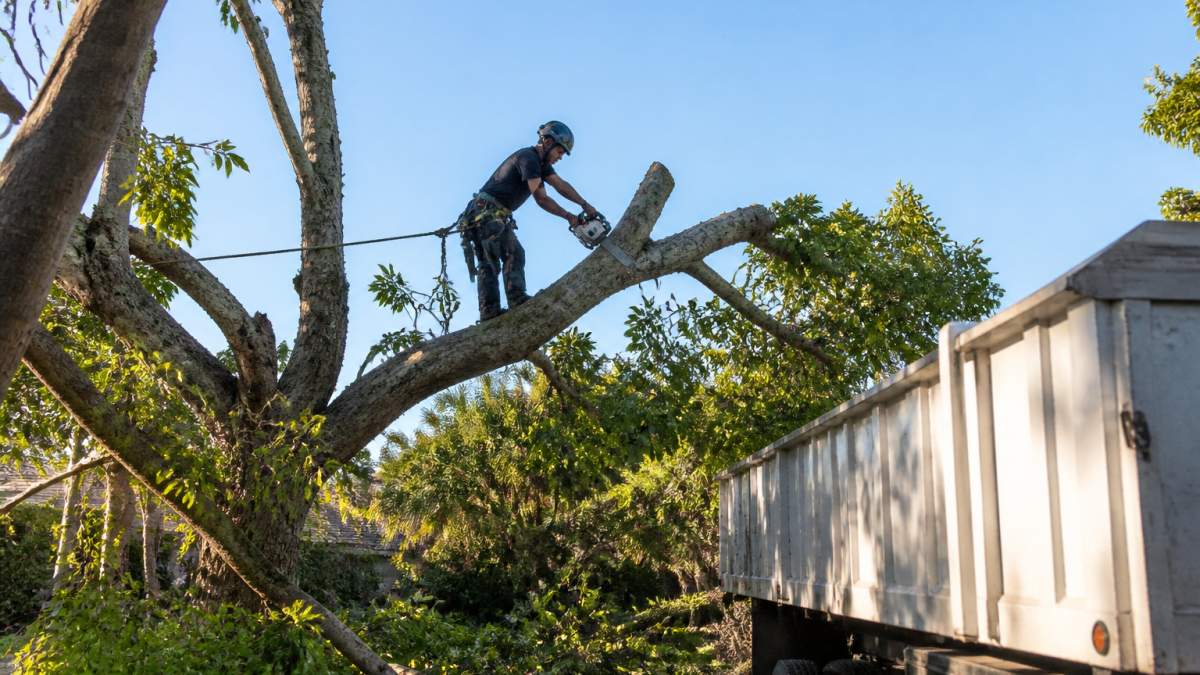
Equipment matters just as much as credentials. Professional crews use a mix of bucket trucks, climbing gear, and rigging ropes to control how each section of the tree falls. If a company only brings a chainsaw and expects to drop the whole tree in one direction, walk away. Ask what equipment they plan to use and why.
Understanding the Average Cost of Tree Removal
The average cost of tree removal varies widely based on the tree's size, location, and condition, so you should never accept a quote without an on-site visit. The cost depends on factors that are invisible in a photo, such as the tree's lean, its proximity to power lines, and the health of its root system.
A low ball estimate is often a warning sign. If one quote comes in dramatically below the others, the company is likely cutting corners on insurance, equipment, or debris removal. The average cost also fluctuates with the season, demand spikes after storms. Scheduling routine removals during the off-season can lead to more competitive quotes.
Factors That Influence Your Final Quote
Several factors influence your final quote. The primary driver is tree size, a small tree under 30 feet is a different job than a mature oak towering over your house. Accessibility is the second major factor. A tree in an open yard is easier to remove than one wedged between your home and a fence, which may require crane-assisted removal.
The tree's health and structure also affect the price. A dead or decaying tree is more dangerous to cut because branches can break unpredictably, increasing the skill required and, consequently, the cost. Finally, cleanup expectations matter. Does the quote include debris removal, wood chipping, and stump grinding? Always ask what is included.
How to Vet Local Tree Removal Experts: Red Flags and Green Lights
Vetting local tree removal experts requires a systematic check of their credentials, their process, and their references. The green lights are clear: they are bonded and insured, they employ ISA certified arborists, they provide a written contract, and they offer references from recent local jobs.
The red flags are equally clear. A company that pressures you to sign immediately, demands cash payment upfront, or cannot produce a certificate of insurance should be eliminated from your list. Poor communication is another warning, if they do not return calls or show up late to the estimate, expect the same behavior on removal day.
| Vetting Checklist | Red Flag | Green Light |
|---|---|---|
| Insurance proof | Refuses to share certificate | Provides current certificate |
| Arborist credentials | No certified staff | ISA certified arborist on crew |
| Site visit | Quote over the phone | On-site assessment required |
| Contract | Verbal agreement only | Written, detailed contract |
| References | Avoids the question | Provides local client list |
What to Expect on Tree Removal Day
On removal day, you should expect a clear safety zone, a systematic cutting process, and a thorough site cleanup before the crew leaves. Before any cutting begins, they will establish a drop zone and cordon off the area to keep people and pets at a safe distance.
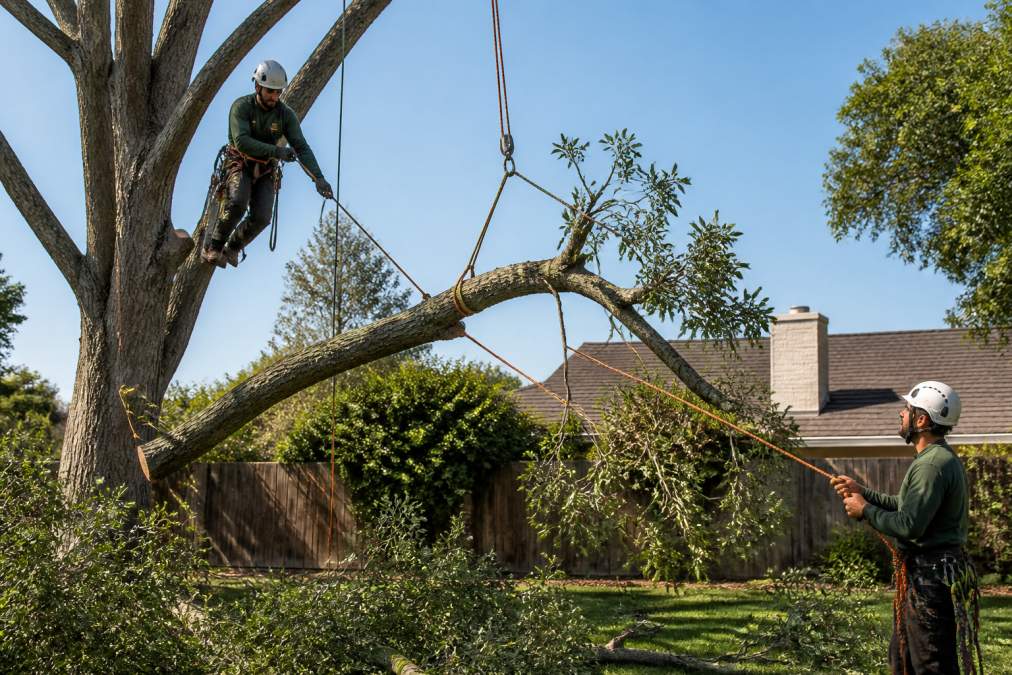
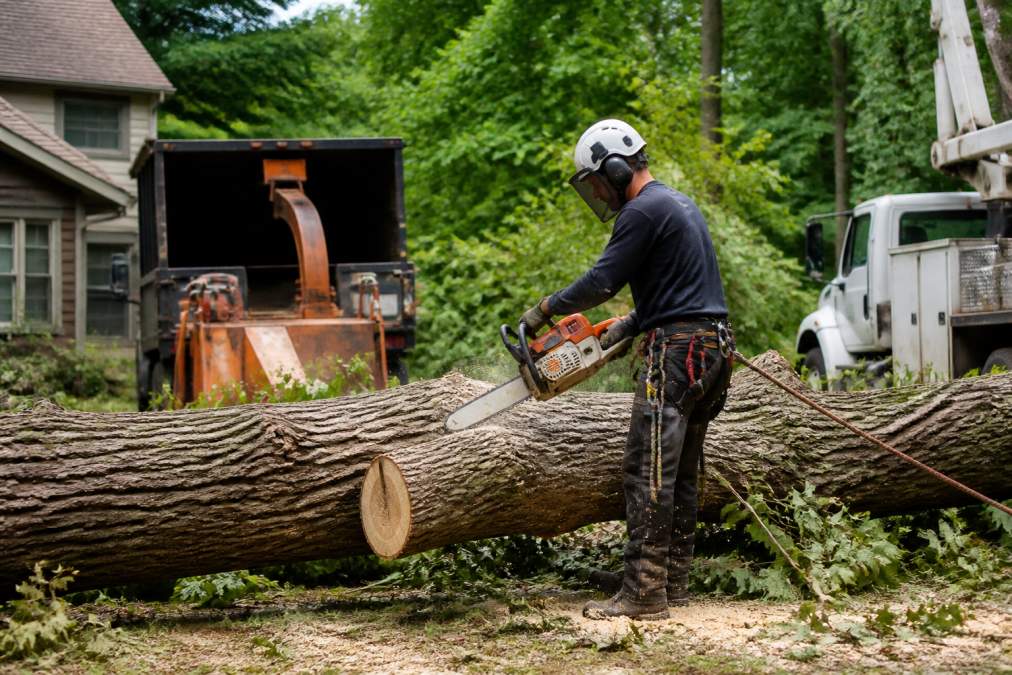
The removal process follows a predictable sequence. The crew typically starts by removing the smaller branches, then cuts the trunk in sections from the top down, lowering each piece with rigging ropes. For trees near structures, they will use a crane to lift heavy sections over your home. Once the trunk is down, the crew grinds the stump below ground level and chips the branches for removal.
After the Stump Is Gone: Restoring Your Landscape
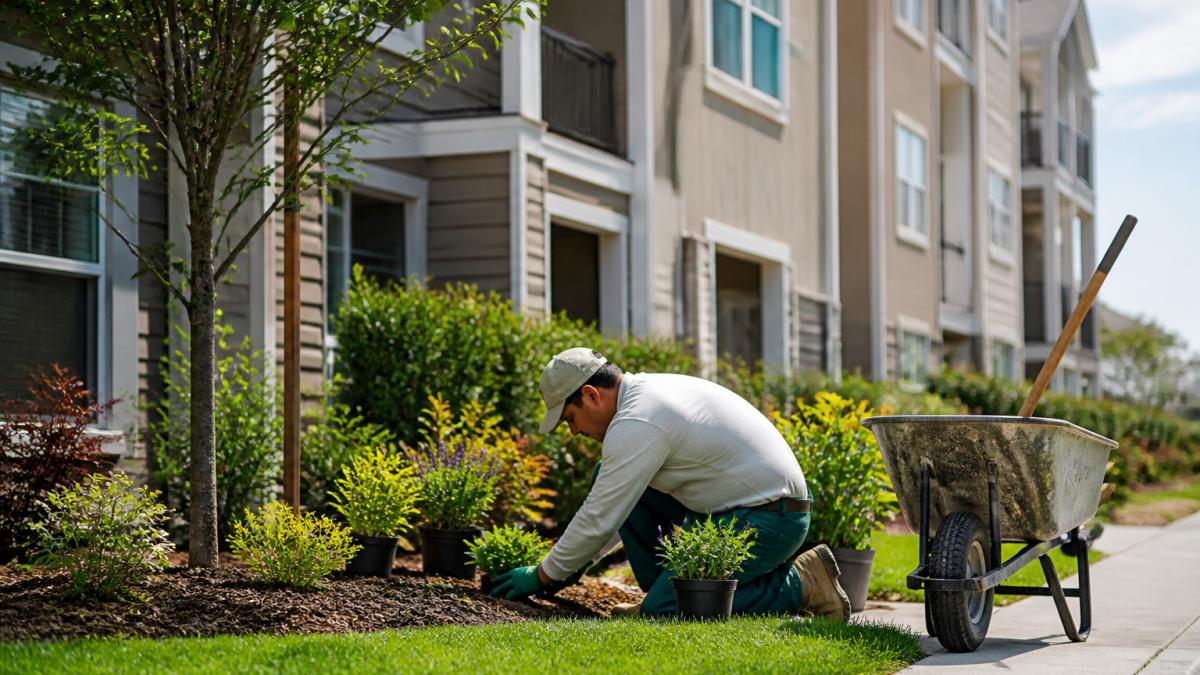
Most guides stop at cleanup, but the job is not finished when the truck pulls away. A tree removal leaves behind a disturbed patch of soil, a stump hole, and often a sudden change in sunlight and drainage patterns.
Assess the soil condition first. Stump grinding leaves sawdust mixed with soil. While sawdust decomposes, it temporarily robs the soil of nitrogen, which can stunt new plantings. A simple fix is to mix a slow-release nitrogen fertilizer into the top few inches of soil before planting. Use topsoil, not pure sawdust, to level any depression, and expect it to settle over the first few months.
Decide whether to replant. If the removed tree was providing shade, your yard's microclimate has changed. Consider what the space needs: a new shade tree, a flower bed, or a hardscape feature like a patio. If you replant a tree, choose a species appropriate for the mature size of the space, a common mistake is planting a fast-growing species too close to the house, recreating the same hazard a decade later.
Check for underground utilities before digging. Whether you are planting or installing a new feature, call 811 before you dig. This free national service will mark underground lines on your property. It is a step that many homeowners skip, but it is essential after tree work has disturbed the soil.
Consider the root system. The roots of the removed tree may extend far beyond the stump. As they decay over the next few years, the soil above them may settle, creating dips in your lawn. Expect to top-dress the area annually for the first two or three seasons.
A professional tree service should be able to advise on these steps or connect you with a landscape contractor. Ask before you book whether they can handle the follow-up work, or whether they can recommend a trusted partner. The goal is not just a removed tree, but a healthy, intentional landscape that adds value to your property.
Conclusion: Book Your On-Site Estimate
Choosing the right tree removal experts is a decision about safety, not just curb appeal. The research you do before booking protects your property and your family. When you ask the questions outlined here, you signal to the company that you are an informed consumer who expects professional standards. As guidance on hiring contractors from the Federal Trade Commission notes, getting multiple written estimates and verifying credentials are the best defenses against costly mistakes.
At P&P Landscaping and Tree Service, we combine over two decades of hands-on experience with a genuine commitment to tailored service. Our team handles everything from routine tree trimming to complex removals, and we back every project with a focus on safety and site cleanup. Book your on-site estimate now and get a clear, honest assessment from a local crew that treats your property like our own.
The challenge is finding a contractor who is both technically skilled and genuinely accountable. The questions in this guide give you a framework for that search, and they are the same standards we hold ourselves to every day. Get started with P&P Landscaping and Tree Service and book your on-site estimate today.
Frequently Asked Questions
What is the average cost of tree removal?
The average cost of tree removal varies significantly based on tree size, location, and complexity. Small trees may cost a few hundred dollars, while large, hard-to-reach trees can run into the thousands. Get at least three written estimates from local experts. The lowest bid isn't always the best value, especially if it cuts corners on insurance or safety. A reputable company will provide a detailed breakdown of costs, so you know exactly what you're paying for.
How do I know if a tree removal company is insured?
Ask for a certificate of insurance directly from the company. This document proves they carry both general liability and worker's compensation coverage. Verify the policy is current by calling the insurance provider listed on the certificate. Never rely on a verbal claim of insurance. If a contractor is uninsured, you could be held liable for property damage or injuries that occur on your land. This is a non-negotiable requirement when you hire local tree removal experts.
Is hiring an ISA certified arborist worth it?
For complex jobs involving large trees, disease, or structural risk, yes. An ISA certified arborist has formal training in tree biology, health assessment, and safe removal techniques. They can tell you whether a tree truly needs removal or if treatment can save it. This expertise prevents unnecessary removal costs and protects your property from future hazards. For simple, straightforward cuts, a well-established local crew may suffice, but certification signals a commitment to industry best practices.
What questions should I ask before hiring a tree removal service?
Start by asking if they are bonded and insured, and request proof. Ask how long they have been in business and whether they employ ISA certified arborists. Inquire about their safety protocols and whether they handle debris removal and stump grinding. Ask for local references and check recent customer reviews. Clarify if the quoted price includes site cleanup, wood chipping, and permits. These questions help you separate professionals from under-equipped operators.
What factors influence the cost of tree removal?
Several factors drive the final price. Tree height, trunk diameter, and canopy spread are primary cost drivers. Location matters too: a tree close to your house or power lines requires more careful, often crane-assisted removal. Accessibility for equipment, the need for permits, and local regulations also affect pricing. Seasonal fluctuations can play a role, with demand often rising after storm damage. Always get a site-specific quote rather than relying on phone estimates.