 how-to
9 Ways Over-Pruning Damages Trees and How to Recover
Last Updated: October 29, 2026
Quick Summary
Over pruning removes so much of a tree's leafy canopy that it cannot make enough food through photosynthesis. The result is weak new growth, sunburned bark, slower healing, and greater risk of insects, disease and root decline. Many over prune trees problems go unnoticed for a season before the decline becomes obvious.
- Leaves make the sugars a tree needs, so removing too many starves the roots.
- A common guideline is to remove no more than about 25 percent of the canopy per season.
- Remove dead, diseased and crossing branches first, cutting just outside the branch collar.
- Never top a tree, since topping leads to weak regrowth and decay.
- Water deeply, mulch 2 to 4 inches out from the trunk, and avoid fertilizing right away.
Table of Contents
- What Over-Pruning Does to a Tree
- Signs of Over-Pruned Trees to Look For
- How Much of a Tree Can You Prune at Once
- Step-by-Step: Pruning Safely to Avoid Damage
- Can a Tree Recover From Bad Pruning
- How to Help an Over-Pruned Tree Recover
- Booking an On-Site Assessment for a Stressed Tree
- Frequently Asked Questions
What Over-Pruning Does to a Tree
Over-pruning happens when too much of a tree's leafy canopy is removed at once, and this is how over prune trees situations usually begin. Leaves are the tree's food factories, so cutting them away starves the roots and weakens the whole plant. Many homeowners do this by accident, usually while trying to keep a tree small or clear a view.
Trees rely on their leaves to make sugars through photosynthesis. When a large share of those leaves disappears, the tree has less energy for growth, defense and healing. A healthy tree can handle some loss. An over-pruned tree often cannot.
Common damage includes:
- Weak new growth that breaks easily in wind
- Sunburned bark on exposed trunk and limbs
- Slower healing around large cuts
- Greater risk of insects and disease
- Roots that stop growing or start to decline
Over time, the tree may look fine for a season and then decline quickly. That delay is why it is so easy to miss when over prune trees problems are developing.
Signs of Over-Pruned Trees to Look For
Watch for these warning signs after a cutting session:
- Bare branches with few or no leaves on the outer canopy
- Sprouts of thin, weak growth along the trunk or big limbs
- Dead or dying tips on branches that were heavily cut
- Dark, cracked or sunken bark near large wounds
- Fungus, mushrooms or oozing at cut sites
- Leaves that are small, pale or dropping early
If several of these show up together, the tree is likely under serious stress. A certified arborist can confirm the problem and recommend next steps.
How Much of a Tree Can You Prune at Once
A common guideline is to remove no more than about 25 percent of a tree's canopy in a single season. The goal is to shape the tree, not reduce its ability to feed itself.
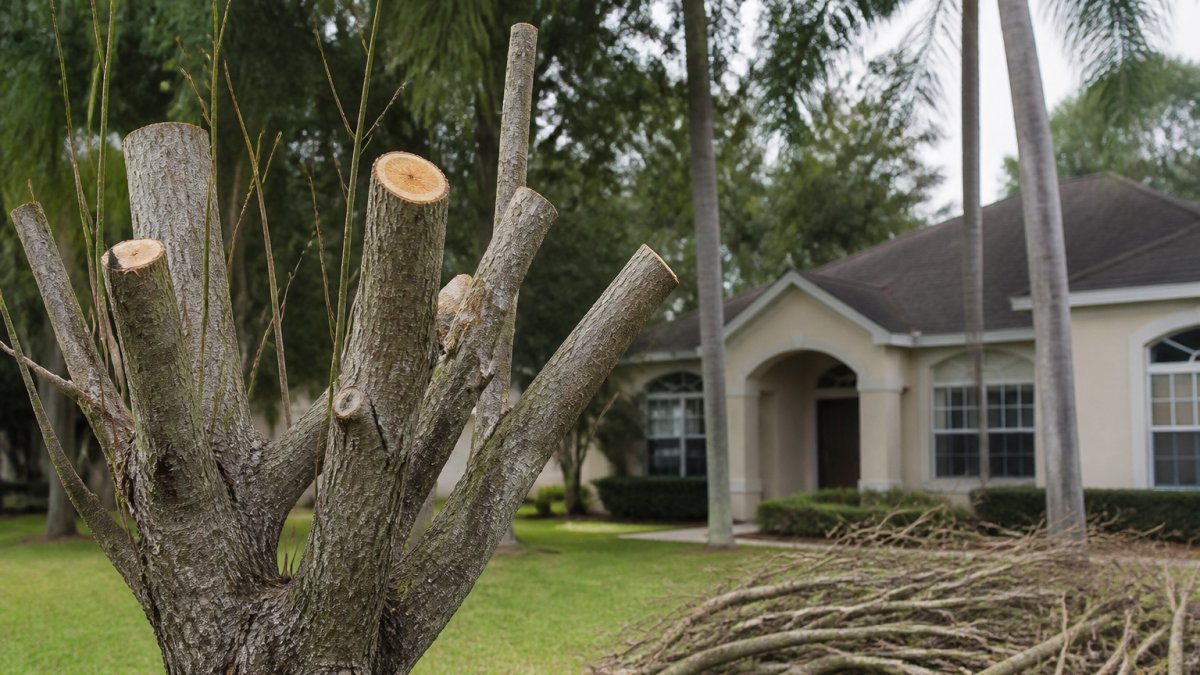
Heavy cutting like topping is among the most damaging practices. Topping removes the main crown and leaves stubs that sprout weak shoots.
Step-by-Step: Pruning Safely to Avoid Damage
Follow these steps to prune without harming the tree.
Step 1: Assess the Tree Before You Cut
Walk around the tree and look at its shape, health and structure. Decide what you actually need to accomplish. Most pruning goals, like clearing a roof line or improving airflow, can be met with light, targeted cuts.
- Note any dead, broken or diseased wood
- Check for branches rubbing against each other
- Estimate how much canopy each cut will remove
Step 2: Remove Dead, Diseased and Crossing Branches First
Start with the wood that does the most harm. Dead branches, diseased limbs and crossing branches should come out before anything else. These cuts remove risk without stressing healthy growth.
Cut just outside the branch collar, the slightly swollen ring where the branch meets the trunk. Do not leave long stubs, and do not cut flush against the trunk.
Step 3: Thin Selectively and Avoid Topping
Thinning means removing a few whole branches back to their origin. It opens up the canopy while keeping the tree's natural shape. Take small amounts from each area rather than heavy cuts in one place.
Never top a tree. Topping may seem like a quick fix, but it leads to weak regrowth and decay. Once you cut the main leaders, the tree rarely recovers its natural form.
The article's pruning steps can be scanned at a glance in the table below.
| Step | What to do | Timing or limit |
|---|---|---|
| Step 1: Assess the tree | Check shape, health and structure before cutting | Estimate canopy removed per cut |
| Step 2: Remove dead, diseased and crossing branches | Cut just outside the branch collar | Do these first |
| Step 3: Thin selectively | Remove whole branches back to origin, in small amounts | Spread cuts across areas |
| Step 3: Avoid topping | Never cut the main crown or leaders | Topping leads to weak regrowth |
| Canopy removal guideline | Limit removal to a share of the canopy | About 25 percent per season |
Can a Tree Recover From Bad Pruning
In many cases, yes, but recovery depends on how much damage was done and how healthy the tree was beforehand. Young, vigorous trees usually bounce back faster than old or already stressed ones. Trees that lost most of their canopy may take a full growing season or longer to refill.
Some damage is permanent. Large wounds can leave lasting scars, and topped trees often never regain a stable structure. Recovery is possible, but it is not guaranteed.
How to Help an Over-Pruned Tree Recover
Give the tree the best chance to heal with these steps:
- Water deeply during dry spells, soaking the root zone rather than just the surface
- Mulch a 2 to 4 inch layer over the root area, keeping it a few inches away from the trunk
- Avoid fertilizing right away, since fast growth can add more stress
- Leave the leaves that do grow, because they are the tree's food source
- Hold off on more cutting until the tree shows steady new growth
A landscaper in work gloves inspecting the leafy new growth on a young shade tree is a good visual reminder that recovery takes patience.
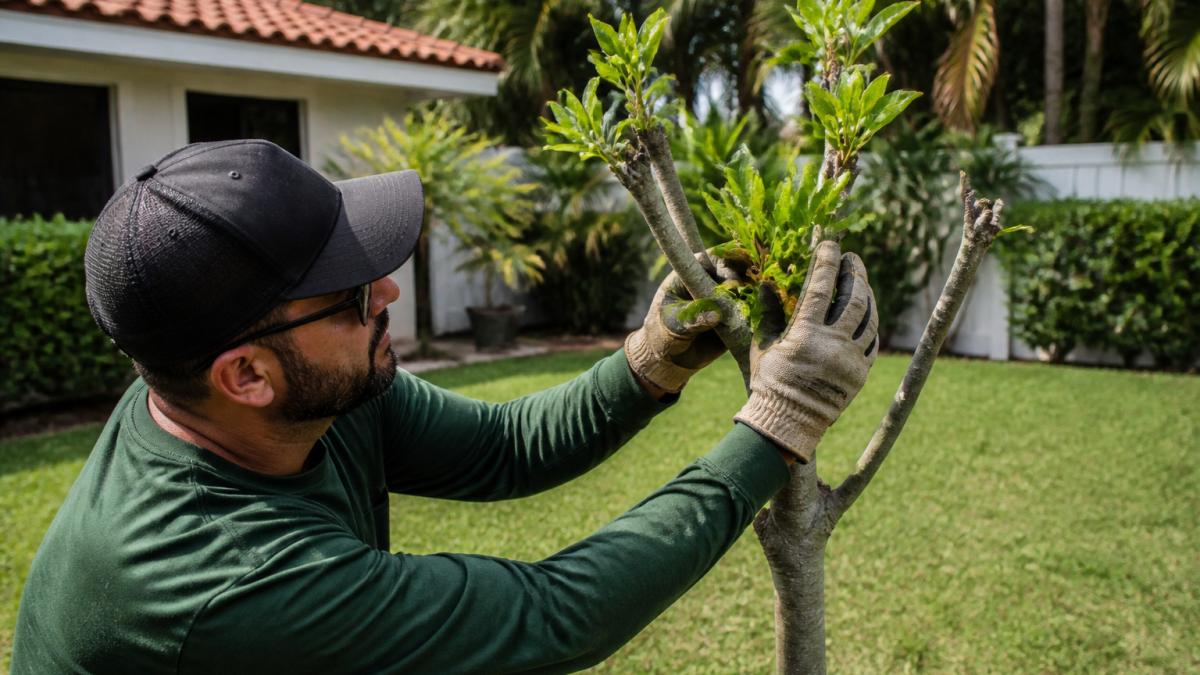
Watch the tree through the next growing season. Healthy new leaves and firm branch tips are good signs. Continued dieback means it may be time for a professional evaluation.
Booking an On-Site Assessment for a Stressed Tree
If your tree shows several warning signs, a professional on-site assessment is the safest next step. A professional assessment can look at the canopy, trunk and root zone, then explain what is happening and what to do.
To set up your on-site estimate, contact P&P Landscaping and Tree Service today. Pricing depends on the size, condition and location of your trees. For current pricing, visit the P&P Landscaping and Tree Service website or request a quote.
Frequently Asked Questions
What happens when a tree is over-pruned?
When too much of the canopy is removed, a tree loses the leaves it needs to make food through photosynthesis. Its stored energy drops, so it grows slowly and can become more vulnerable to pests, disease and wind damage. Heavy cuts can also create large wounds that take a long time to close. In South Florida's heat and humidity, a stressed tree may decline over several seasons, so the damage is not always visible right away. Working with a certified arborist helps you spot problems early and plan a recovery.
Can an over-pruned tree recover?
Many trees can recover from moderate over-pruning if the root system is healthy and the tree still has enough live foliage. Recovery depends on the species, the age of the tree and how much was removed. Young, vigorous trees often rebound faster than mature trees. Trees that have been topped or stripped of most of their leaves may never regain their original shape and may need to be removed if they become unstable. An arborist can judge whether your tree is likely to recover.
How much of a tree can you prune at once?
A common guideline is to remove no more than about 25 percent of a tree's live canopy in a single season. Removing more at one time forces the tree to draw on stored energy it needs for survival. Pruning should be spread across multiple seasons when a tree needs significant work. Dead, diseased or hazardous branches can be removed as needed, since they do not contribute to the tree's energy production. Exact limits vary by species, so consult a certified arborist for your specific tree.
How can you tell if a tree has been over-pruned?
Look for large pruning cuts made in the wrong places, flat-topped crowns, and clusters of weak, fast-growing sprouts emerging from the cut ends. Thinning foliage, sparse canopy, bark sunscald on previously shaded limbs and decay around wounds are also warning signs. If you see these symptoms in a tree on your Miami-Dade or Broward property, a professional assessment can confirm the cause and recommend next steps.