 how-to
Signs a Tree Is Hazardous: 7 Warnings to Check
Table of Contents
- Signs a Tree Is Hazardous: What Homeowners Should Look For
- Trunk and Bark Warning Signs
- Root and Soil Red Flags
- Canopy and Branch Clues That Signal Danger
- Leaning Trees and Storm Damage: When to Act
- Tree Removal Permit North Miami: What You Need to Know
- Hiring Local Tree Removal Experts: What to Look For
- When to Call a Professional Arborist
- Frequently Asked Questions
Last Updated: October 4, 2026
Signs a Tree Is Hazardous: What Homeowners Should Look For
A hazardous tree is a tree with a structural defect that could cause it to fall or drop limbs and damage property or hurt someone. Knowing the signs a tree is hazardous matters most in South Florida, where hurricane season can turn a weak tree into a dangerous one overnight. At P&P Landscaping and Tree Service, we have spent over two decades helping homeowners in North Miami and across Miami-Dade and Broward County spot these problems.
Below, we break down the seven warning signs that matter most, plus what to do when you find one.
Why Hazardous Trees Matter in South Florida
South Florida's climate works against weak trees. Heavy rain softens the soil, and strong storm winds push against every branch and trunk. A tree that looks fine in dry weather can fail fast once the ground is soaked and the wind picks up.
The stakes are real:
- A falling limb can crush a roof, car, or fence.
- A leaning trunk can drop onto power lines.
- A dead tree near a driveway or walkway puts people at risk every day.
Most hazards do not appear overnight. They build slowly, which is why regular checks matter. The good news is that most warning signs are visible if you know where to look.
Trunk and Bark Warning Signs
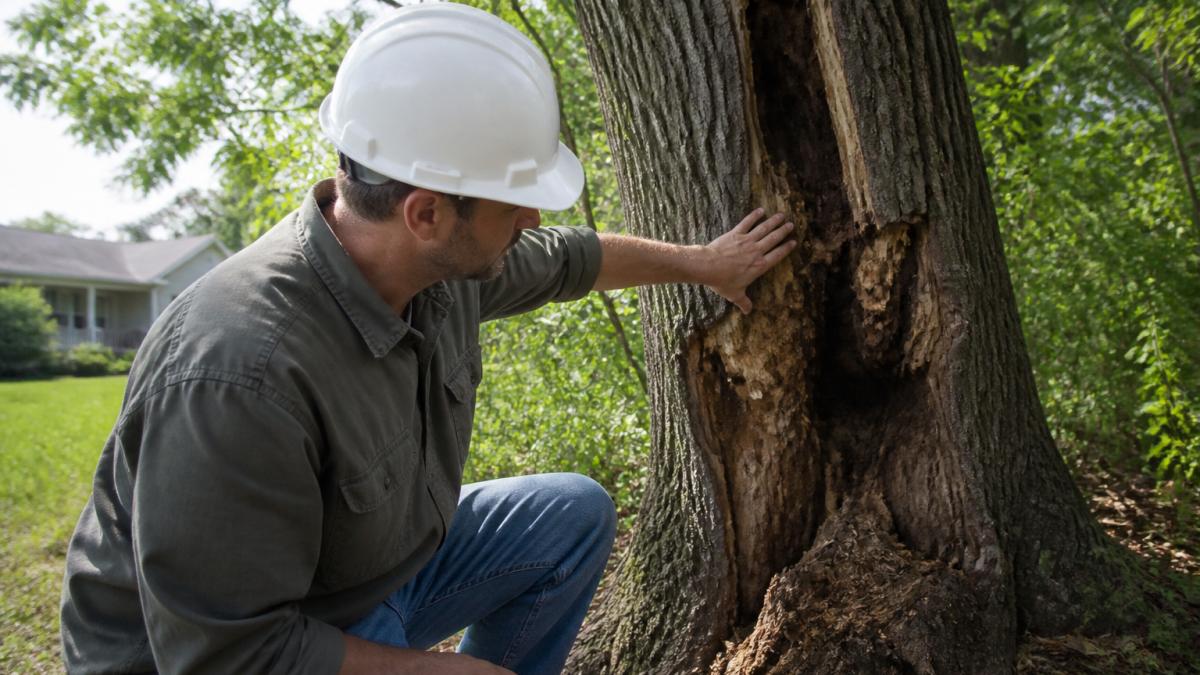
The trunk is the tree's backbone, so problems here are serious. A healthy trunk should feel solid and look whole. Warning signs include:
- Large vertical cracks running down the trunk
- Deep holes or hollow spots you can see or tap into
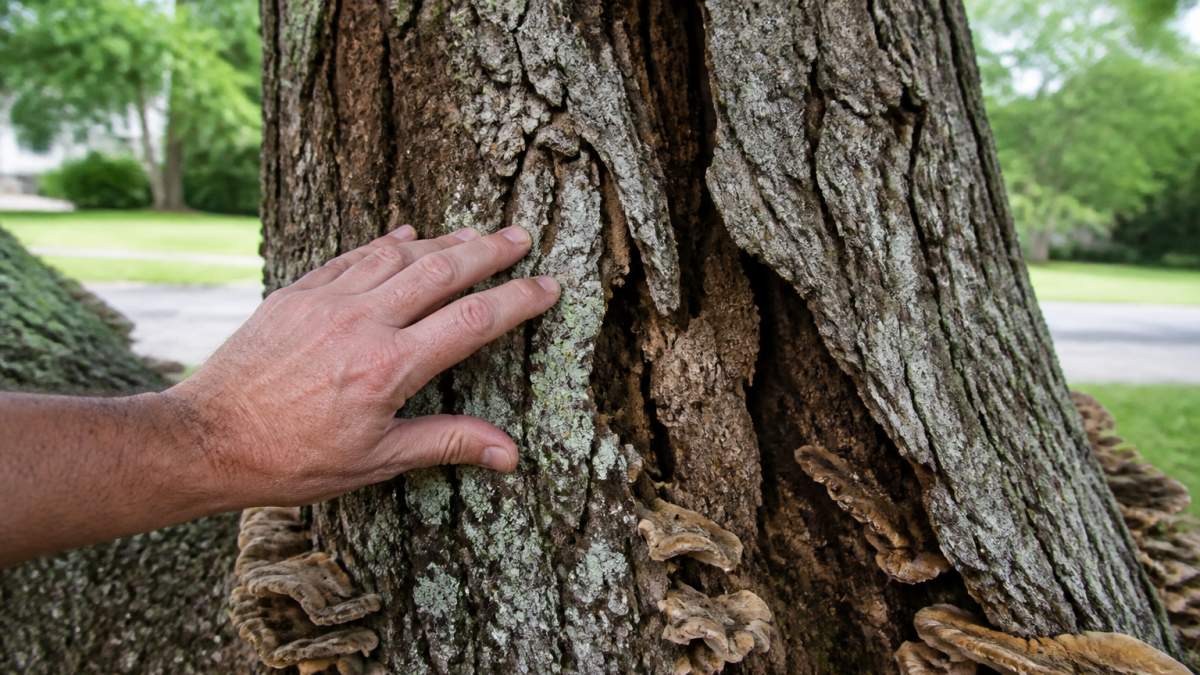
- Fungal growth like mushrooms at the base or on the bark
- Peeling or loose bark in wide patches
- Sawdust-like dust around small holes, a sign of insects
Fungal growth is one of the clearest red flags. Mushrooms near the base often mean the wood inside is rotting. By the time you see them, the damage is usually advanced.
Root and Soil Red Flags
Roots hold a tree upright, and when they fail, the whole tree can go down. You cannot see most roots, but the ground around the tree tells you a lot. Watch for:
- Mushrooms or soft spots in the soil near the base
- Cracked or raised soil around the trunk
- Exposed roots that look broken or decayed
- Sunken ground on one side of the tree
Construction, paving, and digging can cut roots without anyone noticing. A tree that lost roots years ago may still look healthy until the first big storm.
Canopy and Branch Clues That Signal Danger
The top of the tree shows problems you cannot see lower down. A healthy canopy is full and even. Danger signs include:
- Dead branches with no leaves in the growing season
- Branches that hang low or cross each other
- Cracks where a branch meets the trunk
- Hollow or soft spots on large limbs
- Sudden heavy leaf drop outside normal seasons
A "widow-maker" is a dead branch still stuck in the tree. It can fall without warning on a calm day. If you see one hanging over a roof, driveway, or walkway, treat it as urgent.
Leaning Trees and Storm Damage: When to Act
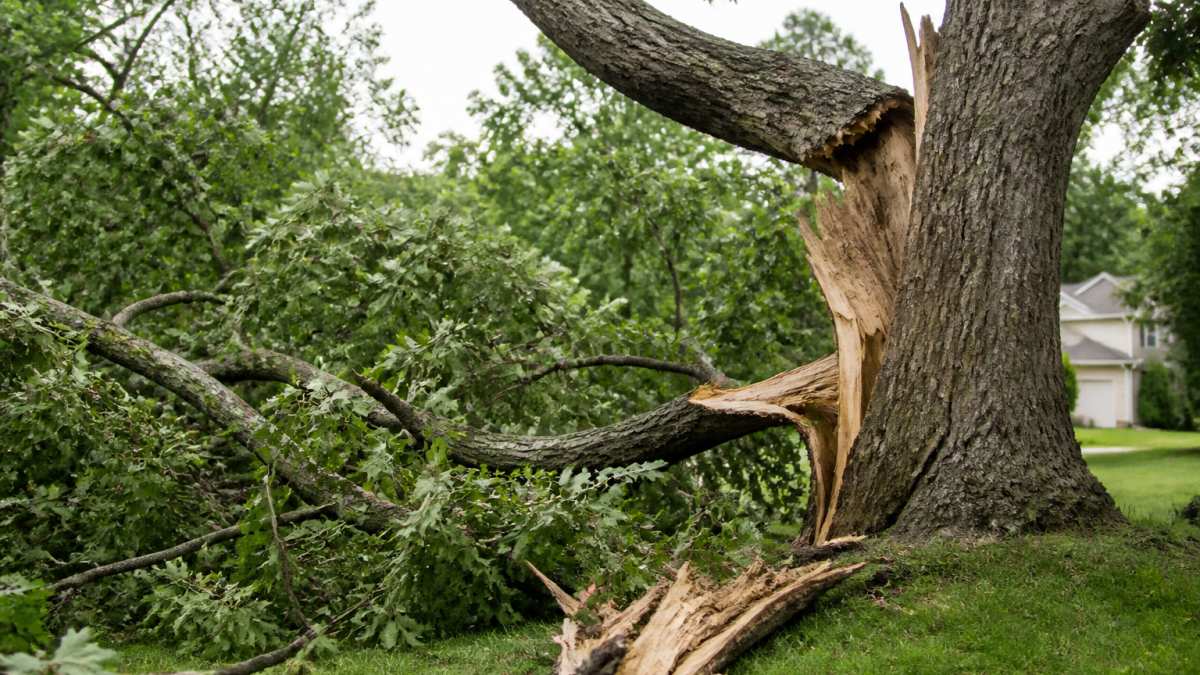
A tree that leans suddenly is a bigger problem than one that has leaned for years. New leans often mean the roots are failing. After a storm, check for:
- A new tilt in the trunk
- Uprooted soil or a lifted root plate
- Split trunks or torn branches
- Bark stripped from the trunk
If a tree leans toward your house, a driveway, or power lines, do not wait. Call a professional the same day.
Tree Removal Permit North Miami: What You Need to Know
Many trees cannot be removed without a permit, even when they are hazardous. In North Miami and across Miami-Dade County, tree removal rules protect the local canopy, so cutting first and asking later can lead to fines.
Here is what to do:
- Check with the city or county before any removal.
- Ask whether your tree is protected by size or species.
- Get the permit in writing before work starts.
Rules vary by city and by tree. Some hazardous trees qualify for emergency removal, but you still need to document the danger. A licensed tree service can handle the paperwork and tell you what your property needs. For current rules and forms, check the Miami-Dade County tree removal regulations and your city's code office.
Hiring Local Tree Removal Experts: What to Look For
Hiring local tree removal experts saves time and prevents costly mistakes. Tree work is dangerous, and the wrong crew can damage your home, your neighbor's property, or themselves. Use this checklist before you hire:
- Ask for proof of insurance and a license
- Request references from jobs in your area
- Get a written estimate with the scope of work
- Confirm they handle permits and debris cleanup
- Check for emergency availability during storm season
A good crew cleans up fully and leaves your yard safe. If a quote seems too low, ask what it leaves out. Cheap tree work often skips insurance, permits, or cleanup, and you pay for it later.
| What to Check | Why It Matters | What to Ask |
|---|---|---|
| Insurance and license | Protects you from liability | "Can I see your certificate?" |
| Local references | Shows real work nearby | "Can I see photos of jobs?" |
| Written estimate | Prevents surprise costs | "What is included?" |
| Permit handling | Avoids fines | "Do you file the permit?" |
| Cleanup included | Keeps your yard safe | "Is debris haul-away included?" |
At P&P Landscaping and Tree Service, we are a family-owned team with over two decades of experience in tree care and landscaping. We handle the permit process, remove hazardous trees safely, and clean up when we are done. If you are searching for tree removal near me in North Miami, we offer on-site estimates.
When to Call a Professional Arborist
Call a professional arborist when you spot two or more warning signs, when a tree leans toward a structure, or when you are unsure. Some problems, like internal rot or root decay, need a trained eye to confirm.
Do not try to remove a large or leaning tree yourself. The risks are too high, and the equipment needed is not something most homeowners have.
For guidance on tree risk, you can review the ISA tree risk assessment resources from the International Society of Arboriculture. A certified arborist can tell you whether a tree can be saved with pruning or needs full removal.
Hazardous trees rarely fix themselves, and waiting only raises the risk to your home and family. If you have spotted cracks, fungal growth, a new lean, or dead branches, get a professional opinion before the next storm. P&P Landscaping and Tree Service brings over two decades of experience, family-owned care, and full-service tree removal and landscaping to homeowners and businesses across North Miami, Miami-Dade, and Broward County. We handle permits, safe removal, and complete cleanup from start to finish. Book an on-site estimate with P&P Landscaping and Tree Service and protect your property today.
Frequently Asked Questions
What are the most common signs of a dying tree?
The most common signs include dead branches that snap easily, a hollow or soft trunk, mushrooms growing at the base, and bark that falls off in large chunks. You may also notice premature leaf drop or yellowing outside of normal seasonal changes. In South Florida, large dead limbs hanging over roofs are a serious red flag, especially before hurricane season.
Can a leaning tree be saved or should it be removed?
A tree that has leaned suddenly is a hazard and should be inspected immediately. A tree with a natural lean that developed over years may be stable if the root plate is intact and the soil is firm. A certified arborist can check for root damage or soil cracking. If the lean is new or the ground around the base is lifting, removal is usually the safer option.
What are the tree removal permit requirements in North Miami?
North Miami requires a permit before removing most trees, especially protected species like oaks and palms. You typically need to submit a tree removal application with photos and a site plan. Some trees are exempt if they are dead, dying, or pose an immediate hazard, but you must still document the condition. Always confirm current rules with the city before any work begins.
How does hurricane season affect tree safety in South Florida?
Hurricane season runs from June through November and brings high winds that can turn weak trees into dangerous projectiles. Trees with included bark, co-dominant stems, or root rot are most likely to fail. Before the season starts, have a professional inspect large trees near your home. Removing hazardous limbs early can prevent damage and costly emergency calls after a storm.