 how-to
Improving Soil Quality for Tropical Plants: A How-To Guide
Table of Contents
- How to Test Soil pH in South Florida
- Florida-Friendly Landscaping Soil Amendments
- Managing Sandy Soil Drainage
- Frequently Asked Questions
Last Updated: September 17, 2026
How to Test Soil pH in South Florida
Testing soil pH in South Florida starts with a home kit or probe meter, because sandy, limestone-heavy ground swings alkaline fast. Improving soil quality for tropical plants begins with knowing your number.
Take samples from four to six spots about 15 centimeters deep, mix them in a clean bucket, and test. Most tropical plants prefer roughly 6.0 to 7.0; above 7.5 usually means limestone. Retest every six months, since heavy rain and irrigation shift pH. For lab analysis, the University of Florida IFAS soil testing services works through county extension offices.
Florida-Friendly Landscaping Soil Amendments
Florida-friendly landscaping soil amendments are worked into existing ground to fix structure, pH, and nutrient holding capacity, since sandy soil drains fast and holds little.
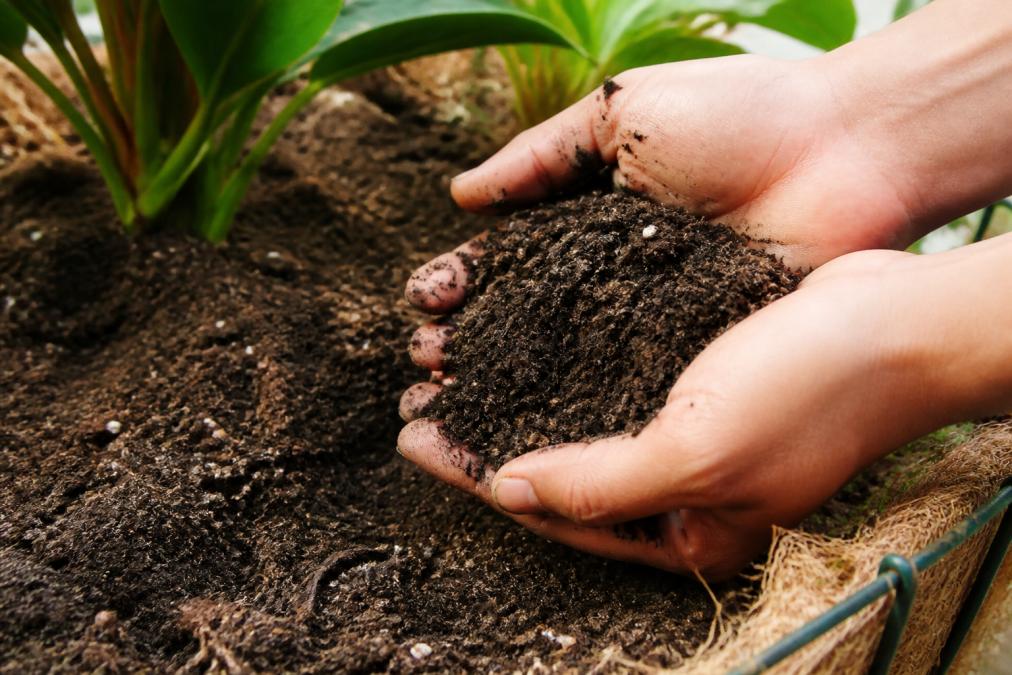
Compost is the workhorse: spread a 5 to 8 centimeter layer and work it into the top 15 to 20 centimeters. Aged manure, peat moss, and coconut coir also help sandy ground hold moisture and nutrients. For alkaline soil, elemental sulfur lowers pH slowly, so apply small amounts and retest. UF/IFAS Florida-Friendly Landscaping program recommends building organic matter first, then adjusting pH.
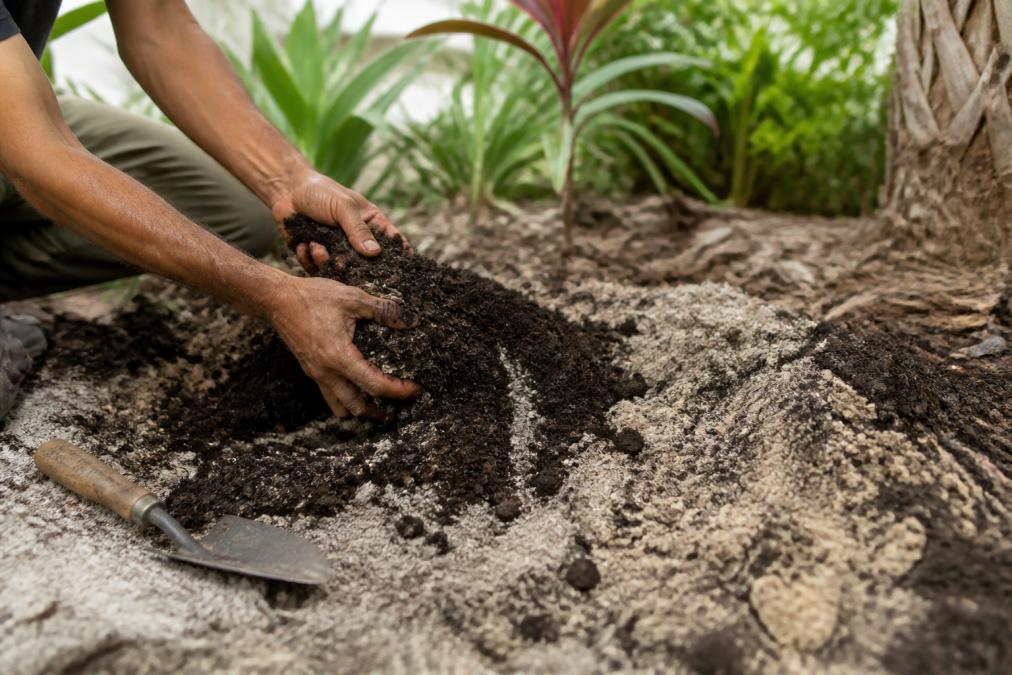
Mulch matters too: a 5 to 8 centimeter layer of pine bark or melaleuca keeps moisture in, suppresses weeds, and breaks down into the soil.
Managing Sandy Soil Drainage
Managing sandy soil drainage means slowing water long enough for roots to drink, because pure South Florida sand pushes water past the root zone. If beds dry out a day after watering, drainage is the problem.
Mix in organic matter, since compost holds water in pore spaces sand lacks. Build slight berms or raised beds so roots sit above the summer water table, and on slopes add a swale or stone line to redirect runoff. Near the coast, choose salt-tolerant tropicals and rinse beds after storms.
If your yard has always struggled, the fix is usually the soil, not the plants. P&P Landscaping and Tree Service brings over two decades of experience to transforming outdoor spaces. Book an on-site estimate and we'll test your ground before we touch a single plant.
Improving soil quality for tropical plants comes down to three moves: test your pH, amend with organic matter, and manage how water moves through sand. P&P Landscaping and Tree Service brings over two decades of local experience, tailored soil and planting plans, and full-service landscape and tree care. Get started with P&P Landscaping and Tree Service and give your tropical landscape ground worth growing in.
Frequently Asked Questions
How do I improve sandy soil for tropical plants in Florida?
Start by testing your soil pH, then work 2 to 3 inches of compost or aged manure into the top 6 inches of sand. This adds water-holding capacity and nutrients that sandy soil lacks. Reapply organic matter each growing season, and top with mulch to slow nutrient leaching. Improving soil quality for tropical plants in South Florida is an ongoing process, not a one-time fix.
Can I use compost to improve soil drainage in tropical landscapes?
Yes. Compost helps sandy soil hold moisture while still letting excess water drain, which is critical during South Florida's rainy season. It also feeds beneficial microbes that break down organic material. Mix it into the top layer of soil rather than dumping it on the surface, and avoid overwatering newly amended beds until plants establish roots.
What are the signs of poor soil quality in tropical plants?
Yellowing leaves, stunted growth, and wilting despite regular watering often point to nutrient-poor or poorly draining soil. In sandy South Florida soil, water and nutrients leach away quickly, leaving plants stressed. A simple pH test and a look at how fast water drains after rain will tell you whether amendments are needed before you add fertilizer.