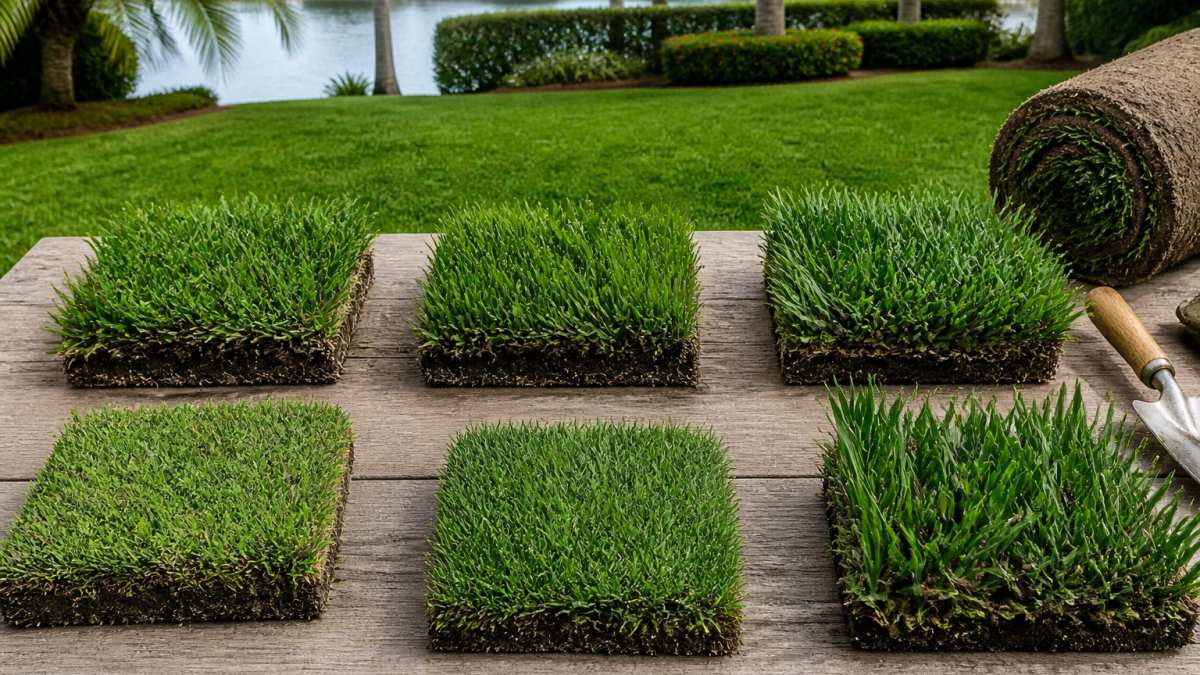
 listicle
5 Best Grass Types for South Florida Lawns
Table of Contents
- Why Grass Type Matters in South Florida Lawns
- The 5 Best Grass Types for South Florida Lawns Compared
- 1. St. Augustine Grass South Florida: Best for Shade and Coastal Yards
- 2. Bermuda Grass South Florida: Best for Full-Sun Lawns
- 3. Zoysia Grass: A Dense Option for Mixed Light
- 4. Bahia Grass: Drought-Tolerant Varieties for Sandy Soil
- 5. Seashore Paspalum: Salt-Tolerant Grass for Florida Lawns Near the Coast
- Best Grass for Shade in Florida: What to Plant Under Trees
- Frequently Asked Questions
Last Updated: October 8, 2026
Why Grass Type Matters in South Florida Lawns
Choosing the right grass for south Florida lawns is not a cosmetic decision. It determines how much water, fertilizer, and mowing your yard demands every month of the year. P&P Landscaping and Tree Service has over two decades of experience, and we can tell you plainly: most lawn failures we see start with the wrong grass for the light and soil conditions, not with bad care.
South Florida sits in USDA growing zones 10 and 11, where heat, humidity, and sandy soil push warm-season grasses to their limits. A grass that thrives in full sun will thin out under a live oak. A grass built for clay will struggle in our sandy yards. Get the match right and maintenance gets easier. Get it wrong and you will replant within two years.
Below, we compare the five best grass types for South Florida lawns, with pros, cons, and watering needs for each. We also cover what to plant in the shade, since that is the question we hear most often on estimates in North Miami and the surrounding areas.
The 5 Best Grass Types for South Florida Lawns Compared
Each grass below earns its place for a different reason: shade tolerance, sun tolerance, drought survival, or salt resistance. None of them wins everywhere, which is why the comparison table matters more than any single recommendation.
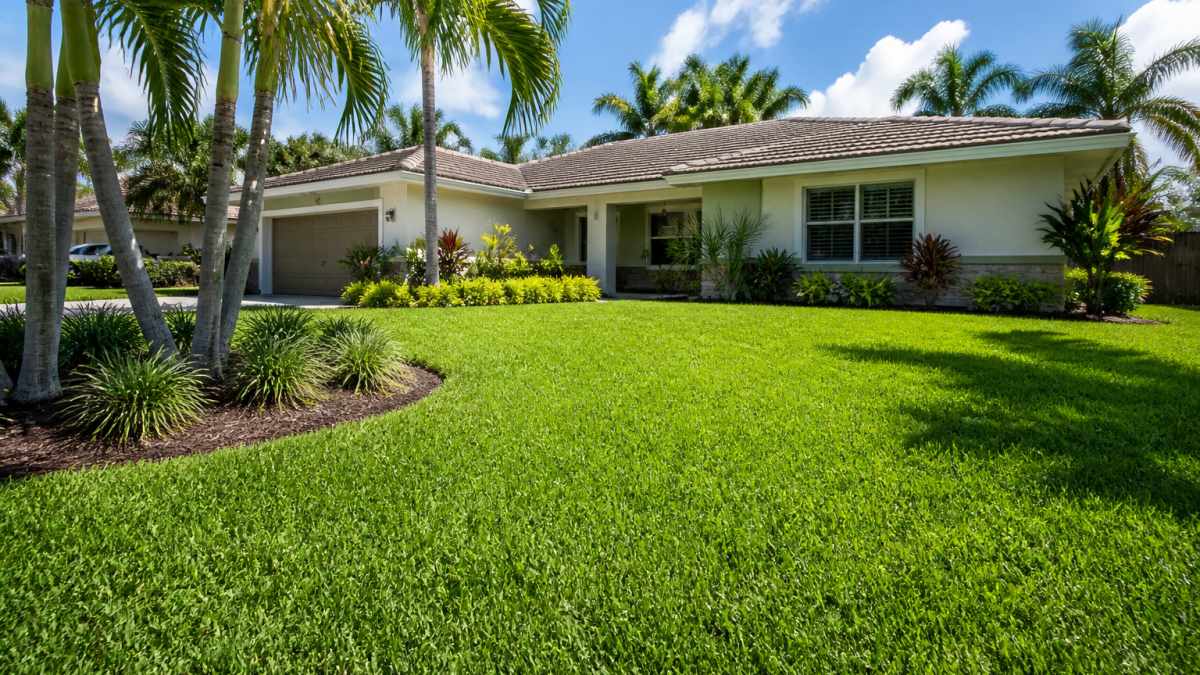
If you want the short version: St. Augustine for shade and coastal yards, Bermuda for full sun, Zoysia for mixed light, Bahia for sandy drought-prone lots, and Seashore Paspalum for salt exposure. The table below summarizes the trade-offs.
Quick Comparison Table
| Grass Type | Light Needs | Drought Tolerance | Salt Tolerance | Best For |
|---|---|---|---|---|
| St. Augustine | Shade to sun | Moderate | Good | Shaded, coastal yards |
| Bermuda | Full sun | High | Low | Open, sunny lawns |
| Zoysia | Mixed light | Moderate | Moderate | Dense, tidy turf |
| Bahia | Full sun | High | Moderate | Sandy, dry soil |
| Seashore Paspalum | Full sun | High | High | Yards near salt water |
1. St. Augustine Grass South Florida: Best for Shade and Coastal Yards
St. Augustine grass South Florida homeowners plant most often is the go-to for yards with partial shade. TruGreen lists it among South Florida options for partial shade, and it appears in Florida grass guides from LawnStarter and Lawn Love. In our experience, it handles the dappled light under palms and oaks better than Bermuda or Bahia.
Palmetto, a named St. Augustine-type selection, shows up in nursery discussions for sandy and dry Florida soil. It is worth asking about if your yard drains fast.
Pros and Cons
Pros:
- Tolerates partial shade better than most warm-season grasses
- Thick blades crowd out many weeds
- Widely available as sod across South Florida
Cons:
- Needs more water than Bermuda or Bahia in full sun
- Prone to chinch bug damage in stressed lawns
- Does not recover quickly from heavy foot traffic
Watering and Maintenance
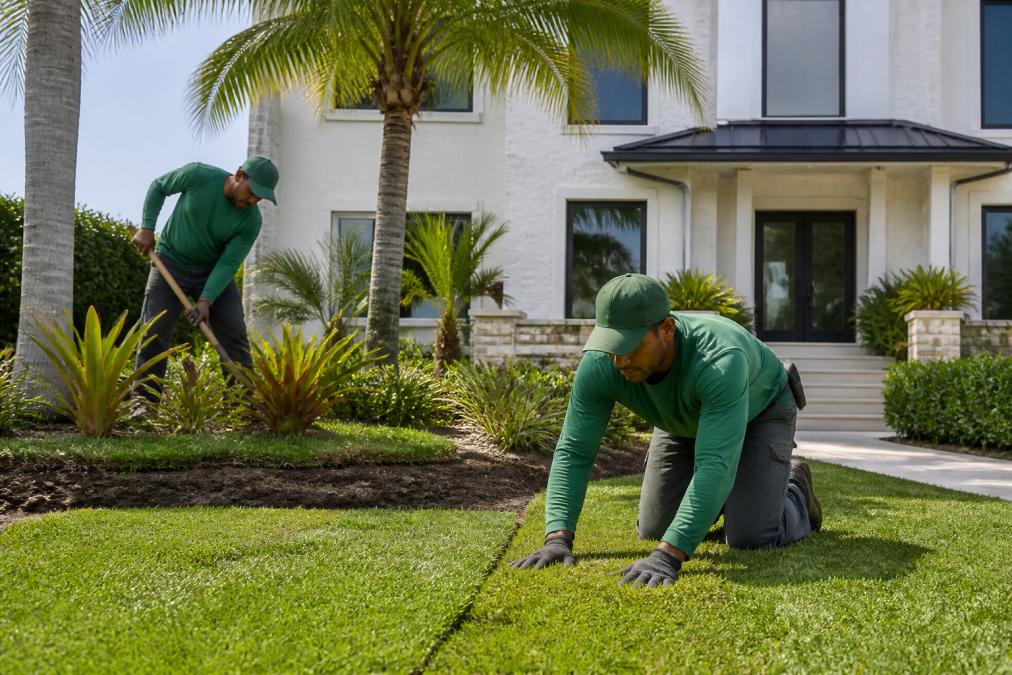
Water deeply two to three times per week during the dry season, less in summer when afternoon storms do the work. Mow at 3 to 4 inches, never scalping. Fertilize lightly in spring and early fall. If you want this installed correctly the first time, our sod installation service handles soil prep before the grass goes down, which is where most failed lawns go wrong.
2. Bermuda Grass South Florida: Best for Full-Sun Lawns
Bermuda grass South Florida lawns use best are open, sunny, and active. TruGreen recommends it for full sun among South Florida warm-season grasses, and LawnStarter includes it in Florida comparisons. It spreads aggressively and repairs itself, which makes it a favorite for yards with kids and dogs.
The catch: it needs sun. Give Bermuda more than a few hours of shade and it thins out fast.
Pros and Cons
Pros:
- Excellent heat and drought tolerance once established
- Self-repairs bare patches quickly
- Stands up to heavy foot traffic
Cons:
- Poor shade tolerance
- Requires frequent mowing in peak season
- Can invade flower beds without edging
Watering and Maintenance
Bermuda wants about an inch of water per week, from rain or irrigation. Mow low, around 1 to 2 inches, and mow often during summer. This is the highest-maintenance grass on our list, and it rewards owners who keep up with it.
3. Zoysia Grass: A Dense Option for Mixed Light
Zoysia grass suits yards that get sun part of the day and shade the rest. It appears in LawnStarter and Lawn Love Florida guides, and a nursery result describes it as an option for yards with shade. It grows slowly, which means less mowing, and it forms a dense carpet that feels good underfoot.
Slow growth cuts both ways. Zoysia takes longer to establish and longer to recover from damage.
Pros and Cons
Pros:
- Tolerates a mix of sun and shade
- Dense growth suppresses weeds
- Lower mowing frequency than Bermuda
Cons:
- Slow to establish from sod
- Higher upfront sod cost than Bahia
- Thatch builds up if not managed
Watering and Maintenance
Water about once weekly, deeply, once roots take hold. Mow at 1.5 to 2.5 inches. Dethatch every couple of years if the lawn feels spongy. Zoysia is a good middle-ground pick for homeowners who want a tidy lawn without Bermuda's mowing schedule.
4. Bahia Grass: Drought-Tolerant Varieties for Sandy Soil
Bahia grass is the practical choice for sandy, dry lots where irrigation is limited. Lawn Love lists it among the best grasses for Florida, and Southern Living identifies Pensacola and Tifton-9 as drought-tolerant varieties, with Argentine noted for pest and disease resistance. Pensacola is described there as extremely drought tolerant.
It is not the prettiest grass on this list. It is, however, hard to kill.
Pros and Cons
Pros:
- Survives drought better than most options
- Handles sandy, low-fertility soil
- Named varieties offer pest and disease resistance
Cons:
- Coarse texture and open growth habit
- Seed heads appear quickly if mowed infrequently
- Less shade tolerance than St. Augustine
Watering and Maintenance
Bahia needs the least irrigation of any grass here. Water only during extended dry spells. Mow at 3 to 4 inches and let it go longer between cuts. If your yard has always struggled, this is often the grass that finally works, and our team can assess your soil before recommending it.
5. Seashore Paspalum: Salt-Tolerant Grass for Florida Lawns Near the Coast
Seashore Paspalum, known botanically as Paspalum vaginatum, is the salt-tolerant grass for Florida lawns close to the ocean or Intracoastal. Lawn Love and Southern Living both include it among recommended Southern grasses. Salt spray and salty irrigation water kill most lawns over time; Paspalum shrugs them off.
It is less common than St. Augustine, so availability varies. Ask your installer before you commit.
Pros and Cons
Pros:
- Best salt tolerance of any grass on this list
- Handles poor, sandy soil well
- Tolerates recycled irrigation water
Cons:
- Less widely available as sod
- Can develop thatch without regular mowing
- Fewer local cultivar options
Watering and Maintenance
Water weekly, deeply, and expect it to handle brackish irrigation better than other grasses. Mow at 1 to 2 inches. For coastal properties, this grass often outlasts everything else, and our landscaping team can tell you whether your salt exposure justifies it.
Best Grass for Shade in Florida: What to Plant Under Trees
The best grass for shade in Florida is St. Augustine, followed by Zoysia where the shade is lighter. No warm-season grass thrives in deep, all-day shade, and that is the honest answer most guides avoid.
Under dense oak canopy, grass will always struggle. We usually recommend one of three fixes: prune lower limbs to let more light through, install a shade-tolerant groundcover instead of turf, or plant St. Augustine in the brightest parts of the yard and accept that deep shade stays bare. Our tree service pairs well with this approach, since thinning a canopy often solves a lawn problem faster than replanting does.
If you are unsure which grass fits your light conditions, book an on-site estimate with P&P Landscaping and Tree Service. We will check your soil, sun exposure, and drainage, then recommend the grass that will actually survive your yard. Get started with us and turn a struggling lawn into one that holds up through every South Florida summer.
Frequently Asked Questions
What is the best grass for a South Florida lawn?
There is no single best grass for every South Florida lawn. St. Augustine grass handles partial shade and coastal conditions well, Bermuda grass thrives in full sun, and Seashore Paspalum tolerates salt near the coast. The right choice depends on how much sun your yard gets, how close you are to the ocean, and how much maintenance you want to take on.
Is St. Augustine grass or Bermuda grass better for South Florida?
St. Augustine grass is the stronger pick for yards with partial shade. Bermuda grass needs full sun to stay dense and healthy, so it suits open, unshaded lawns. If your yard mixes sun and shade, St. Augustine grass South Florida homeowners plant is usually the safer bet.
What is the best grass for a shady yard in South Florida?
St. Augustine grass is the most frequently recommended option for partial shade in South Florida. Zoysia grass is also listed as a shade option in several Florida lawn guides. Keep in mind that no warm-season grass thrives in deep, all-day shade, so trimming low tree branches to let more light through can make a real difference.
Which grass is most drought-tolerant in South Florida?
Bahia grass varieties stand out for drought tolerance. Pensacola bahiagrass is described as extremely drought tolerant, and Argentine bahiagrass is noted for resistance to pests and disease. Both appear in Florida lawn guides as practical choices for sandy soil and yards where irrigation is limited.
What grass can tolerate salt near the coast?
Seashore Paspalum is the salt-tolerant grass for Florida lawns closest to the ocean. St. Augustine grass also handles coastal conditions reasonably well. If salt spray or salty irrigation water is a recurring issue, mention it during your lawn assessment so the right sod is selected.