 How-to
How to Know When to Mow New Sod for the First Time
Last Updated: November 7, 2026
Quick Summary
Wait until the sod has rooted, usually two to three weeks after installation, before you mow new sod for the first time. Confirm readiness with the tug test: the sod should hold firm when you lift a corner, and you should see new white roots at the seams.
- Test two or three spots by pulling straight up gently, never yanking hard enough to lift the piece.
- St. Augustine often passes the tug test around three weeks but is the least forgiving of a low cut.
- Use a walk-behind mower only during weeks 3 to 5, and a riding mower after week 5 with firm rooting.
- After heavy rain, wait at least 24 hours and re-run the footing test before mowing.
- Bag clippings the first time and cut no more than one-third of the blade height.
Table of Contents
- When to Mow New Sod for the First Time: The Readiness Signs That Matter
- Your New Sod Care Timeline: Week by Week After Installation
- When to Mow New Sod St. Augustine in South Florida Heat
- Rain, Irrigation, and Wet-Soil Rules Before You Start the Mower
- When to Mow New Sod With a Riding Mower (and When to Use a Walk-Behind)
- Mowing New Sod: Bag or Mulch the Clippings?
- Common First-Mow Mistakes and New-Sod Troubleshooting
- Book a North Miami Sod Assessment Before Your First Cut
- Frequently Asked Questions
When to Mow New Sod for the First Time: The Readiness Signs That Matter
The short answer: wait until the sod has rooted, usually two to three weeks after installation. Then check before you start the engine. The calendar is a guide, but the grass decides. Mow new sod too early and you'll pull up slabs that never had a chance to grip.
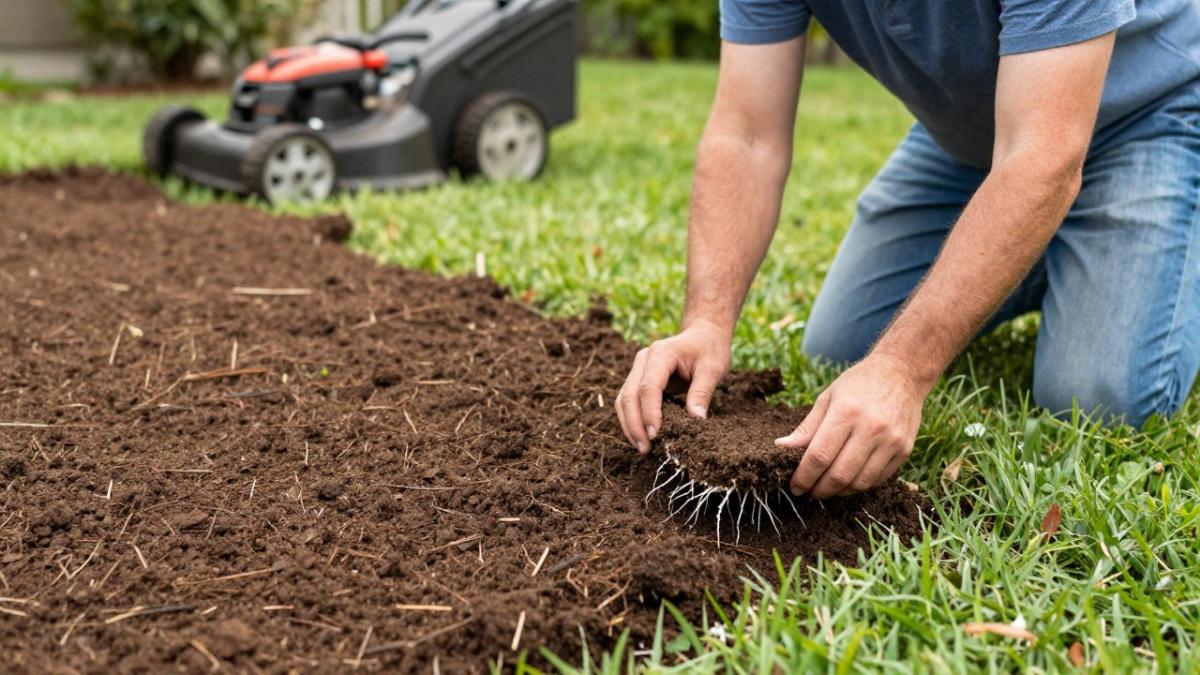
So what counts as ready? Three signs, in order of importance:
- Resistance on a light tug. The sod holds firm when you lift a corner.
- New white roots. You see them at the seams or under an edge.
- Height. The grass is tall enough that you're cutting, not shaving.
Skip the tug test and you're guessing. And guessing is how new sod gets ruined.
The Gentle Tug Test That Confirms Root Establishment
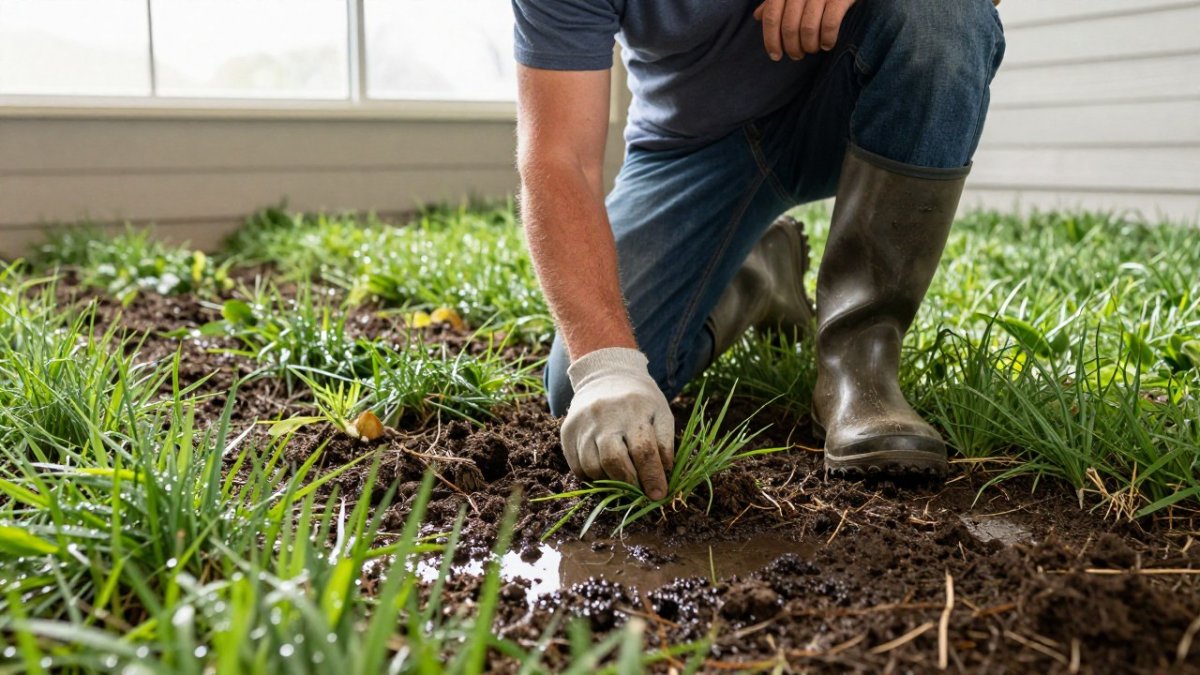
The tug test is simple. Grab a corner of one sod piece and pull up gently.
Root establishment is the process where new roots grow from the sod into the soil below. Until that happens, the sod is only tacked down, not rooted.
A few rules for a fair test:
- Test in two or three spots, not just one.
- Pull straight up, not sideways.
- Never yank hard enough to lift the piece.
If you want the full week-by-week rooting timeline, our guide on how long new sod takes to root walks through each stage.
Your New Sod Care Timeline: Week by Week After Installation
Think of the establishment period as a countdown, not a fixed date. The table below is the generic shape most sod installers in South Florida work from, but the right-hand column is where the real decisions happen, and those decisions change by grass type and by what the sky has been doing.
| Week | What's Happening | Mowing? |
|---|---|---|
| Week 1 | Sod settles; roots begin to form; seams still visible | No |
| Week 2 | Light root growth; sod still lifts at corners | No |
| Week 3 | Roots begin to grip; tug test may start passing in spots | Maybe, if signs agree |
| Week 4+ | Vigorous growth underway; seams knitting | Yes, on a regular schedule |
Two things speed this up or slow it down: water and heat. In North Miami's climate, warm soil pushes root growth along, and a wet stretch can make the sod look rooted before it is. Dry conditions stall everything.
How Grass Type Shifts the Timeline
The generic three-week number is a starting point, not a rule. The common South Florida sods behave differently:
- St. Augustine spreads by thick runners and grows fast in warm, wet weather. It is often the first grass to pass the tug test, sometimes right at the three-week mark, but it is also the least forgiving of a low cut. Set the deck high and take off only the top third.
- Bermuda is fine-bladed and slower to knit at the seams. It generally needs the full three weeks, and often a few extra days, before a mower is safe.
- Zoysia establishes slowly and is easy to pull up in the first month. Do not let the calendar rush you; wait for firm footing and a clean tug test across several spots.
If you are not sure which grass you have, check the sod invoice or ask the installer before you set a mowing date.
Rain, Heat, and the North Miami Wet Season
South Florida's wet season, roughly May through October, changes the countdown in both directions. Warm soil and regular rain speed root growth, but saturated soil keeps the sod soft and the mower dangerous.
During a dry stretch, grass stress slows root growth, so push the first mow back a few days. A simple soil moisture check with your hand tells you more than any schedule.
When to Mow New Sod St. Augustine in South Florida Heat
St. Augustine is a common South Florida sod, and it plays by its own rules. It spreads by runners and grows fast in the growing season.
But fast growth is not permission to rush. Check these first:
- The tug test passes in several spots.
- The grass is roughly one-third taller than your target mowing height.
- The ground is firm underfoot, not spongy.
St. Augustine also does not handle being scalped well. Set the cutting height high and take off only the top third. For more on watering before that first cut, see our guide to telling if new sod is getting enough water.
Rain, Irrigation, and Wet-Soil Rules Before You Start the Mower
South Florida rain decides a lot of mowing days, and this is the section most generic sod guides skip. Wet grass tears instead of cutting. Worse, wet soil means soft footing, and a mower on soft ground can shift the sod slabs under it, sometimes lifting a seam you spent three weeks waiting to close.
A Go/No-Go Check Before Every First-Season Mow
Run this short checklist before you start the engine. If any answer is wrong, wait a day and re-check.
- Footing test. Walk across the lawn. If your shoes sink or leave deep prints, the soil is too soft. Wait.
- Grass wetness test. Brush the back of your hand across the grass. If it comes back wet, the blades will tear and clump. Wait until midday or the next day.
- Seam test. Look at two or three seams. If they are still open or the edges lift easily, the sod is not knitted enough to take a mower.
- Puddle test. Any standing water means wait, no exceptions.
Rain and Irrigation Decision Rules
A few practical rules keep the first mow from turning into a repair job:
- After heavy rain, wait at least 24 hours and re-run the footing test. In North Miami's wet season, that often means the next afternoon, not the next morning.
- After routine irrigation, wait until the surface is dry to the touch. If your system runs at dawn, mow in the afternoon rather than first thing.
- During a dry stretch, do not skip watering to make mowing easier. Stressed grass slows root growth and pushes the first mow back further. Water on the normal establishment schedule, then mow when the surface dries.
- Watch the forecast, not just today's sky. A lawn that is firm at 9 a.m. can be soft by the time an afternoon storm passes through.
Watch out: mowing soft ground is how seams separate and slabs go out of level. If the mower leaves ruts, stop and wait, a rut is cheaper to avoid than to fix.
Local Watering Rules and Water-Wise Establishment
Establishment watering is different from routine lawn care, and local restrictions can affect your schedule. Local utilities may limit irrigation to specific days and hours, and those rules can change with drought conditions.
If the first mow does go wrong and the sod starts browning or lifting, do not panic. Our guide on why new sod dies and how to fix it covers the common causes and the fast fixes.
When to Mow New Sod With a Riding Mower (and When to Use a Walk-Behind)
Here's where a lot of lawns get hurt: mower weight. A riding mower concentrates hundreds of pounds on four tires. On young sod, that pressure can push slabs out of level or break fresh roots.
Our rule of thumb:
- Weeks 3 to 5: use a walk-behind mower only.
- After week 5, with firm rooting: a riding mower is fine.
- On slopes or soft spots: stay with the walk-behind longer.
Whatever you use, sharpen the sharp mower blade first. A dull blade rips grass and invites disease. And make sure the blade is set high for that first pass.
Mowing New Sod: Bag or Mulch the Clippings?
Bag them the first time. Young sod doesn't need a layer of clippings smothering it while roots are still settling. Once the lawn is established, mulching clippings back in is fine and returns nutrients to the soil.
For the first few cuts:
- Bag the clippings.
- Cut no more than one-third of the blade height.
- Vary your mowing pattern each time.
- Keep the deck high.
After that, switch to mulching if you like. Just don't let clumps sit on the grass.
Common First-Mow Mistakes and New-Sod Troubleshooting
The biggest mistake is mowing by the calendar instead of by the grass. Here are the others we see most:
- Scalping the first pass. Set the deck high.
- Mowing wet grass. It tears and clumps.
- Sharp turns on young sod. They lift seams.
- Heavy mower too soon. Wait for firm rooting.
If the first mow goes wrong and the sod starts browning, don't panic. Our guide on why new sod dies and how to fix it covers the common causes and the fast fixes.
Book a North Miami Sod Assessment Before Your First Cut
Not sure your sod has rooted? Contact P&P Landscaping and Tree Service for guidance.
We also deliver fresh sod, soil, and mulch, so if a section needs repair before the first cut, we can handle it. You can order sod and soil delivery for your property, or read more about our family-owned landscaping and tree service and the areas we cover.
Searching for sod help in North Miami? Book an on-site estimate with P&P Landscaping and Tree Service to get started.
Your new sod only gets one first mow, and getting it right protects everything you paid for. If you'd rather not guess, let P&P Landscaping and Tree Service take a look.
Frequently Asked Questions
How long should you let new sod grow before you cut it?
Most new sod needs two to three weeks before the first cut, but the calendar is only a guide. The real signal is root establishment: grab a corner of a sod piece and give a light tug. If it holds firm and resists lifting, roots have knitted into the soil. In North Miami's warm, humid growing season, roots can take hold in as little as 10 to 14 days, while cooler or rainy stretches push that closer to three weeks. Check a few spots across the lawn before you mow new sod.
What happens if you mow new sod too early?
Mowing before roots are established does two kinds of damage. The mower's weight and wheels can shift or lift sod pieces that are still tacked down loosely, breaking the new root growth. A dull or heavy mower can also scalp uneven seams, stressing grass that has no root system to recover from it. Wait for a firm tug test and grass height of about 3 to 4 inches before the first mow, and never cut more than one-third of the blade height in a single pass.
Can you use a riding mower on new sod?
A riding mower is fine once the sod has rooted firmly, but for the very first cut a walk-behind mower is the safer choice. Riding mowers concentrate weight on four wheels and can rut wet soil or rock loose sod that is only partly rooted. If a riding mower is your only option, wait until the tug test passes cleanly, mow when the soil is dry, use the highest cutting height, and keep turns wide to avoid tearing seams.
Should you bag or mulch clippings when mowing new sod?
For the first mow, bag the clippings. New sod is still building its root system, and a thick layer of clippings can smother young grass and trap moisture on the surface, which invites fungus in South Florida humidity. Once the lawn is established and you are mowing regularly, mulching is fine as long as you cut no more than one-third of the blade height so clippings stay small and break down quickly.