 how-to
How to Safely Trim Palm Trees in Autumn: A Step-by-Step Guide
Last Updated: October 25, 2026
Quick Summary
How to safely trim palm trees in autumn involves removing only dead and diseased fronds, making clean cuts at the base, and using proper tools like hand pruners and pole saws. Autumn is ideal in South Florida because cooler temperatures help wounds heal faster, and trimming prepares palms for hurricane season by reducing wind resistance.
- Remove only dead, diseased, and lower fronds touching the ground; leave green fronds and the top canopy intact.
- Use sharp bypass pruners, loppers, curved pruning saws, and pole pruners designed for palm work.
- Cut fronds as close to the trunk as possible without damaging bark, leaving only a one-inch stub.
- Avoid over-trimming, cutting into the trunk, leaving stubs, and using wound sealant or paint.
- Most palms need trimming once or twice yearly; autumn is the best season in South Florida for major trimming.
Table of Contents
- Why Autumn Is the Right Time to Trim Palm Trees in Your Region
- Which Palm Fronds to Cut and Which to Leave Alone
- Essential Palm Tree Pruning Tools for Safe, Effective Work
- Step-by-Step Process for Trimming Your Palm Tree Safely
- How Often to Trim Palm Trees for Optimal Health
- Common Mistakes to Avoid When Trimming Palm Trees
- Professional Palm Tree Trimming in North Miami: When to Call an Expert
- Schedule Your Professional Palm Tree Trimming Today
- Frequently Asked Questions
Why Autumn Is the Right Time to Trim Palm Trees in Your Region
Learning how to safely trim palm trees in autumn is essential, and autumn is the ideal season to do it in South Florida.
Trimming in autumn also prepares your palms for hurricane season. Learn how to prune trees during hurricane season to understand the specific techniques that protect your property when severe weather strikes.
Another key benefit: autumn trimming prevents pest infestations. Many insects lay eggs in dead fronds during summer. Removing this debris eliminates breeding grounds before populations explode.
The timing also aligns with how to safely trim palm trees in autumn naturally. Most homeowners notice problems during summer but wait until fall when conditions improve.
Which Palm Fronds to Cut and Which to Leave Alone
Not all fronds should be removed. The key is knowing which ones to cut and which to keep. Dead fronds are always safe to remove.
Diseased fronds also need removal. Signs include unusual discoloration, spots, or wilting patterns.
Lower fronds that touch the ground create problems. They block air circulation, trap moisture, and invite pest damage. Trim these back to improve airflow around the trunk.
Here's what to leave alone:
- Green fronds actively growing
- Fronds still firmly attached to the trunk
- The top canopy (the crown of the tree)
- Fronds that are yellowing but still living
A common mistake is over-trimming. Some homeowners remove too many fronds, leaving the tree vulnerable. Palm trees need their foliage to photosynthesize and stay strong.
Know which fronds to remove and which to preserve for optimal tree health.
| Frond Type | Action | Reason |
|---|---|---|
| Dead fronds | Remove | Completely brown, brittle, contribute nothing to health |
| Diseased fronds | Remove | Prevent spread to healthy growth |
| Lower fronds touching ground | Trim back | Block air circulation, trap moisture, invite pests |
| Green fronds actively growing | Leave alone | Essential for photosynthesis and tree strength |
| Fronds firmly attached to trunk | Leave alone | Part of healthy canopy structure |
| Top canopy/crown | Leave alone | Critical for tree's overall health and appearance |
| Yellowing but still living fronds | Leave alone | Still contribute to tree function |
Essential Palm Tree Pruning Tools for Safe, Effective Work
Using the right tools makes the job safer and more efficient. You need equipment designed specifically for palm work, not general yard tools.
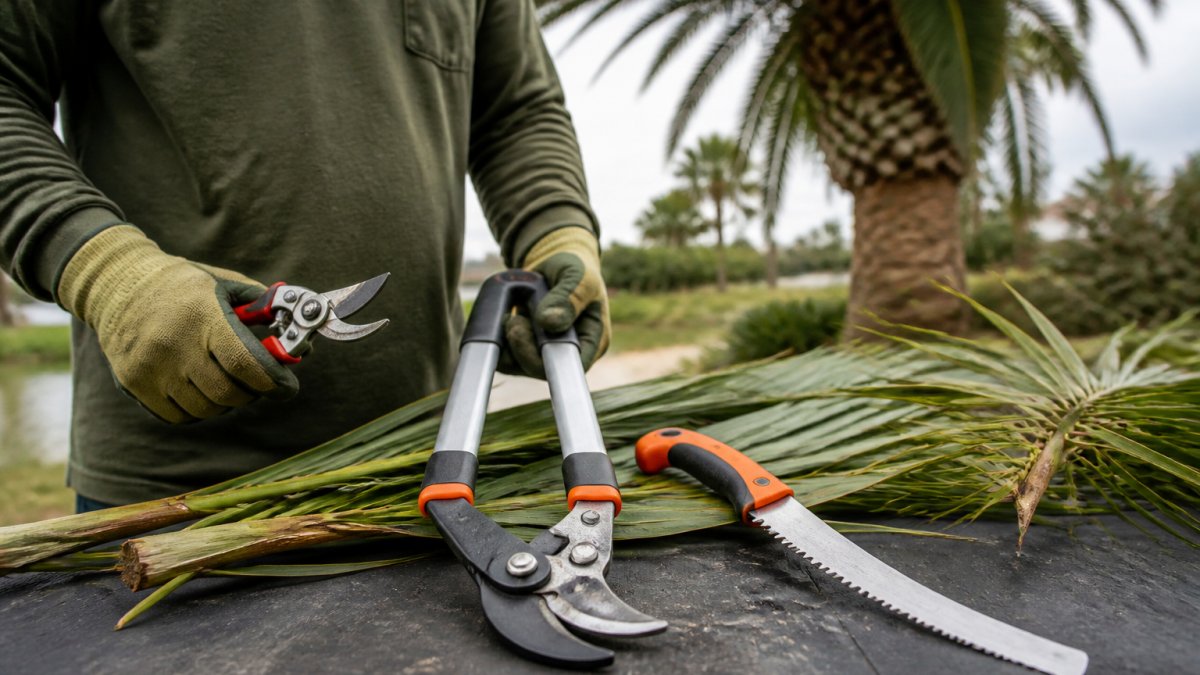
A quality pair of hand pruners handles small branches and fronds up to half an inch thick.
Loppers extend your reach and give you more cutting power. Look for models with long handles, typically 18-24 inches.
A curved pruning saw cuts larger branches cleanly.
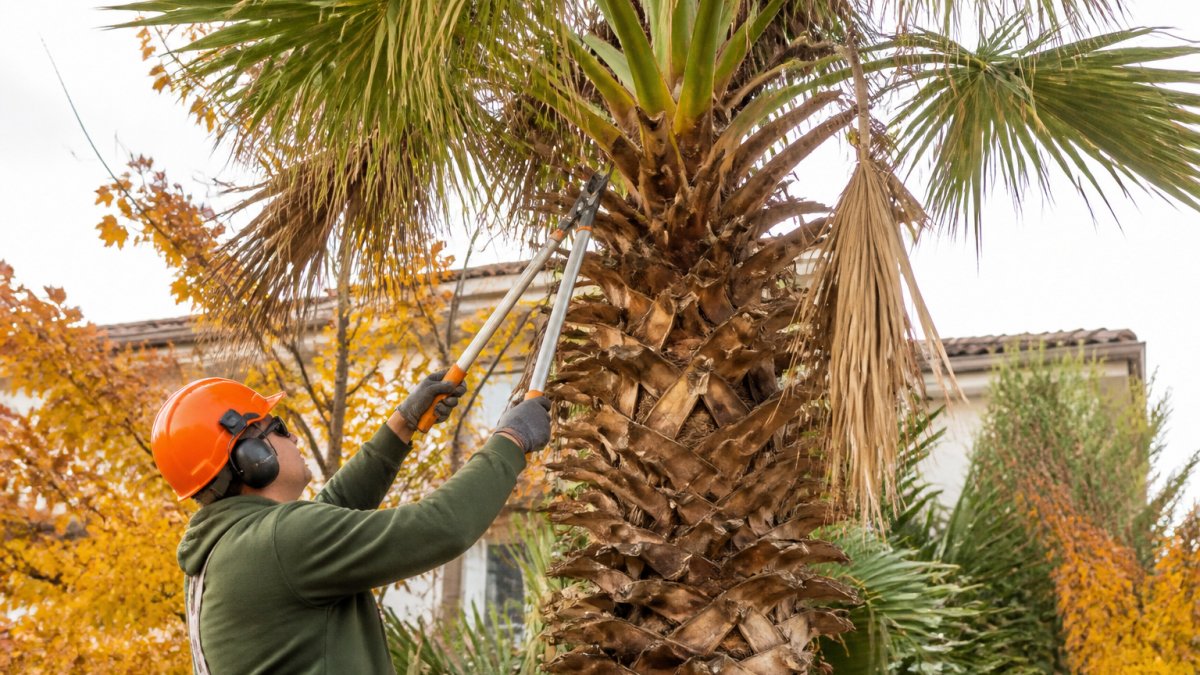
For higher fronds, a pole pruner or pole saw is essential. These extend 8-15 feet, letting you reach upper branches safely from the ground.
Safety gear is non-negotiable:
- Work gloves protect hands from sharp fronds and cuts
- Safety glasses shield eyes from falling debris
- A hard hat protects your head from falling branches
- Closed-toe work boots with good grip prevent slips
- Long sleeves and pants reduce cuts and scrapes
Dull tools are dangerous. Sharp blades cut cleanly and require less force, reducing the risk of slipping. Sharpen your pruners before each major trimming session.
Step-by-Step Process for Trimming Your Palm Tree Safely
Step 1: Assess the Tree and Plan Your Cuts
Before cutting anything, spend time observing the tree. Walk around it completely. Look at the overall shape and identify which fronds need removal. Take photos if it helps you remember your plan.
Check for hazards. Look for dead branches that might fall during work. Identify power lines or structures nearby. Note any signs of disease or pest damage. This assessment takes five to ten minutes but prevents mistakes.
Decide whether you need professional help. If the tree is very tall, if branches hang over structures, or if you're unsure about what to cut, call a professional. Palm tree trimming in North Miami requires expertise when safety is a concern.
Step 2: Remove Dead and Diseased Fronds First
Start with the obvious problem areas. Dead fronds come off first. They're easy to identify and safe to remove without worry about harming the tree.
Work methodically from bottom to top. This keeps debris from falling on you as you work. Cut dead fronds as close to the trunk as possible without damaging the trunk itself. Leave a small stub about an inch long. This prevents the wound from tearing further down the trunk.
Diseased fronds follow the same process. Remove them completely. Dispose of diseased material in the trash, not in compost. This prevents disease spores from spreading to other plants.
Step 3: Trim Lower Branches and Clear Ground Debris
Lower fronds that hang to the ground or block walkways come next. These create safety hazards and moisture problems. Trim them back to create clearance.
Aim for at least six feet of clearance from the ground on the lower canopy. This allows air circulation and prevents the fronds from touching structures or blocking pathways. It also makes the tree look neater and more intentional.
As you work, clear away fallen debris. Pile it in one area for disposal. Don't let it accumulate around the base of the tree. Debris traps moisture and creates pest habitat.
Step 4: Make Clean Cuts at the Base
Every cut matters. A clean cut at the base of a frond or branch heals faster and prevents disease entry.
Position your pruning tool so the blade is perpendicular to the branch. This creates a flat cut surface. Cut as close to the trunk as you can without actually cutting into the trunk bark.
Never leave stubs sticking out. These create entry points for disease. Never cut into the trunk itself. This damages the tree's protective bark and creates a large wound.
Work slowly and deliberately. Rushing leads to mistakes. If a cut is difficult, stop and reassess. Use a different tool or call for help. Forcing a cut usually results in injury or tree damage.
How Often to Trim Palm Trees for Optimal Health
Most palms need trimming once or twice per year. The exact frequency depends on the palm species, its age, and growing conditions. Younger trees often need more frequent attention.
Dead fronds should be removed as they appear, regardless of season. Don't wait for a scheduled trimming. Dead material is always a problem.
For routine maintenance trimming, autumn is ideal in South Florida. One thorough trimming in fall prepares the tree for winter and hurricane season.
Learn more about the professional standard for trimming frequency by reading how often should trees be professionally pruned.
Avoid trimming in summer. The heat stresses the tree and slows wound healing. Also avoid heavy trimming during active growth periods.
Common Mistakes to Avoid When Trimming Palm Trees
Over-trimming is the biggest mistake homeowners make. Removing too many fronds leaves the tree unable to photosynthesize properly.
Cutting into the trunk is another common error. The trunk doesn't have branches like other trees.
Leaving stubs is a mistake that creates problems.
Using dull tools causes ragged cuts. Crushed and torn tissue heals slowly and invites infection. Sharp tools make clean cuts that heal quickly.
Trimming at the wrong time stresses the tree. Summer trimming in South Florida's heat slows healing.
Never use wound sealant or paint. Modern research shows that trees heal better when left alone. Sealant actually traps moisture and promotes disease.
If a tree shows signs of being hazardous or structurally unsound, recognize that this is beyond DIY trimming. Read about signs a tree is hazardous to understand the warning signs that indicate professional help is needed.
Professional Palm Tree Trimming in North Miami: When to Call an Expert
Some situations require professional help. If the tree is very tall, if branches hang over your home or your neighbor's property, or if you're unsure what to cut, hire a professional.
Trees with signs of disease or serious pest infestation need expert assessment. Professionals can identify problems you might miss. They know the right treatment approach for different issues.
If the tree has already been damaged by storm, disease, or poor previous trimming, a professional can often restore it.
At P&P Landscaping and Tree Service, we bring over two decades of experience to every palm trimming job in the Miami-Dade and Broward County area. Our team understands the specific needs of South Florida palms and the timing that works best for this climate. We assess each tree individually and create a trimming plan that keeps it healthy and looking great.
The peace of mind that comes with professional work is worth the investment. You know the job is done safely and correctly. You avoid the risk of injury. You protect your property investment.
Schedule Your Professional Palm Tree Trimming Today
Autumn is here, and now is the time to prepare your palms for winter and hurricane season. Whether you handle the trimming yourself or bring in professionals, the key is doing it right. Clean cuts, proper timing, and the right technique keep your trees healthy and safe.
If you're in the North Miami area and want expert guidance, browse our full range of services to see how we can help with your tree care needs. Or if you're ready to book a professional trimming appointment, schedule your professional palm tree trimming today. Our team will assess your trees, answer your questions, and handle the work with the care and precision your property deserves.
Frequently Asked Questions
Is autumn a good time to trim palm trees?
Yes, autumn is an excellent time to trim palm trees in your region. As temperatures cool and growth slows, palm trees are less stressed by pruning. Trimming in autumn also prepares trees for the winter months and removes dead or diseased fronds before the season changes. However, avoid trimming too late in autumn, as new growth from cuts may be damaged by cooler weather.
How often should you trim palm trees to keep them healthy?
Most palm trees benefit from trimming once or twice per year. Light maintenance trimming can happen seasonally, while more significant pruning is best done in autumn or early spring. Remove dead, diseased, or damaged fronds as soon as you notice them, regardless of season. Over-trimming stresses the tree, so focus on removing only what's necessary for health and safety.
Can you trim green palm fronds, or should you only remove dead ones?
Remove only dead, diseased, or damaged fronds. Green fronds are still photosynthesizing and feeding the tree. Cutting healthy green fronds weakens the palm and slows its growth. The exception is fronds that hang below the horizontal line or pose a safety hazard. When in doubt, leave green fronds intact and focus on dead wood and lower branches that create safety issues.
When should you hire a professional to trim a palm tree instead of doing it yourself?
Hire a professional if the tree is taller than 15 feet, if you lack proper equipment or experience with heights, if the tree shows signs of disease, or if branches hang over structures or power lines. Professional arborists have insurance, safety gear, and the expertise to avoid damage to your property or the tree itself. For peace of mind and quality results, professional trimming is often the safer and smarter choice.
Safe palm trimming starts with understanding what to cut, when to cut it, and how to make clean cuts that heal properly. Follow these steps, use the right tools, and know when to call in professionals. Your palms will thrive through autumn, winter, and hurricane season ahead. P&P Landscaping and Tree Service is here to help with expert trimming and complete property maintenance, bringing over two decades of experience to every job we undertake in South Florida.