 how-to
How to Prune Trees During Hurricane Season
Table of Contents
- Why Timing Matters: Pruning Trees During Hurricane Season
- Tree Pruning Before a Hurricane: What You Need to Know
- Tree Branch Hazard Assessment Before Storm Season
- Palm Tree Hurricane Preparation: Special Considerations
- Professional Tree Pruning: When to Call an Expert
- Step-by-Step Pruning Process for Hurricane Preparedness
- Common Mistakes to Avoid When Pruning for Hurricane Season
- Frequently Asked Questions
Last Updated: October 20, 2026
Why Timing Matters: Pruning Trees During Hurricane Season
Learning how to prune trees during hurricane season requires careful planning. The timing of your cuts determines whether your trees survive strong winds or become hazards.
Hurricane season runs from June through November in South Florida. Most experts recommend completing major pruning work 6-8 weeks before peak storm activity. This window gives trees time to heal their wounds before high winds arrive.
Trees that aren't pruned properly become dangerous. Heavy branches snap during storms. They fall on homes, cars, and power lines. Dead wood inside the canopy creates weak points where branches fail. The best defense is removing these hazards before the season peaks.
Tree Pruning Before a Hurricane: What You Need to Know
Preparing your trees starts well before hurricane season arrives. The work you do now prevents damage later. Here's what homeowners need to understand about timing and technique.
The 6-8 Week Window
The ideal pruning window closes about 6-8 weeks before peak hurricane season. This timing matters because freshly cut branches need time to seal over. Trees heal their wounds through a natural process that takes weeks.
Cuts made too close to storm season leave trees vulnerable. Open wounds don't seal properly. Rain and wind can exploit these weak points. The tree loses structural integrity right when it needs maximum strength.
In Landscape, North Miami, and surrounding areas, this means completing major work by early August.
Work completed earlier in the season is even better. Spring and early summer pruning allows maximum healing time. Trees are also actively growing during these months, which speeds recovery.
Pruning Too Close to Storm Season
Waiting until September to prune your trees is risky. The danger increases the closer you get to peak storm months. Trees pruned in late August or September don't have adequate healing time.
Fresh pruning wounds create entry points for disease and pests. More importantly, they weaken the tree's structure. A tree with open wounds cannot withstand strong winds effectively.
Emergency pruning during hurricane season should only address immediate hazards. Dead branches hanging over your house need removal. But routine maintenance pruning should be completed well in advance.
Tree Branch Hazard Assessment Before Storm Season
Identifying problem branches is your first step. Not every branch needs removal. But dangerous ones must come down before hurricane season peaks. Here's how to spot the branches that pose real risks.
Identifying Dead or Diseased Branches
Dead wood is easy to spot once you know what to look for. Dead branches are gray or brown. They have no green bark underneath when you scratch them.
Diseased branches show different signs. Look for unusual discoloration, fungal growth, or areas where bark is peeling away. Branches with visible cracks or splits are structurally weak.
Remove all dead wood before hurricane season. Dead branches provide no benefit to the tree. They only create hazards. This is the single most important pruning task for storm preparation.
Spotting Weak Branch Attachments
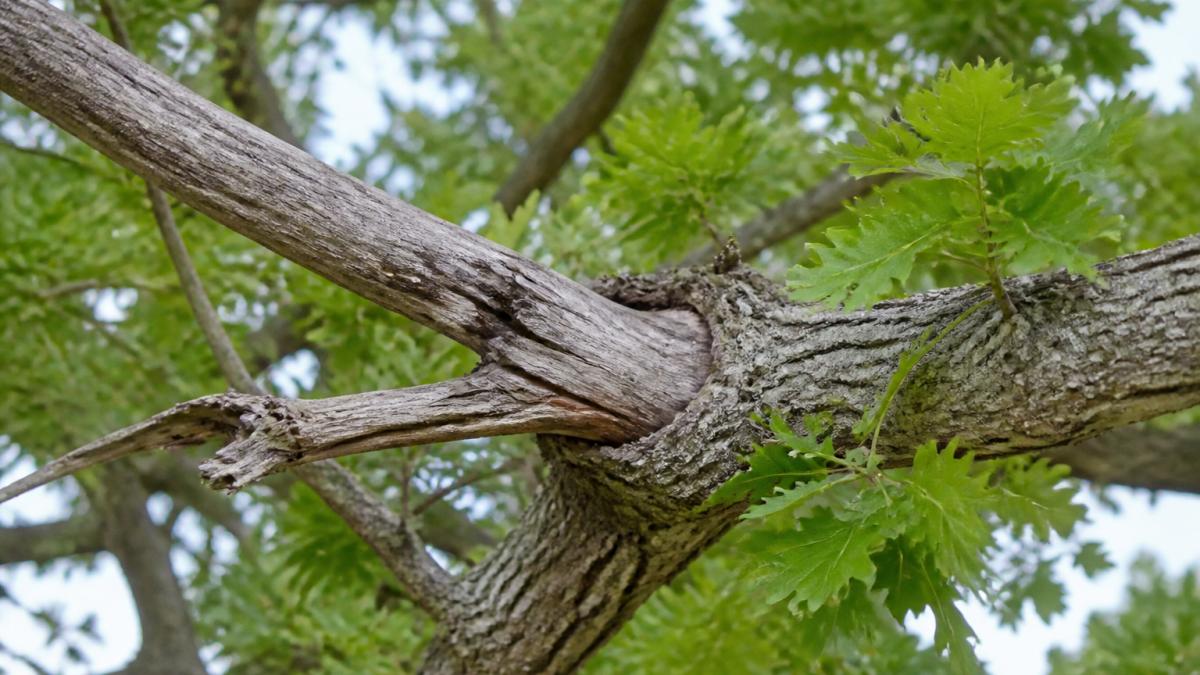
Branch attachment points determine whether branches stay on trees during storms. Strong attachments have bark that grows continuously from the trunk into the branch. Weak attachments look different.
Look for branches that grow at sharp angles, less than 45 degrees from vertical. These angles create mechanical stress. The branch pulls away from the trunk rather than growing with it.
V-shaped crotches are stronger than U-shaped ones. In a V-shaped crotch, the branch and trunk form a narrow angle with strong wood throughout. U-shaped crotches have bark trapped between the branch and trunk.
Branches with included bark, bark growing inside the crotch, are prone to failure. These branches separate from the trunk more easily. Remove them if they're large or hang over structures.
Assessing Overall Tree Structure
Step back and look at the entire tree shape. Healthy trees have a strong central leader or multiple leaders that grow upward. Trees with multiple heavy branches at the same height are structurally weak.
Lopsided trees are more vulnerable to wind. If all the heavy branches grow on one side, the tree becomes unbalanced. Strong winds push against the heavier side. The root system may not hold the entire weight.
Crowded branches create problems too. Where branches overlap or cross, they rub together. This damage creates entry points for disease. Dense canopies also catch more wind, creating greater stress on branch attachments.
Palm Tree Hurricane Preparation: Special Considerations
Palm trees require different pruning techniques than traditional shade trees. Most homeowners in South Florida have palms mixed with oaks and other hardwoods. Palms need specific preparation for hurricane season.
Frond Removal Strategy
Remove dead fronds, but leave healthy ones. Many people strip palms bare thinking this reduces wind damage. This is a mistake. Healthy fronds actually help the tree survive wind.
Fronds act like shock absorbers. They bend and flex in wind. This movement distributes stress throughout the canopy. A completely stripped palm is actually more vulnerable because the trunk bears all the wind force alone.
Remove only fronds that are completely brown or yellow. Leave green fronds in place. This keeps the tree's natural wind-resistance intact while eliminating dead material.
Dead fronds also create hazards. They fall during storms. They can damage property or injure people. Removing dead fronds is the priority for palm hurricane prep.
Seed Pod and Flower Cluster Removal
Seed pods and flower clusters add unnecessary weight to palms. During storms, these heavy structures catch wind. They can break branches or damage the trunk.
Remove all mature seed pods before hurricane season. Flower clusters that have set seed should come down too. This reduces weight in the canopy and eliminates wind-catching structures.
Fresh flowers and young flower clusters can stay. They're lightweight and flexible. Only remove structures that are clearly heavy or mature.
Professional Tree Pruning: When to Call an Expert
Some pruning jobs require professional help. Knowing when to call an expert prevents injury and property damage. P&P Landscaping and Tree Service has over two decades of experience helping homeowners in Landscape, North Miami, and throughout South Florida prepare trees for hurricane season.
Signs You Need Professional Help
Large trees over 40 feet tall need professional pruning. Working at heights requires specialized equipment and training. Falls from height are serious injuries. Professional arborists have the right equipment and insurance.
Trees with branches over your house or power lines need professionals. One mistake creates liability. A branch falling on your neighbor's property can result in legal action. Professionals carry liability insurance for this reason.
Multiple large branches needing removal indicates a professional job. If you're removing more than a few branches, the work becomes complex. Professionals plan the sequence of cuts to maintain tree balance.
Diseased trees need expert assessment. Some diseases require specific treatments. A professional can diagnose problems and recommend solutions. Removing a diseased tree is sometimes the safest option.
What Professional Pruning Includes
Professional arborists start with a full tree assessment. They identify all hazardous branches. They evaluate the tree's overall health and structure. They develop a pruning plan that addresses hazards while preserving tree health.
Proper cuts are made at the branch collar, the swollen area where the branch meets the trunk. Cuts made here allow the tree to seal the wound naturally. Improper cuts create larger wounds that don't heal well.
Professional pruning removes all debris from your property. Branches are chipped or hauled away. Your yard is left clean. This service prevents the mess that DIY pruning often creates.
Step-by-Step Pruning Process for Hurricane Preparedness
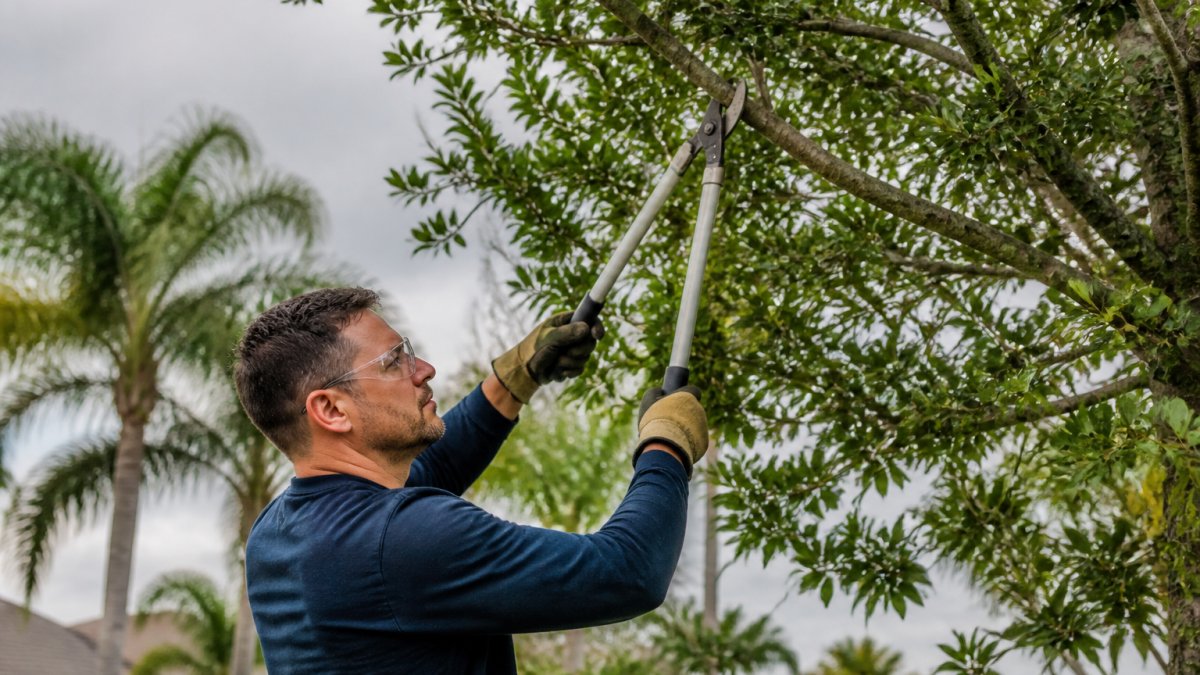
If you have small trees or low branches you can safely reach, here's how to prune trees during hurricane season with this process. For larger trees or higher branches, call a professional. Safety always comes first.
Step 1: Inspect and Mark Problem Branches
Walk around your tree slowly. Look at every branch. Mark branches that are dead, diseased, or have weak attachments. Use spray paint or tape to mark them clearly.
Step back frequently to see the overall tree shape. Make sure you're not removing too much from one side. Balance matters for tree stability. A tree that leans to one side is stressed.
List every branch you plan to remove. This helps you visualize the final result. It prevents impulsive cuts you might regret later.
Step 2: Remove Dead Wood First
Start by removing all dead branches. These are your priority. Dead wood creates hazards and provides no benefit to the tree.
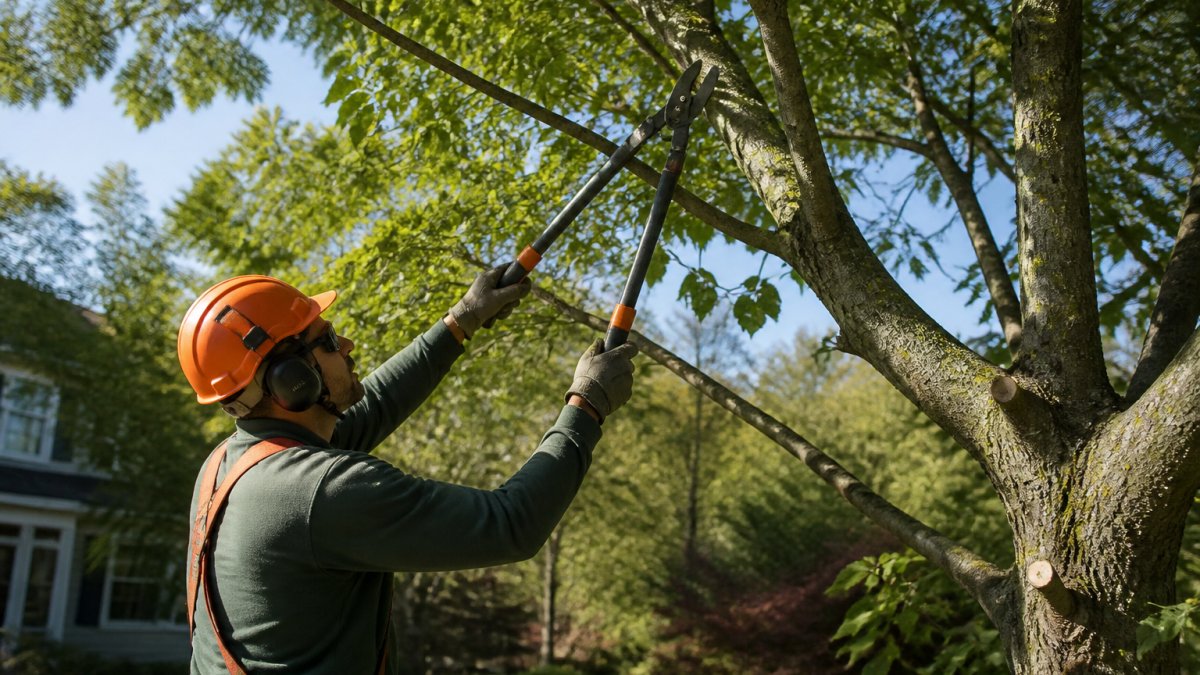
Make cuts at the branch collar. This is the swollen area where the branch meets the trunk. Cut just outside this collar, don't cut into it. Leave a small collar of wood, which helps the tree seal the wound.
Remove branches completely. Don't leave stubs. Stubs don't heal properly. They become entry points for disease.
Step 3: Thin Out Interior Branches
Remove branches that cross or overlap other branches. These create rubbing damage. They also shade interior branches, which weakens them.
Thin the canopy so light reaches inside the tree. Sunlight helps interior branches stay strong. A dense canopy creates weak interior growth.
Remove branches that grow inward toward the trunk. Branches should grow outward. Inward-growing branches create crowding and weak structures.
Step 4: Make Proper Cuts
Every cut should be at the branch collar. The branch collar is the raised area of bark where the branch connects to the trunk. Cut just outside this collar.
Don't use wound dressing or tree paint on cuts. Research shows trees heal better without these products. The tree's natural defenses work best when exposed to air.
Make cuts with sharp tools. Dull saws crush wood fibers. Crushed wood doesn't heal well. Sharp tools create clean cuts that seal quickly.
Common Mistakes to Avoid When Pruning for Hurricane Season
Many homeowners damage trees while trying to help them. Understanding common mistakes prevents these problems.
Topping trees is a serious mistake. Topping means cutting the top off the tree to reduce height.
Over-pruning weakens trees. Removing more than 25% of the canopy stresses the tree.
Pruning at the wrong time causes problems. Late-season pruning stimulates new growth.
Using climbing spikes damages trees. Spikes puncture the bark and create wounds. These wounds allow disease to enter.
Leaving stubs creates disease entry points. Always cut at the branch collar. Stubs don't heal. They become hollow and weak.
Removing all interior branches weakens wind resistance. Interior branches help the tree flex in wind.
Preparing your trees for hurricane season takes time and planning.
Frequently Asked Questions
Should you prune trees during hurricane season?
Pruning trees during active hurricane season (June through November) is risky because fresh cuts expose trees to stress and disease. The ideal window is 6-8 weeks before hurricane season begins, typically in late April or May. This timing allows trees to heal and develop stronger branch structure before storms arrive. If a tree shows obvious hazards like dead branches or weak attachments, professional removal may be safer than waiting.
What's the best timing for tree pruning before a hurricane?
Late spring, typically April through May, offers the best window for tree pruning before a hurricane. This gives trees 6-8 weeks to compartmentalize wounds and develop stronger architecture before the season begins. Pruning this early allows new growth to harden off and branch connections to strengthen. Avoid pruning in June or later, as trees have less recovery time and will be stressed when storms arrive.
Which branches should you remove before a hurricane?
Prioritize removing dead wood, diseased branches, and limbs with weak V-shaped attachments to the trunk. Remove branches crossing other limbs or rubbing together. Thin out interior branches to reduce wind resistance. For palms, remove all dead fronds and seed pods. Avoid removing more than 25% of the canopy at once. When in doubt about which branches to cut, consult a certified arborist to avoid over-pruning.
When should you hire a professional to prune a tree?
Hire a professional if the tree is taller than 30 feet, branches overhang structures or power lines, the tree shows signs of disease or insect damage, or you're uncertain about branch identification. Professional tree pruning before hurricane season ensures proper technique and safety. P&P Landscaping and Tree Service offers expert assessments and can handle complex pruning jobs to prepare your trees for storm season. Book an on-site estimate for a customized plan.