 Ultimate guide
Sustainable Landscaping Design for Florida Yards
Last Updated: November 4, 2026
Quick Summary
Sustainable landscaping is the practice of designing and maintaining a yard so it needs less water, fewer chemicals, and less replacement over time. In South Florida, it means using Florida native plants, hydro-zoning irrigation by water need, and keeping permeable surfaces and mulch so rain soaks in instead of running off.
- North Miami yards face salt air, fast-draining sandy soil, and summer stormwater runoff heading to Biscayne Bay.
- Native groundcovers and hydro-zoning by water need can reduce irrigation demand compared with a traditional St. Augustine lawn.
- Convert spray heads to micro-irrigation drip lines, add a rain sensor, and water deeply twice a week.
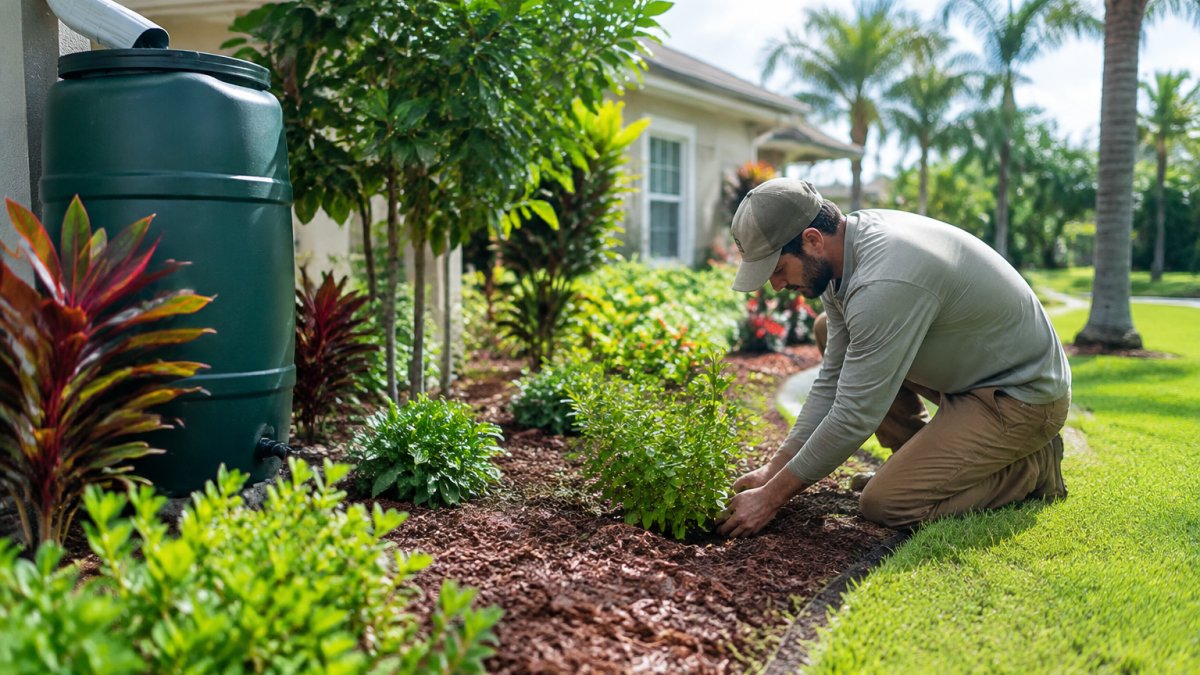
- Apply organic mulch two to three inches deep, pulled back from trunks and stems.
- A typical North Miami lot takes one full growing season from assessment to a self-sustaining bed.
Table of Contents
- Why Sustainable Landscaping Pays Off in South Florida
- Florida Landscape Design Principles That Hold Up in the Heat
- Choosing Florida Native Plants for Landscaping
- Water-Efficient Landscaping Florida Homeowners Can Maintain
- Small Yard Landscaping Ideas Florida Homeowners Actually Use
- A Step-by-Step Conversion Guide for Your Yard
- Staying HOA-Compliant With a Sustainable Yard
- Book an On-Site Estimate With P&P Landscaping and Tree Service
- Frequently Asked Questions
Why Sustainable Landscaping Pays Off in South Florida
Sustainable landscaping is the practice of designing and maintaining a yard so it needs less water, fewer chemicals, and less replacement over time. In South Florida, that is not a niche preference. It is the difference between a yard that survives the wet season and one that keeps draining your wallet. Sustainable landscaping design for Florida conditions is a practical fix for yards that keep failing for avoidable reasons.
The North Miami Microclimate: Salt, Sand, and Stormwater
North Miami yards fight three things at once. Salt air burns tender foliage near the coast. Sandy, fast-draining soil sheds water and nutrients before roots can use them. Then the summer deluge arrives and stormwater runoff carries whatever the soil did not hold straight toward Biscayne Bay. A plant palette that ignores any one of these will struggle no matter how carefully you water it.
Sustainable vs. Traditional Lawns: A Cost-Benefit Look
A traditional St. Augustine lawn demands constant irrigation, regular feeding, and frequent pest treatment. Native groundcovers, organic mulch, and hydro-zoning by water need can reduce irrigation demand. For a side-by-side look at what replacing lawn actually involves, see our guide to lawn alternatives in North Miami.
| Approach | Water Demand | Maintenance Load | Replacement Risk |
|---|---|---|---|
| Traditional lawn | High, year-round | Weekly mowing, feeding, pest treatment | High after floods or salt events |
| Native groundcover beds | Low once established | Occasional weeding and mulch refresh | Low with right plant, right place |
Florida Landscape Design Principles That Hold Up in the Heat
Good Florida landscape design principles start with one rule: put the right plant in the right place. That single decision prevents most of the problems homeowners call us about. Group plants by water need, a practice called hydro-zoning, so you irrigate zones rather than the whole yard. Keep permeable surfaces and mulch beds so rain soaks in instead of sheeting off. Use native vegetation to build a pollinator habitat and shade your soil. And plan for stormwater runoff before it plans for you.
Choosing Florida Native Plants for Landscaping
Florida native plants for landscaping outperform imported ornamentals because they evolved here. They tolerate sandy soil, salt wind, and months of heat with minimal input. The Florida-Friendly Landscaping program from the University of Florida is the standard reference for which species suit which zone, and Miami-Dade sits in a tropical zone that supports a wide native palette.
Native Trees, Shrubs, and Groundcovers for Miami-Dade Yards
- Trees: gumbo limbo, live oak, and royal palm for canopy and structure
- Shrubs: cocoplum, firebush, and saw palmetto for hedges and pollinator value
- Groundcovers: sunshine mimosa and beach sunflower instead of turf in tough spots
For shaded yards where sod keeps failing, our sod alternatives for shaded Florida backyards article covers the species that actually hold. When you are ready to plant, we supply plants, palms, sod and mulch with delivery and installation included within 20 miles of North Miami.
Water-Efficient Landscaping Florida Homeowners Can Maintain
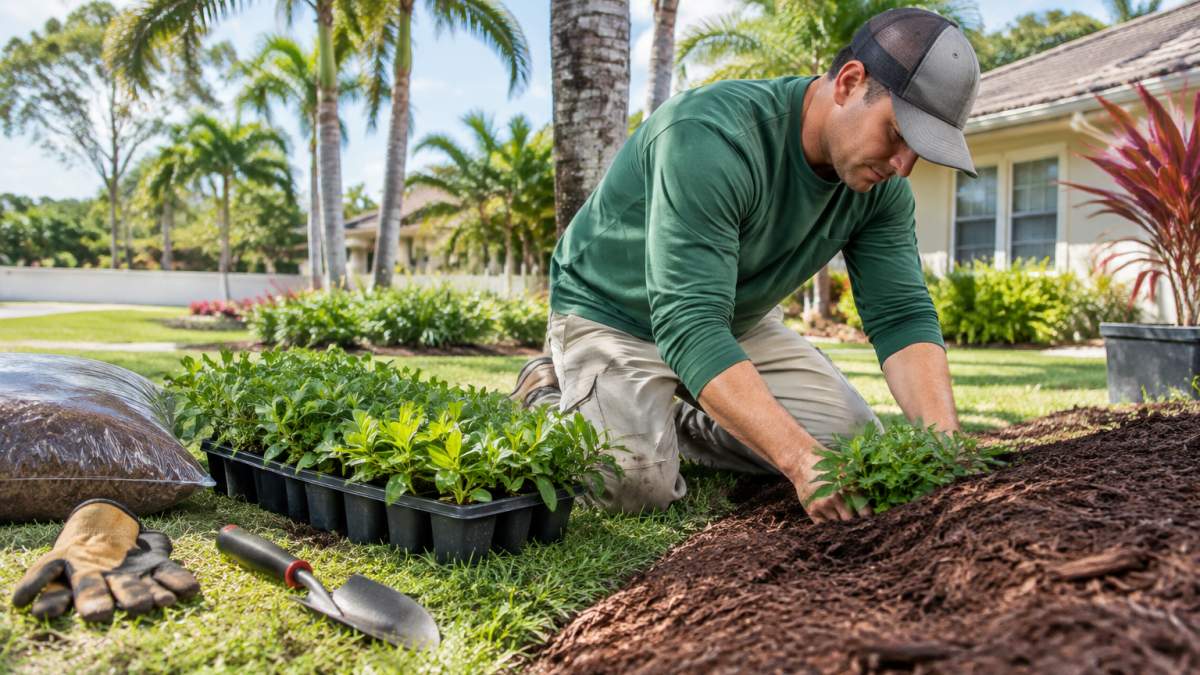
Water-efficient landscaping in Florida is mostly about irrigation efficiency, not deprivation. Convert spray heads to micro-irrigation drip lines, set a rain sensor, and water deeply twice a week instead of lightly every day. Deep watering pushes roots down; shallow daily watering keeps them near the surface where heat kills them. Organic mulch two to three inches deep slows evaporation and cools the soil. A common mistake is burying drip lines under fresh sod, which clogs emitters and wastes the whole install.
Small Yard Landscaping Ideas Florida Homeowners Actually Use
Small yards reward vertical thinking. Use palms and tall shrubs to draw the eye up, keep a single focal tree, and let native groundcovers replace turf strips too narrow to mow well. A mulch border around beds doubles as a permeable surface that handles runoff. For layout and plant combinations sized to compact lots, our landscaping design for small yards guide goes deeper. What most guides miss is that small yards fail from overplanting, not underplanting.
A Step-by-Step Conversion Guide for Your Yard
This section walks through the conversion sequence step by step: the actual sequence for converting an existing St. Augustine lawn in North Miami into a native, low-input landscape without losing the yard for a season.
Phase 2, Clear and remove invasives (weeks 2-4). Remove Brazilian pepper, carrotwood, and other invasive exotics before planting, or they resprout through the new bed.
Phase 3, Fix the soil (weeks 3-6). North Miami's sandy soils drain fast and hold almost no nutrients or organic matter.
Phase 4, Hydro-zone the irrigation (weeks 4-6). Group beds by water need, coastal-tolerant, drought-tolerant, and moisture-loving, and convert spray heads in bed areas to micro-irrigation drip lines.
Phase 5, Plant in layers (weeks 6-10). Start with canopy trees such as gumbo limbo and live oak, then shrubs like cocoplum and firebush, then groundcovers such as sunshine mimosa and beach sunflower.
Phase 6, Mulch and edge (week 10). Apply organic mulch two to three inches deep, keeping it pulled back from trunks and stems. Define bed edges so the yard still reads as intentional, this matters later if you need HOA approval.
Phase 7, Maintenance reset (ongoing). Shift from weekly mowing and feeding to targeted weeding, an annual mulch refresh, and pruning only where needed. Expect the first year to need more hand-weeding than later years; that is normal, not failure.
A realistic timeline for a typical North Miami lot is one full growing season from assessment to a self-sustaining bed. The most common failure point is Phase 3, sandy soil without compost cannot hold nutrients, and no amount of fertilizer fixes that.
Staying HOA-Compliant With a Sustainable Yard
HOAs are the most common roadblock North Miami homeowners raise, and the concern is fair: many association covenants were written decades ago around turf coverage and uniform plant height. The good news is that Florida law gives homeowners protections for Florida-Friendly Landscaping, though associations can still enforce reasonable aesthetic and maintenance standards. Knowing that distinction is what turns a confrontation into a plan approval.
Build a submission package before you dig. Most boards approve what they can see on paper. Include a scaled landscape plan showing bed layout and turf edge, a plant list with botanical and common names plus mature height and spread, an irrigation plan showing drip zones and rain sensor, and a maintenance schedule.
Keep a defined turf edge where rules require it. If your covenants mandate a certain percentage of lawn or a uniform front setback, design the native beds behind a maintained turf strip or a clean mulch edge. You keep the sustainable core and satisfy the letter of the rule.
Document the water-wise intent in writing. Cite Florida-Friendly Landscaping principles and the statute in your cover letter, and keep copies of every approval. If a dispute arises later, paperwork wins arguments that conversations cannot.
Negotiate plant height and sightlines specifically. Boards often worry about blocked views and security. Propose shrubs that stay below a stated height near the street, keep canopy trees pruned to a clear trunk, and offer to replace any plant the board finds unkempt after a review period.
Escalate only after you have a record. If a board rejects a compliant plan, request the rejection in writing and ask for the specific covenant language relied on. Many disputes resolve at that step because the covenant does not actually prohibit what the board assumed.
Read any architectural-review approval conditions carefully before you sign.
Book an On-Site Estimate With P&P Landscaping and Tree Service
The gap between a sustainable plan and a yard that actually thrives is installation and follow-through. That is where we come in. P&P Landscaping and Tree Service is a family-owned and operated business with over two decades of experience, handling both landscaping and tree care. We tailor services to your property and manage projects from consultation to completion. Book a free on-site estimate with P&P Landscaping and Tree Service.
Frequently Asked Questions
What is sustainable landscaping in Florida?
Sustainable landscaping in Florida means designing a yard around plants and systems that fit the local climate instead of fighting it. That usually includes Florida-Friendly Landscaping practices such as native plant species, hydro-zoning, micro-irrigation, organic mulch, and integrated pest management. The goal is a landscape that needs less water, fewer chemicals, and less maintenance over time while still looking healthy through heat, rain, and hurricane season.
Which native plants are best for a North Miami landscape?
North Miami yards sit on sandy, fast-draining soil with salt exposure and heavy summer rain, so native trees like gumbo limbo and live oak, shrubs like cocoplum and saw palmetto, and groundcovers like sunshine mimosa and beach sunflower tend to hold up well. These species support pollinators and local wildlife and need far less irrigation once established. A site visit helps confirm which plants fit your light, soil, and space.
How can I reduce water use in a Florida yard?
Start with hydro-zoning, which groups plants by water need so you are not irrigating drought-tolerant natives on the same schedule as thirstier beds. Switch to micro-irrigation or drip lines, add organic mulch to slow evaporation, and water deeply but less often. Replacing part of the lawn with native groundcovers also cuts irrigation demand. Check with Miami-Dade County on current watering restrictions, since they change by season.
What are the nine principles of Florida-Friendly Landscaping?
The University of Florida IFAS program lists nine principles: right plant, right place; water efficiency; appropriate fertilization; mulching; attracting wildlife; responsible pest management; recycling yard waste; reducing stormwater runoff; and protecting the waterfront. Together they form the framework most sustainable landscaping design for Florida follows. You do not need to apply all nine at once. Most homeowners start with right plant, right place and water efficiency.
How do I make a small Florida yard more sustainable?
Small yards actually make sustainability easier. Use vertical planting and containers for pollinator-friendly natives, replace narrow turf strips with native groundcovers, and direct downspouts toward planted beds instead of pavement to reduce stormwater runoff. Permeable surfaces like gravel or shell paths let rain soak in. A compact micro-irrigation zone keeps water use low, and a single well-placed native tree can shade a large share of a small lot.
What is the best mulch for a Florida landscape?
Organic mulch such as pine bark, melaleuca, or eucalyptus mulch works well in South Florida. Aim for a 2 to 3 inch layer, kept a few inches away from trunks and stems to prevent rot. Organic mulch breaks down and improves sandy soil over time, which helps with nutrient leaching. Avoid piling mulch against the base of trees, and refresh it annually as it decomposes.
Will a sustainable landscape pass my HOA's rules?
Many South Florida HOAs require maintained turf and restrict plant height or bed placement, so check your association's covenants before converting a lawn. A common path is to keep a neat, edged front yard with native plants that read as intentional design rather than overgrowth. Bringing a written plan and plant list to your HOA board often gets approval faster. Ask what rules apply to your community.
Ready to stop guessing which plants will survive your yard? Book a free on-site estimate with P&P Landscaping and Tree Service, and we will walk your property and put together a clear, sustainable plan built for North Miami conditions. Get started and turn your outdoor space into a landscape that holds up season after season.