 listicle
Lawn Alternatives in North Miami: 6 Options
Table of Contents
- Why Homeowners Are Ditching Traditional Grass in North Miami
- Artificial Turf: Zero-Mow Durability for Florida Sun
- Drought-Tolerant Ground Cover Florida Options
- Native Florida Plants for Sustainable Yards
- Florida-Friendly Landscaping Principles for Lawn Replacement
- Hardscape and Gravel Solutions for High-Traffic Areas
- Choosing the Right Lawn Alternative for Your Yard
- Frequently Asked Questions
Last Updated: September 23, 2026
Why Homeowners Are Ditching Traditional Grass in North Miami
Maintaining a traditional lawn in South Florida demands constant attention. Weekly mowing, regular watering, fertilizer applications, and pest management consume time and money that most homeowners would rather spend elsewhere. Maintaining a traditional lawn in South Florida demands constant attention. Weekly mowing, regular watering, fertilizer applications, and pest management consume time and money that most homeowners would rather spend elsewhere.
The good news: lawn alternatives North Miami homeowners are choosing are thriving. Homeowners are discovering that replacing grass with drought-tolerant ground covers, artificial turf, native plants, and hardscape solutions delivers better results with far less maintenance. Whether you're managing a rental property, designing a sustainable yard, or simply tired of weekend mowing, there's a solution that fits your budget and lifestyle.
Below, we'll explore six proven lawn alternatives that work specifically for North Miami's climate and soil conditions.
Artificial Turf: Zero-Mow Durability for Florida Sun
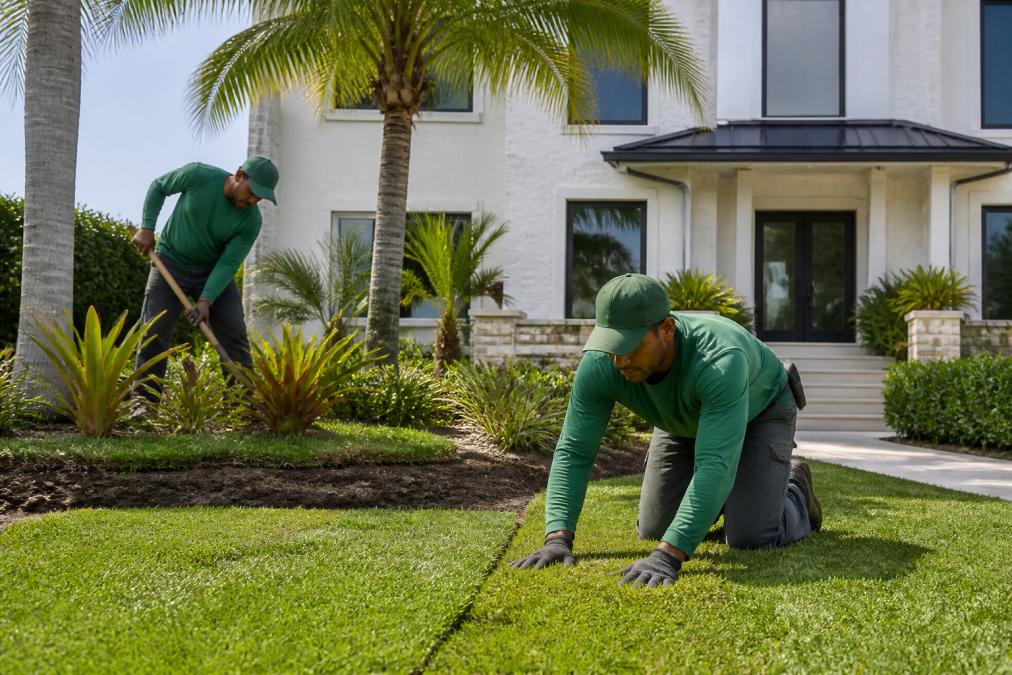
Synthetic grass eliminates the mowing chore entirely while maintaining a manicured appearance year-round. For North Miami homeowners, artificial turf delivers consistent green color even during dry spells when natural grass would brown out.
Modern artificial turf products are engineered specifically for Florida's intense UV exposure. UV-stabilized fibers resist fading under direct sunlight, and permeable backing systems handle the region's heavy rainfall without creating standing water or drainage problems. Installation of artificial turf requires only occasional rinsing to remove dust and debris.
The primary trade-off is upfront cost. Artificial turf installation runs higher than seeding or sodding natural grass, but the long-term savings on water, fertilizer, equipment, and labor often justify the investment over 10-15 years.
Drought-Tolerant Ground Cover Florida Options
Ground covers offer a middle ground between traditional lawn and hardscape. They provide green space, support local pollinators, and require significantly less water and maintenance than conventional turfgrass once established.
Micro Clover Blend
Micro clover is a low-growing nitrogen-fixing plant that stays green year-round in North Miami's zone 10b climate. Unlike traditional clover varieties, micro clover grows to just 2-4 inches tall, creating a dense mat that suppresses weeds naturally without herbicide applications.
The nitrogen-fixing property is the real advantage here. Micro clover pulls nitrogen from the air and deposits it into soil, reducing or eliminating the need for synthetic fertilizers.
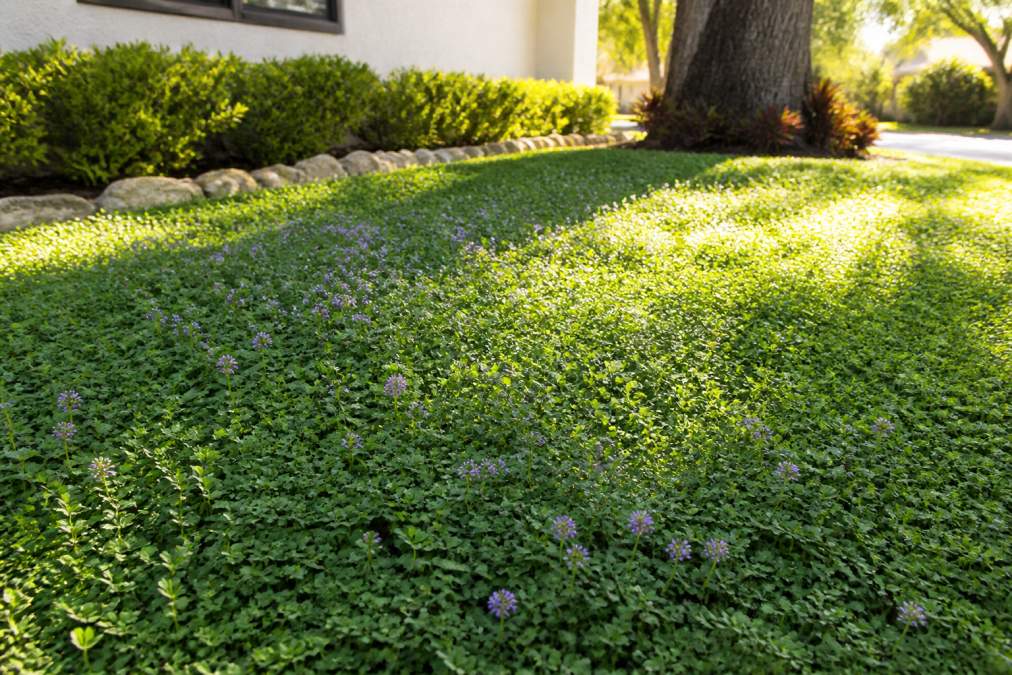
Micro clover does require some care during establishment. Seeds need consistent moisture for the first 4-6 weeks, and young plants benefit from light foot traffic only. Once established, mowing is optional, many homeowners in North Miami let it grow naturally or mow just once or twice yearly for aesthetic purposes.
One limitation: micro clover can be sensitive to certain broadleaf weed killers. If your yard has existing weed problems, address them before planting micro clover, or plan to manage weeds manually.
Creeping Thyme
Creeping thyme thrives in sunny, well-draining spots throughout North Miami. This fragrant perennial produces tiny purple or pink flowers that attract pollinators, and the foliage releases an aromatic scent when stepped on, a pleasant bonus for garden pathways.
Creeping thyme is remarkably drought-tolerant once established, typically requiring water only during extended dry spells. It forms a dense mat 2-6 inches tall that naturally prevents weed germination. The plant prefers full sun and well-draining soil, making it ideal for areas where traditional grass struggles.
The trade-off: creeping thyme isn't suitable for high-traffic play areas. Heavy foot traffic can damage the delicate stems, so it works best as a border plant, pathway accent, or ground cover for decorative garden beds rather than main lawn space.
Native Florida Plants for Sustainable Yards
Native Florida plants are naturally adapted to local climate extremes, soil conditions, and pest pressures. They require minimal supplemental irrigation once established, support local bird and pollinator populations, and eliminate the need for pesticides and synthetic fertilizers.
Common native ground cover options include coontie, muhly grass, beach sunflower, and various native sedges. These plants thrive in North Miami's sandy soil and humid subtropical climate.
The setup phase requires more planning than simply seeding traditional grass. Native plant landscaping works best when plants are selected for specific microclimates within your yard, sunny versus shaded areas, wet versus dry spots, high-traffic versus low-traffic zones. P&P Landscaping and Tree Service specializes in designing native plantings that transform yards into thriving ecosystems while eliminating mowing and chemical inputs entirely.
Florida-Friendly Landscaping Principles for Lawn Replacement
Florida-Friendly Landscaping is a statewide program that guides homeowners toward sustainable outdoor design, including lawn alternatives North Miami residents can implement. The core principles apply directly to choosing lawn alternatives in North Miami.
The program emphasizes water conservation, soil improvement, appropriate plant selection, and reduced chemical use. When replacing traditional grass, these principles suggest prioritizing native plants, drought-tolerant ground covers, and hardscape solutions that minimize irrigation needs.
Implementing Florida-Friendly Landscaping principles often qualifies homeowners for rebates from local water authorities (Florida Yards and Neighborhoods (FYN) - Miami-Dade County - University of Florida...). Check with your local water utility for current incentive programs.
Hardscape and Gravel Solutions for High-Traffic Areas
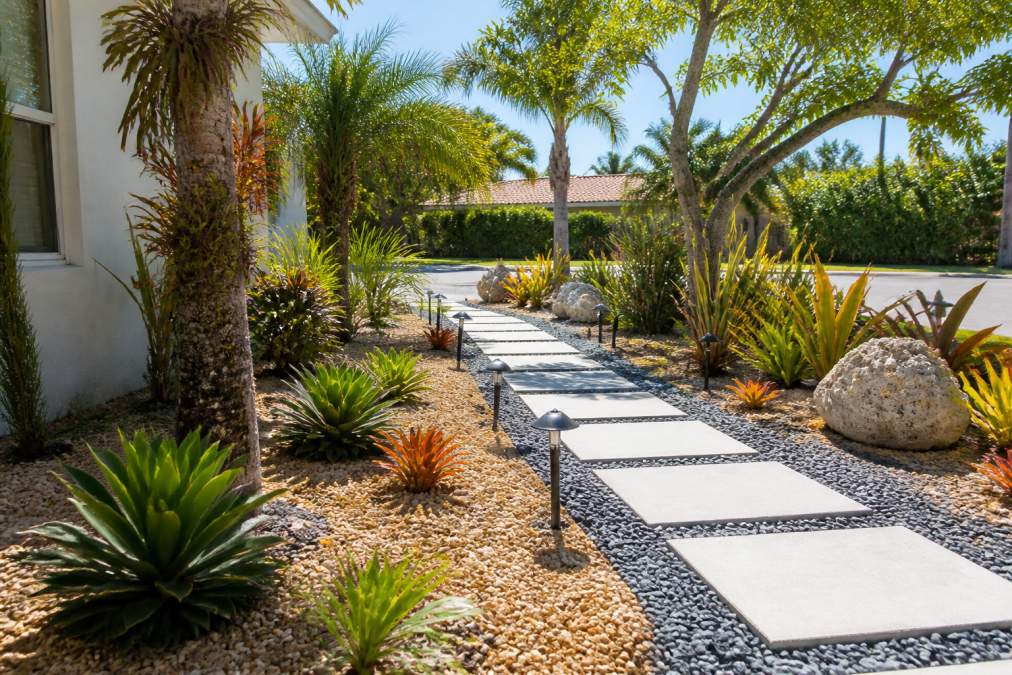
Hardscape solutions, pavers, stone, mulch, and decorative gravel, eliminate the need for grass entirely in areas where foot traffic or drainage problems make lawn maintenance difficult.
Gravel and stone provide excellent drainage for North Miami's rainy season, require zero water, and create a clean, modern aesthetic. Decorative gravel in earth tones or river rock finishes complements most home styles. Maintenance consists mainly of occasional raking to redistribute material and removal of any weeds that emerge.
The primary drawback: gravel and stone absorb and retain heat during peak summer months, potentially making outdoor areas less comfortable during afternoon use. Permeable pavers offer a compromise, providing durable hardscape with slightly lower heat retention than solid stone.
For high-traffic areas like entryways, pathways, and parking zones, hardscape solutions outperform any grass or ground cover option. Many North Miami homeowners combine hardscape for functional areas with ground covers or native plants in decorative zones, creating a balanced landscape that's both practical and attractive.
| Solution | Best For | Maintenance | Water Needed |
|---|---|---|---|
| Artificial Turf | Year-round green appearance | Occasional rinsing | None |
| Micro Clover | Eco-conscious homeowners | Minimal after establishment | Low |
| Creeping Thyme | Pathways and borders | Very low | Low |
| Native Plants | Sustainable ecosystems | Minimal after year two | Low |
| Hardscape/Gravel | High-traffic areas | Occasional raking | None |
Choosing the Right Lawn Alternative for Your Yard
The best lawn alternative depends on your specific situation: budget, time commitment, aesthetic preferences, and how you plan to use the space.
Start by evaluating your yard's conditions. Does it receive full sun or significant shade? Is drainage adequate or does water pool after rain? Is the soil sandy, clay-heavy, or mixed? North Miami's sandy soils work well with most alternatives, but drainage and sun exposure vary significantly between properties.
Consider your maintenance tolerance honestly. Artificial turf requires almost no upkeep but costs more upfront. Native plants demand careful initial planning but reward you with a self-sustaining ecosystem. Hardscape solutions eliminate mowing entirely but offer no green space or pollinator benefits.
Budget matters too. Artificial turf and hardscape involve higher installation costs. Ground covers and native plants cost less initially but require more time during establishment. P&P Landscaping and Tree Service works with homeowners, designing solutions that deliver results.
The rental property question comes up often. Landlords managing properties in North Miami frequently choose low-maintenance alternatives like artificial turf or hardscape to minimize exterior upkeep costs. These solutions also improve curb appeal.
Choosing a lawn alternative in North Miami isn't just about eliminating mowing. It's about creating an outdoor space that fits your lifestyle, respects the local environment, and looks great year-round. Whether you prioritize sustainability, low maintenance, or modern aesthetics, there's a solution that works.
P&P Landscaping and Tree Service brings two decades of experience designing and installing lawn alternatives across North Miami and South Florida.
Frequently Asked Questions
What are the best drought-tolerant ground covers for South Florida?
Micro clover blend and creeping thyme are top choices for drought-tolerant ground cover in Florida. Both establish deep root systems that reduce watering needs once mature. Micro clover fixes nitrogen naturally, improving soil health, while creeping thyme thrives in well-draining soils and produces pollinator-friendly flowers. Native Florida ground covers also perform exceptionally well, requiring minimal supplemental irrigation and naturally resisting local pests and diseases.
How do lawn alternatives comply with North Miami landscaping ordinances?
Before removing traditional grass, verify your local municipality's landscaping requirements. Many jurisdictions have specific standards for ground cover height, maintenance, and water conservation. Native plants and Florida-Friendly Landscaping principles typically align with local environmental goals. P&P Landscaping and Tree Service can guide you through local compliance during the design phase, ensuring your lawn alternative meets all ordinance requirements.
Are there low-maintenance lawn alternatives that thrive in Miami-Dade County?
Yes. Artificial turf eliminates mowing and watering entirely, while micro clover and creeping thyme require minimal upkeep once established. Native Florida ground covers are naturally adapted to local conditions and need far less fertilizer and pest control than traditional sod. Hardscape and gravel options require zero maintenance. The best choice depends on your budget, aesthetic preference, and how much foot traffic the area receives.
What's the cost difference between lawn alternatives and traditional sod?
Costs vary widely by material and installation size. Artificial turf can involve a higher initial investment but may lead to long-term savings on mowing and water. Ground covers and native plants can be more affordable initially but require proper soil preparation and establishment care. Hardscape solutions vary in cost depending on material. Contact P&P Landscaping and Tree Service for a detailed quote based on your specific yard conditions and chosen alternative.