 ultimate-guide
Commercial Landscaping Maintenance Pricing Guide 2026
Table of Contents
- What Drives Commercial Landscaping Maintenance Pricing
- Commercial Lawn Maintenance Frequency: How Often Is Enough?
- What Belongs in a Commercial Landscaping Contract Template
- Florida-Friendly Landscaping™ Guidelines and Their Impact on Cost
- How to Budget for Commercial Tree Maintenance
- Pricing Tiers: What Different Service Levels Actually Include
- Conclusion
- Frequently Asked Questions
Last Updated: October 1, 2026
What Drives Commercial Landscaping Maintenance Pricing
Commercial landscaping maintenance pricing is the total cost a property owner or manager pays for recurring grounds care, and it is built from three variables: how much ground you have, how often crews visit, and how much work each visit includes. P&P Landscaping and Tree Service has extensive experience with commercial contracts across Miami-Dade and Broward County, and the pattern is consistent: two properties of identical size can land thousands of dollars apart per year based on service scope alone.
Below, we'll show you exactly how each factor moves the number, what belongs in a commercial landscaping contract template, and how to compare bids without getting burned.
Property Size and Turf Area
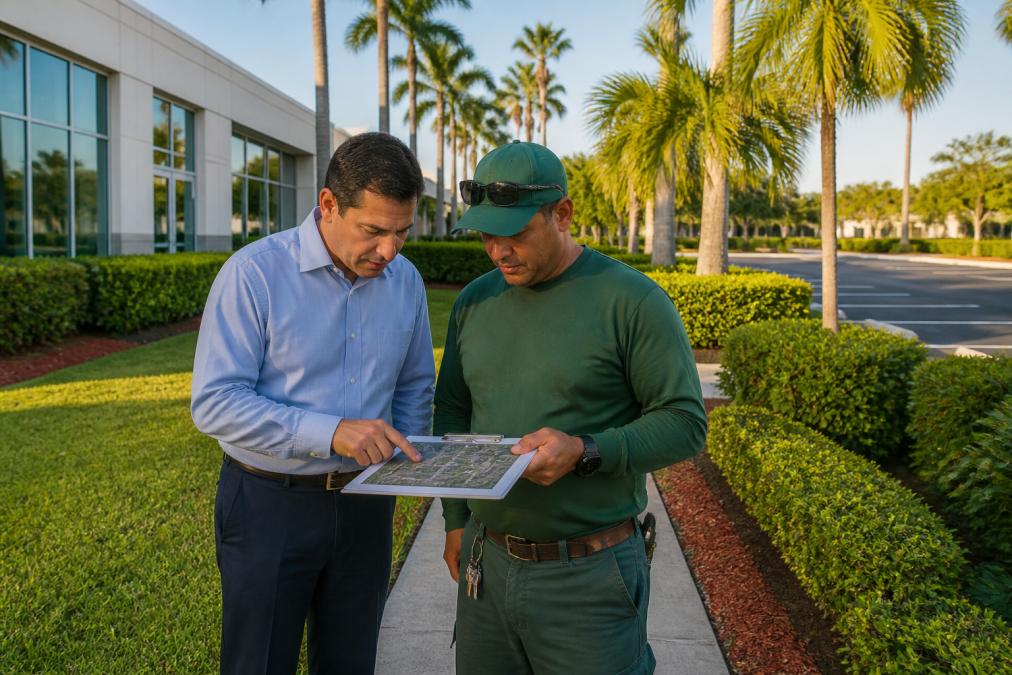
Turf area, not total acreage, is the number that matters. A property with 40,000 square feet of lawn and 60,000 square feet of parking lot costs far less to maintain than one with 90,000 square feet of grass, because mowing, edging, and irrigation checks scale with planted surface.
Property managers should measure three things before requesting quotes:
- Mowable turf square footage
- Bed and hedge linear footage
- Number and height of trees requiring routine care
Service Scope and Frequency
Scope is where bids diverge most. A mow-and-blow contract covers cutting, trimming, and cleanup. A full-service agreement adds fertilization, weed control, mulch refresh, irrigation repair, and seasonal color rotations.
Commercial Lawn Maintenance Frequency: How Often Is Enough?
The right commercial lawn maintenance frequency for most South Florida commercial properties is weekly during the growing season. Warm, humid conditions push turf growth year-round, so biweekly visits let grass get ahead of crews and leave a shaggy first impression for tenants and customers.
Frequency choices typically break down this way:
| Frequency | Best For | Tradeoff |
|---|---|---|
| Weekly | Retail centers, HOAs, offices with visible frontage | Highest cost, best appearance |
| Biweekly | Light-use industrial sites, storage yards | Visible growth between visits |
| Monthly | Vacant land, seasonal properties | Appearance not tenant-facing |
Seasonal Adjustments for South Florida
South Florida doesn't follow the four-season calendar most national contracts assume. The rainy season from roughly May through October drives heavy growth and fungal pressure, while the drier winter months slow turf and shift work toward irrigation repair, pruning, and mulch.
A well-built contract adjusts visit counts by month rather than locking a flat frequency year-round. That structure keeps you from paying for visits you don't need in January while protecting appearance in August.
What Belongs in a Commercial Landscaping Contract Template
A commercial landscaping contract template should specify scope, frequency, pricing structure, term length, termination terms, and insurance requirements in writing. Verbal agreements are the single most common source of disputes between property managers and grounds crews.
Clauses That Protect Your Budget
Three clauses do most of the protective work:
- Scope definition: exact square footage, plant counts, and tasks per visit
- Price adjustment terms: how and when rates can change, and with how much notice
- Termination and cure period: your exit path if service quality drops
Florida-Friendly Landscaping™ Guidelines and Their Impact on Cost
The Florida-Friendly Landscaping™ guidelines, developed through the University of Florida's extension program, promote nine principles including right plant right place, efficient irrigation, and reduced fertilizer runoff (9 Principles - Florida-Friendly Landscaping™ Program - University of Florida, Institute...). For commercial properties, aligning with these guidelines often lowers long-term cost because appropriate plant selection reduces water, chemical, and replacement expenses.
Adopting the guidelines can raise upfront design costs while lowering recurring maintenance over time. The trade is worth it on properties you plan to hold for years.
Florida-Friendly Landscaping Program
How to Budget for Commercial Tree Maintenance
Tree care is the line item property managers most often forget, and the one that causes the biggest surprise invoices. Routine pruning, palm trimming, and hazard assessment belong in the annual budget as a separate category from turf care.
Budget tree work in three tiers:
- Routine: annual or biennial pruning and palm trimming
- Reactive: storm damage, limb removal, emergency calls
- Capital: removal of hazardous or dying trees
For properties with mature oaks or pines, a certified arborist assessment before hurricane season is the cheapest insurance you can buy. Documentation of hazard trees also supports insurance and liability positions.
Pricing Tiers: What Different Service Levels Actually Include
Most commercial landscaping maintenance pricing falls into three service tiers, and knowing which one your property actually needs is the fastest way to control cost. P&P Landscaping and Tree Service offers tailored service plans for commercial agreements, adjusting for property specifics.
| Tier | Typical Scope | Best For |
|---|---|---|
| Essential | Mowing, edging, trimming, debris hauling | Industrial sites, storage yards |
| Standard | Essential plus fertilization, weed control, irrigation checks | Retail, offices, rental properties |
| Full-Service | Standard plus mulch, seasonal color, tree care, design refresh | Class A offices, HOAs, hospitality |
The gap between tiers is scope, not quality. A property that only needs clean, safe grounds should not pay for seasonal color rotations it will never notice.
For property managers in North Miami searching for commercial landscaping maintenance near me, the practical move is to request an on-site walkthrough rather than a phone quote. Crew leaders who see the turf, irrigation, and tree canopy in person can price accurately; phone quotes almost always get revised upward once work begins.
Conclusion
The hardest part of commercial landscaping isn't finding someone to mow, it's finding a crew that shows up, finishes the job, and prices it honestly. P&P Landscaping and Tree Service has handled commercial grounds across Miami-Dade and Broward County for more than twenty years as a family-owned and operated business, combining landscape maintenance with in-house tree care so property managers deal with one reliable team instead of three. Our tailored service plans and seamless project execution from consultation to completion keep commercial properties presentable and safe year-round. Book an on-site estimate now and get a scope-based number you can actually budget against.
Frequently Asked Questions
What factors influence commercial landscaping maintenance pricing in North Miami?
Pricing depends on property size, turf area, plant density, service frequency, and whether tree care is included. Properties with extensive palm trees or hurricane-prone oak canopies require more labor. Irrigation system condition and access constraints also affect cost. Because every commercial site is different, P&P Landscaping and Tree Service provides on-site estimates rather than flat-rate quotes. Request a walkthrough so the crew can measure actual turf square footage and count trees before quoting.
How often should commercial properties in Florida be serviced?
Most commercial lawns in South Florida need mowing every 7 to 14 days during the growing season, which runs nearly year-round. Fertilization typically follows a quarterly schedule, and hedge trimming happens every 4 to 8 weeks depending on species. Commercial lawn maintenance frequency should be written into your contract with specific visit counts per month, not vague language like 'as needed.' This prevents disputes and keeps the property consistently presentable for tenants and customers.
What is included in a standard commercial landscaping contract template?
A solid commercial landscaping contract template covers scope of work, visit frequency, equipment used, debris removal, and payment terms. It should also address insurance requirements, termination notice periods, and how change orders are handled. Include a clause about who supplies materials like mulch and fertilizer. For commercial properties, add language about parking lot islands, median strips, and any common areas. Review the template with your landscape provider before signing so both parties agree on deliverables.
Are there specific Florida-Friendly Landscaping™ requirements for commercial properties?
Florida-Friendly Landscaping™ guidelines encourage water-efficient irrigation, appropriate plant selection, and reduced fertilizer runoff. While not a legal mandate, many municipalities in Miami-Dade and Broward County reference these principles in their landscaping codes. Following the guidelines can lower long-term maintenance costs because native and adapted plants need less water and fewer chemical treatments. Ask your provider whether their maintenance plan aligns with Florida-Friendly Landscaping™ practices to avoid code issues and reduce utility bills.
How do I budget for commercial tree maintenance in North Miami?
Tree maintenance budgeting depends on tree count, species, size, and risk level. Palms need frond trimming, while large shade trees may require structural pruning or hazard assessment. Hurricane season adds urgency, so schedule an inspection before June. Allocate a contingency line for emergency removals. P&P Landscaping and Tree Service offers on-site estimates that include a tree inventory, so you know exactly which trees need work and can plan costs across the fiscal year instead of reacting to storms.