 Ultimate guide
Hiring Professional Landscaping for Business: A Complete Guide
Last Updated: November 16, 2026
Quick Summary
Hiring professional landscaping for business means contracting a commercial provider to manage your property's grounds to a documented standard, covering turf care, pruning, tree and palm maintenance, irrigation, and seasonal color as one coordinated scope. Compare scopes on stated visit frequency, priced square footage, irrigation repairs, and storm response before comparing price.
- North Miami's year-round growing season makes a scheduled maintenance plan essential for commercial properties.
- Most North Miami properties do best on a weekly or biweekly mowing cycle during the growing season.
- Contractors generally quote a flat monthly fee, per-visit pricing, or a base fee plus unit pricing.
- Verify an active certificate of general liability insurance and workers' compensation before work begins.
- Ask for three references from commercial properties of similar size before signing.
Table of Contents
- Why Commercial Properties in North Miami Need Professional Landscaping
- Services a Professional Landscaper Provides for Commercial Properties
- What a Commercial Landscaping Contract Should Include
- Understanding Commercial Landscaping Cost and How to Read a Quote
- Building a Commercial Landscaping Maintenance Plan for Your Property
- Your Commercial Landscaper Hiring Checklist
- Book an On-Site Estimate for Your North Miami Property
- Frequently Asked Questions
Why Commercial Properties in North Miami Need Professional Landscaping
Commercial landscaping is the ongoing management of a business property's grounds, from turf and irrigation to trees and palms, performed to a documented standard. For a business in North Miami, that standard is set by a subtropical climate that never really stops growing.
Commercial owners who treat grounds care as a weekend chore tend to see the same predictable results: patchy turf, overgrown hedges, and code complaints that arrive faster than the fix.
What Business Owners Get Wrong About DIY Upkeep
The biggest mistake is assuming a mower and an afternoon will cover it. Commercial properties carry obligations residential yards do not: parking islands, entry beds, medians, and liability exposure when a palm frond drops on a customer's car.
A common mistake is trimming hedges without knowing which species tolerate hard cuts in this climate. Another is skipping irrigation checks until the dry season, when turf damage is already visible.
Services a Professional Landscaper Provides for Commercial Properties
A commercial landscaping contract should cover turf care, ornamental pruning, tree and palm maintenance, irrigation, and seasonal color as one coordinated scope. Splitting these across vendors is how gaps appear.
Mowing, Trimming, and Edging Schedules
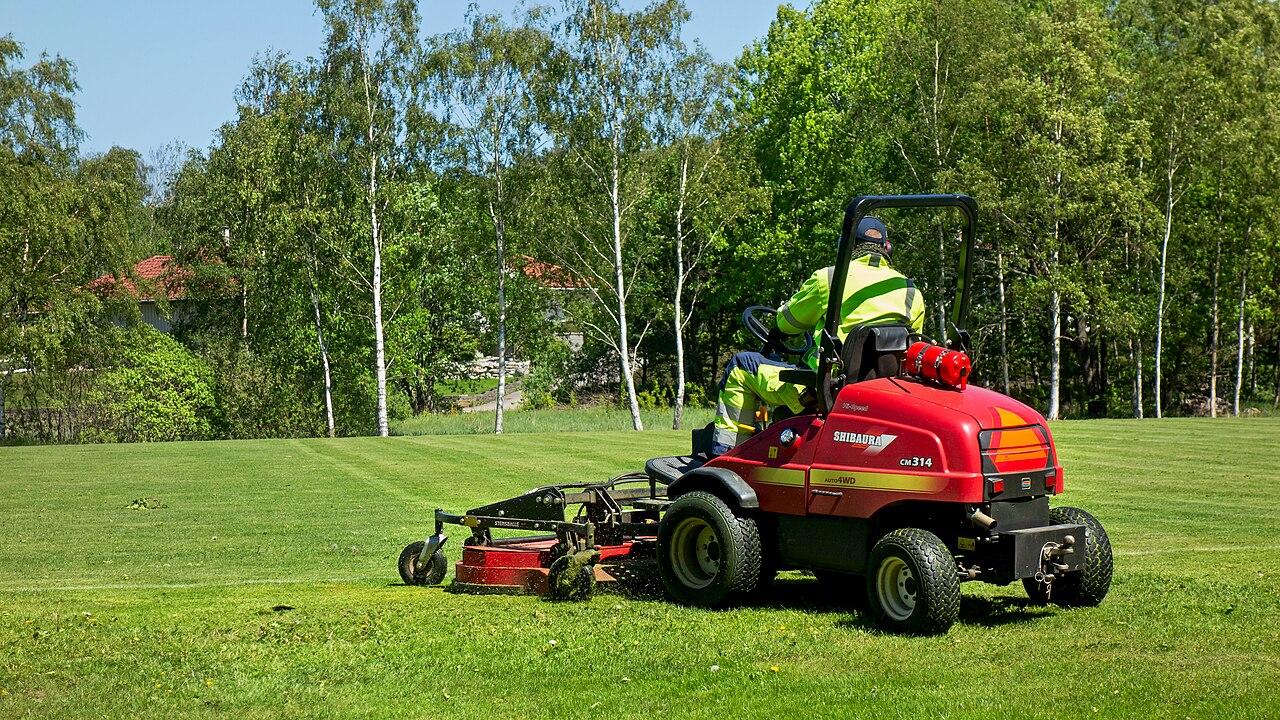
Turf on a commercial property needs a rhythm, not a reminder. Most North Miami properties do best on a weekly or biweekly mowing cycle during the growing season, with edging along every walkway and bed line at each visit.
Consistency matters more than speed. Mowing too low in summer heat stresses the turf and opens the door to weeds. Heavy rain also matters here: mowing saturated turf tears it and compacts soil, so a credible scope states how rain days and make-up visits are handled.
Pruning, Planting, and Tree Care
Pruning is where untrained work does the most damage. Shrubs cut back to stubs at the wrong time of year may not recover, and palms stripped of too many fronds weaken permanently.
Tree care is the higher-stakes half. Hazardous limbs over parking areas, dead palms near walkways, and storm-season risk all need assessment by someone who understands both the species and the liability.
Irrigation, Beds, and Seasonal Color
Irrigation is the service most likely to be quietly excluded. A commercial scope should state whether the contractor inspects heads and zones, adjusts the controller by season, and repairs breaks, and whether repairs are included or billed.
Bed care and seasonal color round out the scope: weed control, mulch refresh, and rotating color in entry beds. These are the visible zones customers judge first, so they belong in the recurring scope rather than in a separate project quote.
How to Compare Two Scopes Side by Side
Because service lists look alike, compare them on these points before you compare price:
- Visit frequency stated in visits per month, not just "weekly" or "as needed."
- Turf and bed square footage priced, so you are comparing the same area.
- Irrigation: inspections included, repairs included or billed, and who holds parts warranties.
A contractor who can answer these in writing is describing a maintenance plan, not just a service menu, and that is the difference you can actually manage against.
What a Commercial Landscaping Contract Should Include
A commercial landscaping contract is a written agreement defining scope, frequency, pricing, and accountability for a property's grounds. If it does not name these clearly, expect disputes.
Look for:
- A written scope listing every service and how often each occurs
- A property map showing turf, beds, trees, and irrigation zones
- Pricing that separates recurring maintenance from project work
For practical guidance on negotiating these terms before you commit, our team put together commercial landscaping service contract tips that walk through the clauses worth pushing back on.
Understanding Commercial Landscaping Cost and How to Read a Quote
Commercial landscaping cost depends on property size, service frequency, plant density, and tree risk, and it is best estimated after a site walk. The buyer-side gap most guides skip is how the number is actually built, so you can compare two proposals line by line instead of staring at two totals.
The Three Pricing Models You Will See
Commercial contractors generally quote one of three ways, and each shifts risk differently:
- Flat monthly fee. One recurring price covers the defined scope. Predictable for budgeting, but only fair if the scope is specific about visit frequency and what counts as extra.
- Per-visit pricing. You pay for each service visit. It works for low-frequency or seasonal properties, but costs climb fast if the property needs weekly attention during the growing season.
- Base fee plus unit pricing. A recurring base covers routine mowing, edging, and bed care, and project work (mulch, sod, irrigation repairs, tree removal) is priced per unit, per cubic yard of mulch, per pallet of sod, per hour of tree work.
Ask which model a proposal uses before you compare totals. A flat fee and a base-plus-unit quote can look similar on page one and diverge sharply by month three.
What Moves the Number Up or Down
The same half-acre property can price very differently depending on these factors:
- Turf area versus total acreage. Parking lots, buildings, and hardscape do not need mowing. Price the maintainable turf and bed square footage, not the parcel size.
- Visit frequency. Visit frequency often varies between the warm, wet months and the winter season, so a quote that assumes the same frequency year-round should be questioned.
- Plant and tree density. Dense hedges, palm rows, and mature canopy take more labor per visit than open turf.
How to Read a Proposal Line by Line
When you open a bid, separate it into four buckets and confirm each is priced and explained:
- Recurring maintenance, mowing, edging, trimming, blowing, bed weeding. Confirm visits per month, not just "weekly."
- Irrigation, inspections, adjustments, and repairs. Ask what is included versus billed.
- Seasonal and project work, mulch refresh, sod replacement, annual color, pruning cycles. These should be unit-priced or scoped separately.
- Tree work, pruning, removals, and storm response. Confirm whether it is in-scope or quoted per job.
Then ask what triggers an extra charge: storm debris, irrigation breaks, added plantings, or extra visits. A fair quote states those triggers upfront and puts the unit price in writing.
If you want a sense of how proposals are typically structured before you start collecting them, our commercial landscaping maintenance pricing guide breaks down the factors that move a number up or down.
Contractors generally quote commercial grounds care one of three ways, and each shifts risk differently.
| Pricing model | How it works | Best for | Watch out for |
|---|---|---|---|
| Flat monthly fee | One recurring price covers the defined scope | Predictable budgeting | Only fair if scope is specific about frequency and extras |
| Per-visit pricing | You pay for each service visit | Low-frequency or seasonal properties | Costs climb fast with weekly growing-season attention |
| Base fee plus unit pricing | Recurring base covers mowing, edging, bed care; projects priced per unit | Separating routine work from project work | Unit rates apply per cubic yard, pallet, or hour |
Building a Commercial Landscaping Maintenance Plan for Your Property
A maintenance plan is the schedule and standard behind the contract: what gets done, when, and how success is measured. Without one, service visits become reactive.
Start with a property walk and photograph the current condition. Set priorities by visibility and risk: entry areas first, then high-traffic turf, then perimeter beds.
Landlords and property managers with multiple doors should ask for a plan that scales across sites. Our landscaping services for rental properties overview shows how recurring upkeep is structured for rental and commercial portfolios.
Your Commercial Landscaper Hiring Checklist
Hiring a commercial landscaper comes down to verification: license, insurance, scope, references, and a written plan. Skip any one of these and you are gambling with your property.
Use this checklist before signing:
- Confirm the business holds a current occupational license for the work performed
- Request a certificate of general liability insurance and verify it is active
- Ask for workers' compensation coverage confirmation
- Request three references from commercial properties of similar size
Licensing, Insurance, and Safety Protections
Insurance is the line between a routine accident and a claim against your business.
Safety matters just as much. For licensing and consumer protection questions in Florida, the Florida Department of Business and Professional Regulation maintains the public license lookup.
Watch out: the most common failure here is a contractor who provides an insurance certificate that has already lapsed. Call the insurer to verify the policy is current before work begins.
Book an On-Site Estimate for Your North Miami Property
An estimate should start with a walk of your property, not a phone number.
If you are comparing quotes and want to understand what a well-built proposal includes, our North Miami landscaping and tree service team provides free on-site estimates and will walk the property with you before pricing anything.
Questions about scheduling, coverage, or how we handle storm cleanup? Our contact page has the direct line and hours, and we are happy to answer licensing and insurance questions before you commit to anything.
Commercial grounds in South Florida do not pause, and neither should the plan behind them.
Frequently Asked Questions
How do I choose a commercial landscaping company?
Start with proof of licensing and insurance, then ask for references from properties similar to yours in size and use. Review the proposed scope in writing, confirm how often crews visit, and check who handles tree work versus routine maintenance. A professional landscaping provider should walk the property before quoting, explain what each line item covers, and put service frequency, cleanup, and communication terms in the contract. Ask how they handle storm damage and whether emergency response is included.
What should a commercial landscaping contract include?
A solid commercial landscaping contract names the specific tasks and visit frequency, the service area on your property, and who supplies water and equipment access. It should state start and end dates, renewal terms, payment schedule, and notice period for cancellation. Include insurance and licensing certificates, debris removal and cleanup obligations, and how change orders are priced. Clarify what happens after storms or freezes, and whether tree removal is covered or quoted separately.
How much does commercial landscaping cost in North Miami?
Commercial landscaping cost depends on property size, plant density, how often crews visit, and whether tree work or irrigation repairs are included. Quotes typically factor in labor, equipment, disposal fees, and material replacements. Storm season can raise maintenance frequency, which affects price. Because every property differs, ask for an itemized quote rather than a single lump sum, and compare what each proposal actually covers before deciding.
What questions should I ask before hiring a landscaper?
Ask how long the company has operated in the area, whether crews are employees or subcontractors, and who your point of contact will be. Request proof of general liability and workers' compensation insurance. Ask what happens if a crew misses a visit, how storm cleanup is handled, and whether the same crew services your property each time. Finally, ask for local references and photos of completed commercial work similar to your property.
How can businesses maintain landscaping between service visits?
Between professional visits, assign someone to report irrigation leaks, broken sprinkler heads, or fallen branches promptly. Keep walkways clear and remove litter, and avoid trimming plants yourself in ways that damage shape or health. A commercial landscaping maintenance plan can include scheduled inspections so small issues are caught before they become expensive. Documenting problems with photos helps your provider respond faster and keeps the property presentable for tenants and customers.