 how-to
Is It Safe to Keep Dead Trees Near Your House?
Table of Contents
- Why Dead Trees Near Your House Are a Safety Concern
- Signs a Dead Tree Is Dangerous
- Understanding Dead Tree Falling Risk
- How to Assess Tree Health Before Taking Action
- Dead Tree Removal Near House: What You Need to Know
- Tree Removal Permit Requirements in North Miami
- When to Call a Professional Tree Service
- Protecting Your Property and Family
- Frequently Asked Questions
Last Updated: October 9, 2026
Why Dead Trees Near Your House Are a Safety Concern
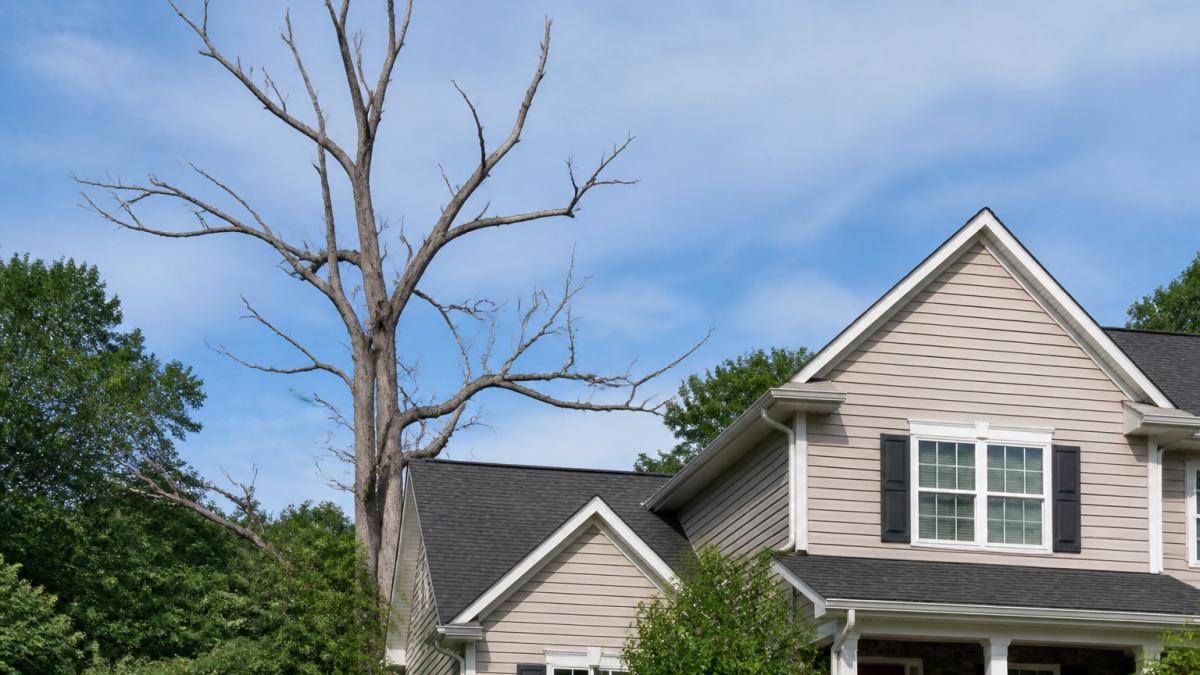
A dead tree standing near your home is more than an eyesore. It's a structural hazard waiting to fail.
Dead trees lose their flexibility and strength over time. Unlike living trees that bend in wind and absorb stress through active wood tissue, dead wood becomes brittle. The roots stop anchoring the tree securely in the soil.
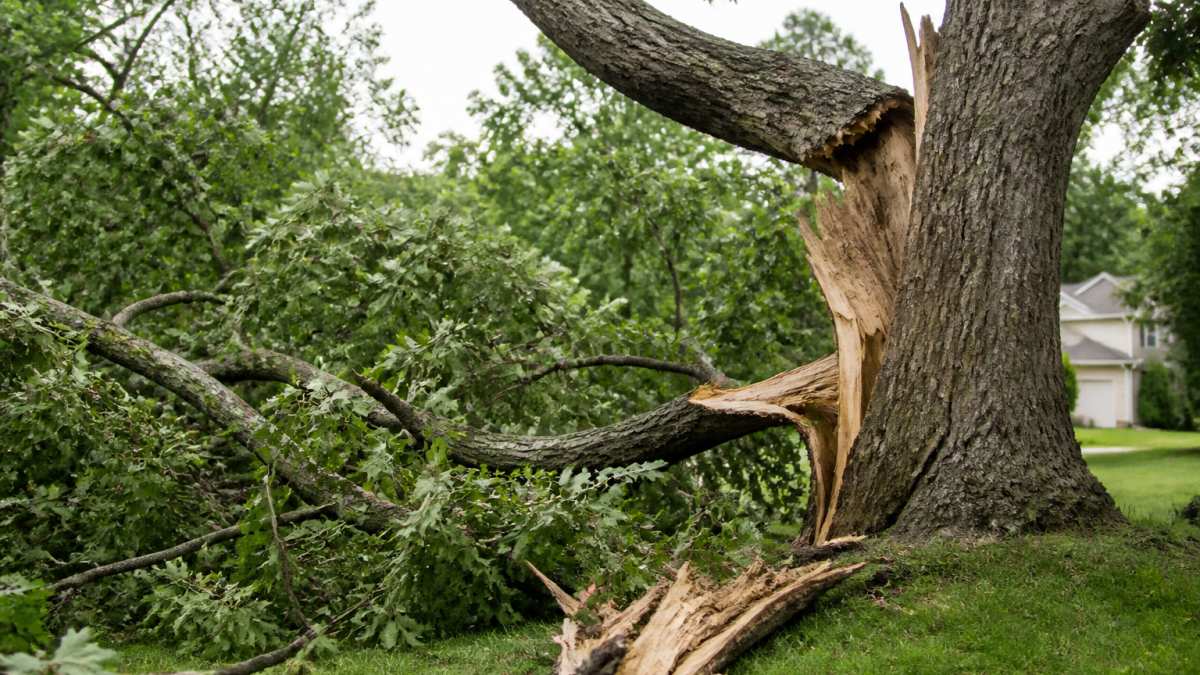
The risk escalates during storms, high winds, or heavy rain. A single gust can snap a dead tree or tear it from the ground. Branches break and fall without warning.
Most homeowners wait too long to address dead trees near house because they underestimate the danger. A dead tree can appear stable right up until the moment it fails catastrophically.
Signs a Dead Tree Is Dangerous
The clearest sign a tree is dead is the complete absence of green foliage during growing season. If a tree has no leaves by late spring, it's dead or dying.
Look for these specific danger indicators:
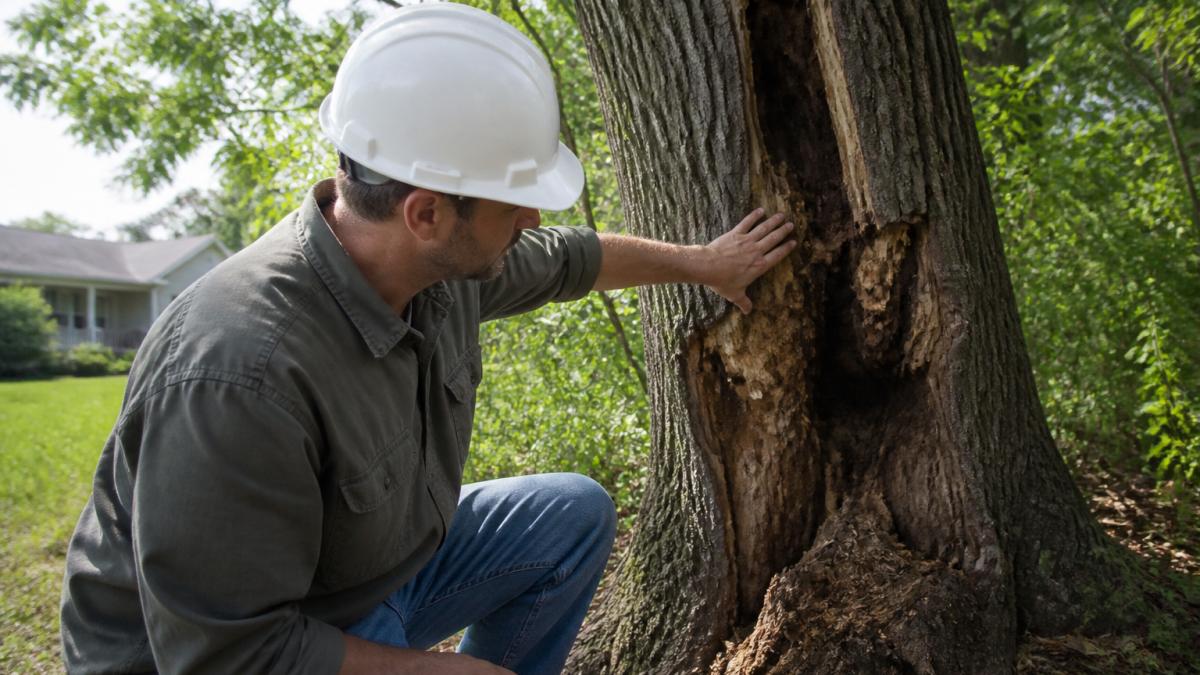
- Bark peeling or missing, Exposed wood underneath invites disease and accelerates decay
- Large dead branches, Indicates structural failure is already underway
- Cracks or splits in the trunk, The tree is breaking apart from internal stress
- Leaning or tilting, The root system is failing or the tree has shifted
- Fungal growth or mushrooms, These feed on decaying wood and signal advanced decay
- Hollow sections, Tap the trunk; a hollow sound means internal rot
- Sawdust or wood chips at the base, Insects are tunneling through weakened wood
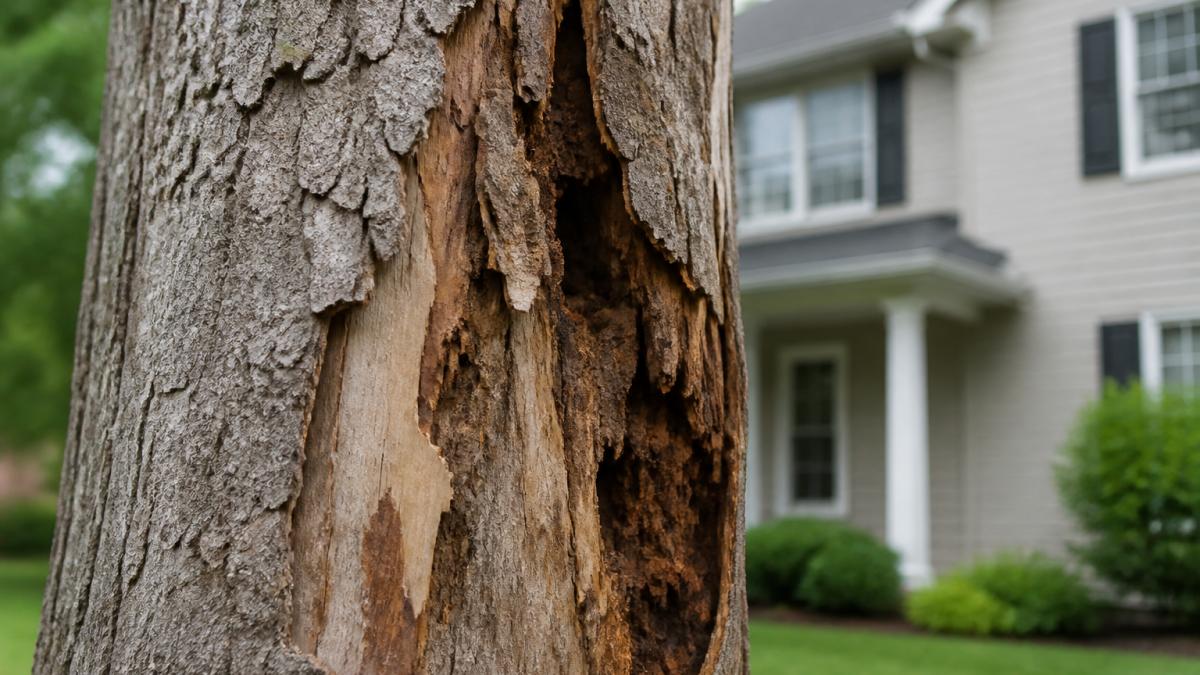
The most dangerous dead trees are those near structures. A tree 30 feet from your house poses less risk than one 10 feet away.
Age of the tree also matters. A tree dead for multiple years has undergone significant internal decay (Dead wood biomass and turnover time, measured by radiocarbon, along a subalpine elevation...).
Understanding Dead Tree Falling Risk
Not every dead tree falls immediately. Some remain standing for years. Others collapse within weeks. The difference comes down to specific structural and environmental factors that determine how soon failure occurs.
Structural Failure Indicators
A dead tree's internal condition determines when it will fail. Wood loses strength as it decays. Decay doesn't happen uniformly. Some parts of the tree rot faster than others.
The most dangerous pattern is decay concentrated in the base or lower trunk. This is where the tree bears all its weight. If the lower trunk is hollow or severely rotted, the tree can snap at that point and fall.
Root rot is equally critical. Healthy roots anchor the tree deep in soil. Dead roots decay and lose their holding power.
Size and weight amplify the danger. A 30-foot dead pine is less dangerous than a 60-foot dead oak. Larger trees carry more weight and can cause more damage when they fall.
Environmental Factors That Increase Risk
Weather accelerates dead tree failure. Wind is the primary trigger. Even moderate wind can snap brittle deadwood. Hurricane-force winds will topple nearly any dead tree.
Soil conditions affect how long a dead tree stays rooted. Shallow soil or loose, sandy soil provides less anchoring. A dead tree in shallow soil fails faster than one in deep, clay soil.
Pests and disease accelerate decay. Beetles, termites, and carpenter ants tunnel through dead wood. Fungi and molds spread rot deeper into the trunk.
Proximity to other trees matters. A dead tree surrounded by healthy trees may be partially supported by them. An isolated dead tree bears all its own weight and falls more readily.
How to Assess Tree Health Before Taking Action
Before deciding whether to remove a dead tree near house, assess its condition yourself.
Start with the obvious: is the tree actually dead? Check for green leaves or buds during growing season. Look for any signs of life.
Next, examine the trunk and branches from a safe distance. Look for the danger signs listed above.
Walk around the tree and look at the angle it's growing. A straight trunk is better than a leaning one.
Check the ground around the base. Look for root damage, heaving soil, or exposed roots. These indicate the tree is losing its anchor.
Finally, assess distance from structures. Measure roughly how far the tree is from your house, deck, roof, or parked vehicles.
Dead Tree Removal Near House: What You Need to Know
Removing a dead tree near house requires planning and the right approach. The safest and most effective method depends on the tree's size, location, and condition.
DIY vs. Professional Removal
Small dead trees (under 20 feet) with clear fall zones might be manageable for a homeowner with chainsaw experience. But "small" is relative. Even a 20-foot tree is heavy and dangerous. One mistake with a chainsaw or miscalculation of where it falls causes serious injury or property damage.
Most dead trees near houses should be removed by professionals. Here's why:
- Risk of injury, Chainsaws, falling branches, and heavy wood cause serious cuts and broken bones
- Property damage, A tree falling the wrong direction destroys your home, vehicles, or utilities
- Liability, If the tree damages a neighbor's property, you're responsible
- Cleanup, Professional removal includes hauling and disposal; DIY leaves you with tons of wood
- Insurance, Many homeowner policies require professional removal for trees over a certain size
Professional tree removal near house also handles complications. If power lines are nearby, professionals know how to work safely around them. If the tree is diseased or infested, professionals dispose of it properly to prevent spread. If the tree is partially over a neighbor's property, professionals handle the legal and safety considerations.
Tree Removal Permit Requirements in North Miami
Before removing a tree, check local regulations. Many municipalities in Florida require permits for tree removal, especially for trees over a certain size.
Generally, you'll need a permit if the tree is:
- Over a certain diameter (often 6 inches or more, measured at breast height)
- A protected species (live oaks, native trees, and heritage trees often have protection)
- Located in a conservation area or on protected land
- Subject to a tree preservation order
Dead trees sometimes have fewer restrictions than living trees. A clearly dead tree that poses a safety hazard may not require a permit, or the permit process may be expedited.
Contact the North Miami city arborist or development services department to confirm requirements. Provide details about the tree: species if you know it, size, location, and condition.
Some tree removal companies handle permit applications as part of their service. A professional tree service can advise on permit requirements for your specific property and help ensure all regulations are followed.
When to Call a Professional Tree Service
Professional tree removal is the right choice in several situations. If any of these apply to your dead tree near house, contact a certified arborist or tree service now.
Call immediately if:
- The tree is actively failing (branches falling, trunk cracking, tree leaning more each week)
- The tree is within 20 feet of your house, deck, or parked vehicles
- Power lines run through or near the tree
- The tree is over 30 feet tall
- You lack chainsaw experience and proper safety equipment
- The tree is in a difficult location (near a fence, building, or other obstacles)
Call soon if:
- The tree is clearly dead but stable and not immediately threatening structures
- You need a professional assessment to confirm the tree is actually dead
- You're uncertain about permit requirements
- You want the tree removed before hurricane season
Call for consultation if:
- You're unsure whether the tree is dead or just dormant
- You want an expert opinion on whether removal is necessary
- You need recommendations for what to plant after removal
A professional arborist can assess the tree in person, confirm its condition, estimate the risk, and recommend the safest removal method. Many tree services offer free consultations. This gives you clear information before making decisions.
Protecting Your Property and Family
Removing a dead tree near house eliminates one hazard, but prevention matters too. Here are steps to protect your property going forward.
Maintain healthy trees:
- Water trees during dry periods, especially young trees
- Prune dead or diseased branches promptly
- Avoid injuring tree bark when using string trimmers or equipment nearby
- Have diseased trees treated by a professional if recovery is possible
Monitor trees regularly:
- Walk your property after storms and look for damage
- Check trees for signs of disease or pest damage
- Notice if trees are leaning or if new cracks appear
- Remove small dead branches before they become large hazards
Plan ahead for storm season:
- Have large trees near structures inspected before hurricane season
- Remove dead trees before storms arrive
- Trim branches hanging over your roof
- Clear gutters to prevent water damage if branches do fall
Work with professionals:
- Have a certified arborist assess high-risk trees
- Get multiple quotes for removal work
- Ask about ongoing maintenance plans for your landscape
- Consider professional tree care as an investment in safety
We help homeowners across the area maintain healthy landscapes and remove hazardous trees safely. Our team brings over two decades of experience assessing tree health, managing removal projects, and protecting properties. Whether you need a dead tree assessed or removed, we provide professional guidance tailored to your specific situation.
Frequently Asked Questions
Is it safe to keep a dead tree near a house?
No. Dead trees near your house pose serious safety risks, including falling branches, complete tree failure, and property damage. Dead wood loses structural integrity over time, making it unpredictable. Proximity to your home increases the danger to your roof, windows, and foundation. Professional assessment is the safest approach to determine if removal is necessary.
How can I tell if a dead tree is likely to fall?
Several signs indicate high falling risk: large dead branches hanging from the canopy, significant trunk damage or hollow sections, bark peeling away, severe leaning, and visible cracks or splits. Trees that have lost all foliage are at immediate risk. Environmental factors like strong winds, recent storms, or saturated soil increase falling likelihood. When in doubt, have a professional assess the tree's structural integrity.
Do I need a tree removal permit in North Miami?
Local regulations often require permits for tree removal. Regulations protect protected species and native trees. Contact your local municipality to determine if your tree requires a permit before removal. A professional tree service can handle permit applications, ensuring compliance with local ordinances.
Can a dead tree damage my house or power lines?
Absolutely. Falling branches or entire trees can damage roofs, siding, windows, and foundations. Dead trees near power lines create electrical hazards and fire risks. They also block gutters with debris, attract pests and disease, and destabilize the soil around your home's foundation. Even partial failures pose significant liability and safety concerns for your family.
What's the difference between professional dead tree removal and handling it myself?
Professional tree removal services have specialized equipment, trained crews, and insurance to handle hazardous trees safely. DIY removal of dead trees is extremely dangerous, especially near structures or power lines, and often violates local regulations. Professionals ensure proper debris removal, site cleanup, and compliance with permits. They also assess whether removal is truly necessary or if other mitigation options apply.
Dead trees near house aren't something to ignore. They pose real risks to your home, vehicles, and family. The safest approach is professional assessment and removal. Contact P&P Landscaping and Tree Service for an on-site estimate. We'll evaluate your dead tree, explain the risks, and recommend the best solution for your property. Book your on-site estimate now and protect your home from tree hazards.