 How-to
Zoysia Lawn Pests: How to Identify and Prevent Them?
Quick Summary
Zoysia lawn pests are insects such as chinch bugs, white grubs, billbugs and fall armyworms that feed on zoysia turf, especially in dense, warm, thatchy lawns. Identify them by checking for irregular dead patches, turf that pulls up with no roots, and sawdust-like debris before treating. Prevention means proper mowing height, deep but infrequent watering, thatch control and scouting throughout the season.
- Pest damage often looks like drought, so check before watering or treating.
- Do the tug test: turf that lifts easily with no roots suggests grubs or root-feeding pests.
- Dig a square foot of soil about 2 inches deep to count grubs before treating.
- Never remove more than about one-third of the blade when mowing zoysia.
- Dethatch or aerate when thatch exceeds about half an inch, since it shelters pests.
Table of Contents
- Why Zoysia Lawns Attract Pests in North Miami
- How to Tell Zoysia Pest Damage From Disease or Drought Stress
- Zoysia Pest Identification Checklist: Chinch Bugs, Grubs, Billbugs and Armyworms
- Grubs in Zoysia Grass: Testing, Timing and Treatment
- Zoysia Lawn Insect Control: Step-by-Step Treatment Protocol
- Zoysia Lawn Maintenance in Florida: Prevention Calendar for South Florida
- Scheduling a Professional Lawn Inspection in North Miami
- Frequently Asked Questions
Why Zoysia Lawns Attract Pests in North Miami
Last Updated: November 21, 2026
If your zoysia lawn looks thin, patchy or yellow in North Miami, zoysia lawn pests are often part of the problem. Zoysia lawn pest problems and prevention questions often come up from homeowners who think their turf is simply struggling in the heat.
Zoysiagrass is a dense, warm-season turfgrass that does well in Florida's long, hot summers. That same density can make it a comfortable home for insects. Thick thatch and shaded soil give chinch bugs, grubs and billbugs places to hide and lay eggs.
A common mistake is assuming the lawn is just thirsty. Zoysia lawn pests and drought stress look alike from a distance, so it helps to check before you water or treat.
How to Tell Zoysia Pest Damage From Disease or Drought Stress
Pest damage, disease and drought all cause browning, but they leave different clues. Learning those clues saves time and keeps you from using the wrong product.
Signs that point to insects:
- Irregular dead patches that grow outward, often in sunny spots
- Turf that pulls up easily from the soil, as if it has no roots
- Sawdust-like debris or tunneling near the soil surface
- Grass that stays brown even after consistent watering
Signs that point to disease:
- Circular brown patches with a darker ring, especially in humid weather
- Thinning that spreads quickly after rain or heavy irrigation
Signs that point to drought stress:
- Blue-gray color and footprints that stay visible for a long time
- Dryness across the whole lawn rather than in isolated spots
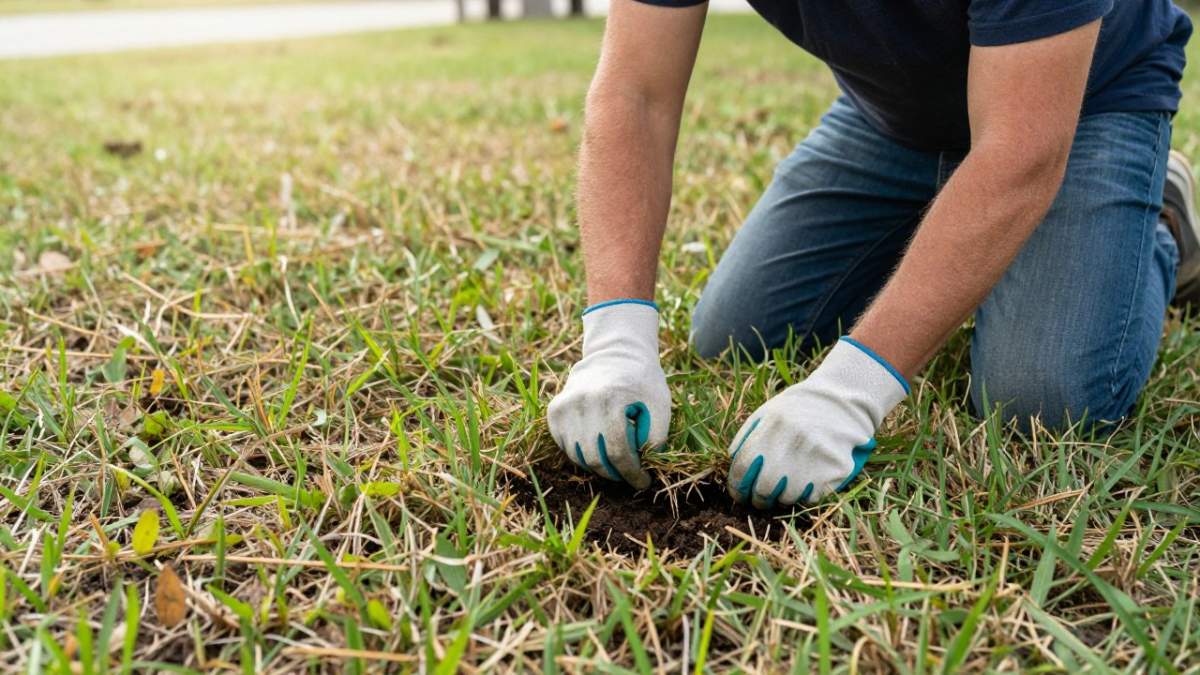
The tug test is a simple check. Grab a handful of grass and pull gently. If it lifts out easily with no roots attached, suspect grubs or another root-feeding pest.
Zoysia Pest Identification Checklist: Chinch Bugs, Grubs, Billbugs and Armyworms
Use this checklist to narrow down the cause before you choose a treatment.
- Chinch bugs: Look for yellow-to-brown patches in full sun. Part the grass at the edge of a damaged area and check for small black-and-white adults and nymphs.
- White grubs: Do the tug test. Dig a square foot of soil about 2 inches deep and count the C-shaped, cream-colored larvae.
- Billbugs: Look for sawdust-like frass at the base of the plant and stems that pull out easily.
- Fall armyworms: Look for chewed leaves and small green caterpillars, usually in late summer and fall, that can strip a lawn quickly.
- Confirm before treating: If you find fewer than a few pests per square foot, the damage may come from something else. Recheck after a week.
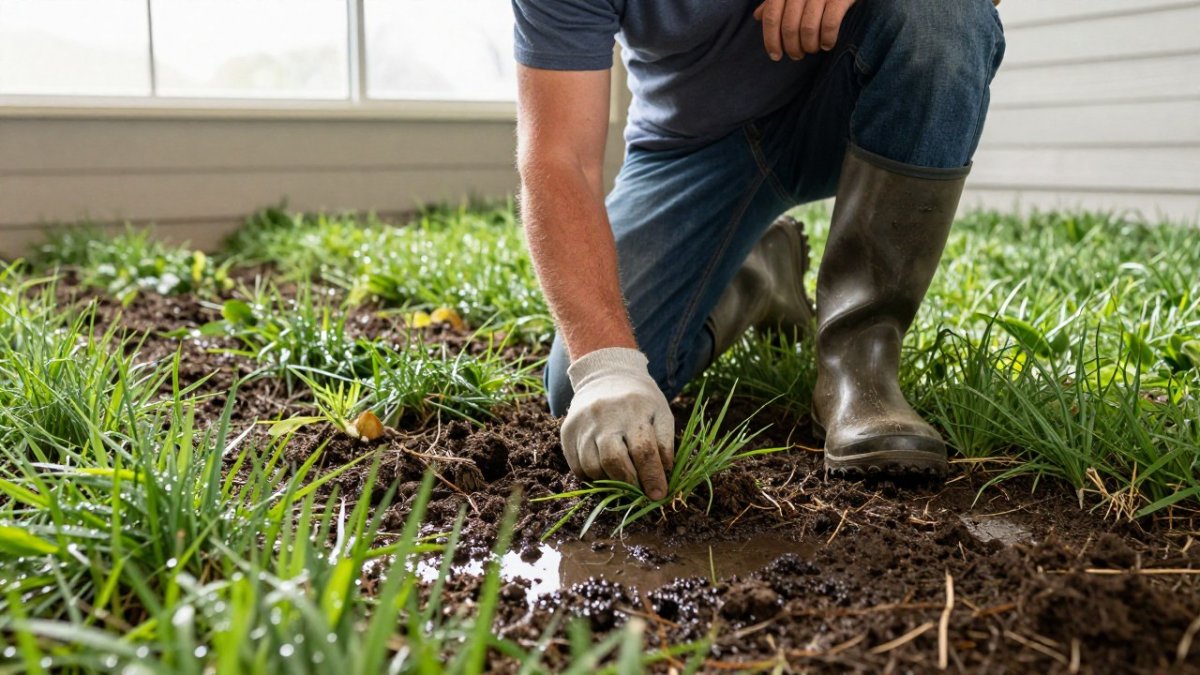
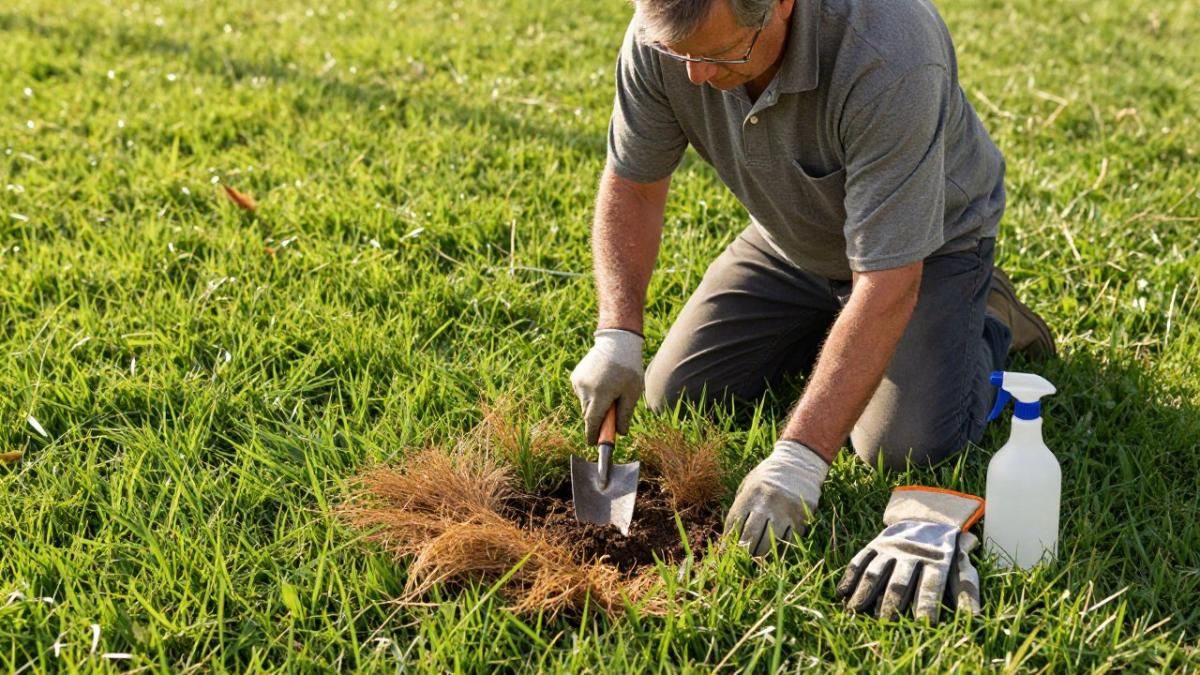
!Homeowner in work gloves kneeling on a dry, patchy zoysia lawn in South Florida, pulling back turf to inspect the soil and roots
Grubs in Zoysia Grass: Testing, Timing and Treatment
White grubs are the C-shaped, cream-colored larvae of scarab beetles, and in South Florida the grubs most often found under zoysia are the larvae of masked chafers and, in some yards, Japanese beetles where they occur. The damage is easy to misread because the larvae feed underground on roots for weeks before the turf above shows stress.
Test before you treat. Grub populations are patchy, so one sample tells you almost nothing. Cut a 1-square-foot square of turf and soil about 2 to 3 inches deep at several spots, especially along the boundary between healthy and damaged grass, and sift through the soil for larvae.
Timing is the whole game. Grubs are easiest to control when they are small and near the surface. In South Florida's warm, long growing season, that window typically falls in late spring through midsummer, depending on the species and the year's rainfall. Older, larger grubs are much harder to kill, and by fall they have usually stopped feeding and moved deeper, so a fall application often does little.
Treatment mechanics that matter:
- Choose a product labeled for white grubs on zoysiagrass, and read the label for the rate, the target life stage, and the required post-application watering.
- Many grub products need to be watered in immediately so the active ingredient reaches the root zone where the larvae feed; skipping that step is one of the most common reasons a treatment underperforms.
- Apply when the soil is moist and rain is not expected to wash the product off the target area.
- Keep people and pets off the treated area until the label says it is safe, and never apply more than the label allows.
Watch out: Treating a lawn for grubs without confirming larvae in the soil is one of the most common wasted applications in home lawn care, the brown patches are just as often chinch bugs, billbugs, disease, or irrigation problems, and an insecticide aimed at grubs will not fix any of those.
After treatment, expect recovery to be slow. If a large area is dead and does not fill back in, that is when sod installation in Miami, FL becomes the realistic fix rather than another round of product.
Zoysia Lawn Insect Control: Step-by-Step Treatment Protocol
Insect control works best as a sequence, not a single spray. Follow these steps:
- Confirm the pest. Use the checklist and tug test above.
- Check the cause. Fix watering problems and mowing height first, since stressed turf invites pests.
- Choose a labeled product. Pick an insecticide labeled for your specific pest and for zoysia.
- Apply at the right time. Follow label timing for the life stage you found.
- Water as directed. Many products need watering in to reach the target.
- Recheck in 7 to 14 days. Count pests again to see if the treatment worked.
Always read and follow the label (the EPA). Wear gloves, keep children and pets off treated areas until the label says it is safe, and store products out of reach (the EPA).
Insect control works best when you follow the steps in order, as summarised below.
| Step | What to do | Timing |
|---|---|---|
| Confirm the pest | Use the checklist and tug test | Before any treatment |
| Check the cause | Fix watering and mowing height first | Before treating |
| Choose a labeled product | Pick one labeled for your pest and zoysia | Before applying |
| Apply at the right time | Follow label timing for the life stage found | Per label |
| Water as directed | Water in so product reaches the target | Per label |
| Recheck | Count pests again to see if treatment worked | 7 to 14 days later |
Zoysia Lawn Maintenance in Florida: Prevention Calendar for South Florida
Most zoysia pest advice online is written for a four-season climate. North Miami does not have one. With warm nights, heavy summer rain, a dry-ish late-winter stretch, and turf that keeps growing most of the year, pest pressure here follows its own calendar.
January-February (cool, drier stretch). Growth slows but does not stop. Keep mowing at the correct height for your zoysia variety rather than scalping, water only when the turf shows stress, and skip heavy nitrogen fertilization, pushing growth now invites problems later.
March-April (warming up). Chinch bug activity begins to build as temperatures rise, and the first generation starts feeding in the hottest, sunniest parts of the lawn.
May-June (early rainy season). This is the core grub-treatment window in South Florida: larvae are small and near the surface, so a labeled product watered in per the label has the best chance of working.
July-August (peak heat and rain). Chinch bugs and billbugs are most active, and fall armyworm moths begin showing up. Scout for chewed leaves and small green caterpillars, especially after storms.
September-October (late rainy season). Fall armyworms can strip a lawn quickly in late summer and fall, so keep scouting. Grubs from the summer generation are larger and harder to control, so this is more about monitoring than treating.
November-December (cooler, drier). Pest activity drops but does not disappear. Keep the lawn clean of debris, mow at the right height, and water only as needed. Avoid heavy winter fertilization, which can trigger tender growth that cold snaps and pests exploit.
The maintenance levers that actually prevent pests:
- Mowing height and frequency: Mow at the height recommended for your zoysia variety and never remove more than about one-third of the blade at once; scalping stresses turf and opens it to chinch bugs and disease.
- Irrigation: Water deeply and less often so roots go deep, and water in the morning so the leaf blades dry before night, wet turf overnight favors disease.
- Thatch and drainage: Thatch thicker than about half an inch shelters pests and holds moisture; dethatch or aerate when it builds up, and fix low spots that stay soggy.
- Fertilization: Follow a soil-test-based plan and avoid pushing heavy nitrogen in the wrong season, which produces soft growth that pests and disease attack first.
Our team at P&P Landscaping and Tree Service can help you set up a schedule that fits your yard, whether you want to handle it yourself or have us manage it.
Scheduling a Professional Lawn Inspection in North Miami
Some pest problems are hard to diagnose or treat on your own. A professional inspection can confirm the pest, check for underlying issues and suggest a plan.
Call us when the lawn keeps declining after you have adjusted watering and mowing, when damage spreads quickly, or when you are unsure which product is right. Homeowners across the area, including those in Miami Beach and Miami Shores, rely on our local team, and our North Miami base is ready to help you book an estimate.
To schedule a visit, call (786) 892-9894 for a free on-site estimate.
Frequently Asked Questions
What are the most common pests in zoysia grass?
The pests most often found in zoysia lawns in South Florida are chinch bugs, white grubs, hunting billbugs and fall armyworms. Chinch bugs cause yellow, then brown, patches in hot, dry weather, usually along sunny edges and driveways. White grubs feed on roots, so turf lifts easily and wilts despite watering. Billbug larvae tunnel inside grass stems, and armyworms strip leaf blades quickly in warm months. Checking for these signs early makes treatment far simpler.
How can I tell if insects are damaging my zoysia lawn?
Start with a tug test: pull gently on grass in a yellowing area. If it lifts easily, roots are likely being eaten by grubs. Next, check the soil edge where grass meets sidewalks, a classic chinch bug hiding spot, and look for insects or larvae in the top inch of soil. Brown patches that appear suddenly during hot, dry weather point toward insects, while circular patches with dark edges more often indicate fungal disease. Compare patterns across the lawn before deciding on treatment.
How can I tell the difference between zoysia insect damage and fungus?
Insect damage usually appears as irregular patches that expand from sunny, stressed areas, and the tug test often shows loose turf. Fungal problems such as large patch or brown patch tend to form rings or circles, often with a dark or smoky border, and show up more after prolonged wet, humid weather. Insects leave lawn surfaces intact but the crown and roots damaged, while fungus affects leaf blades and crowns more visibly. If you are unsure, a local extension office or a professional inspection can confirm the cause before you apply any product.
What is the best way to prevent pests in a zoysia lawn?
Prevention starts with healthy turf. Mow zoysia at the recommended height, usually between 1 and 2 inches, since taller grass tolerates pest feeding better. Water deeply and less often so roots grow deep, and avoid frequent shallow watering that keeps the surface soft and encourages thatch. Fertilize on a seasonal schedule using a balanced program, and keep thatch under control through periodic aeration. Monitoring your lawn every few weeks during the warm season lets you act before a small problem spreads.