 How-to
How to Hire Professional Arborists for Storm Mitigation
Last Updated: November 13, 2026
Quick Summary
Hire professional arborists for storm mitigation by checking for certified arborist credentials, proof of liability and workers' compensation insurance, a written estimate with a clear scope, and a documented tree risk assessment. Book the assessment before storm season, when you can compare options.
- Verify the ISA certification number of the arborist who will actually perform the work.
- Request current general liability and workers' compensation certificates sent directly from the insurer.
- Ask whether the assessor holds the ISA Tree Risk Assessment Qualification (TRAQ).
- Avoid heavy topping; removing more than about a quarter of the living canopy stresses the tree.
- Compare bids line by line, since a lower total often omits debris removal or stump grinding.
Table of Contents
- Why Storm Mitigation Needs a Certified Arborist
- Tree Risk Assessment: What a Qualified Arborist Actually Checks
- Tree Pruning for Storm Preparation: What to Cut and What to Leave
- How to Choose a Tree Service Company in South Florida
- Arborist Inspection Cost and How to Compare Estimates
- Permits, Protected Trees, and Insurance Documentation
- Booking Your Storm Mitigation Assessment Before Hurricane Season
- Frequently Asked Questions
Storm season in North Miami leaves a lot of trees standing on borrowed time. A single overloaded limb or a leaning oak can turn a July thunderstorm into a roof claim, a fence repair, or worse. Before requesting a bid, you can see what a professional removal quote should include. This guide explains how to hire professional arborists for storm mitigation, what they should check, and how to tell a serious company from one that just owns a chainsaw. Hiring professional arborists for storm mitigation is about preventing damage before the weather arrives, not cleaning up after it.
Why Storm Mitigation Needs a Certified Arborist
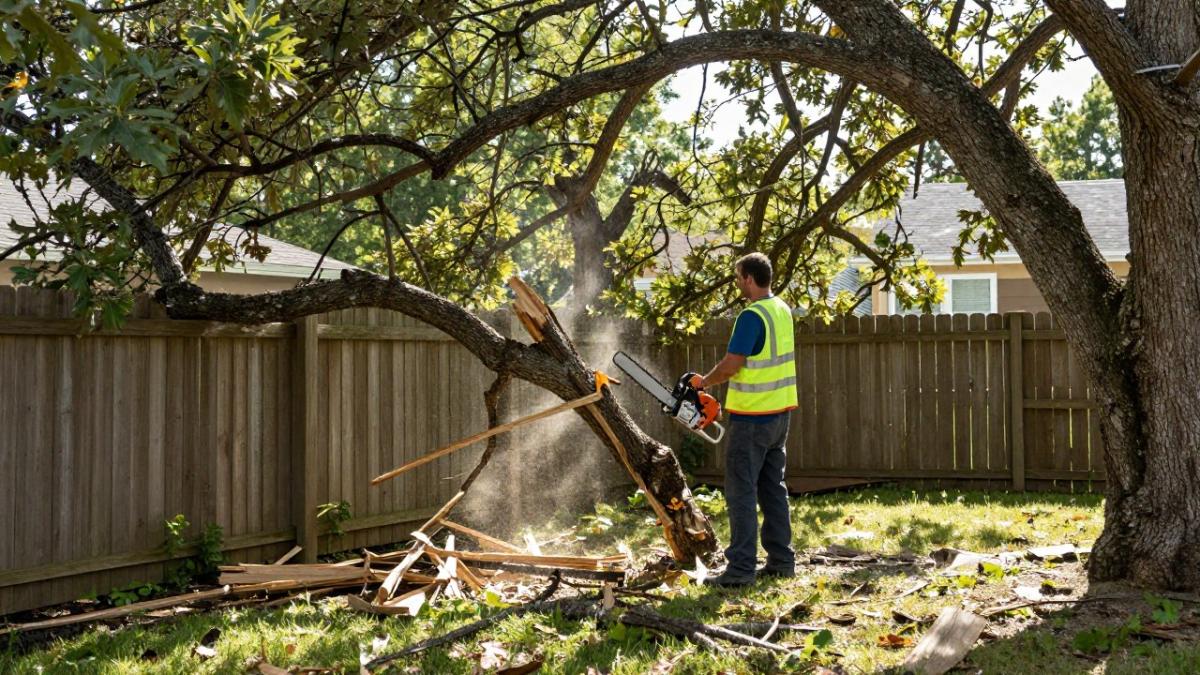
Storm mitigation is the work of reducing the chance that a tree fails and damages people or property. A certified arborist brings training in tree biology, structure, and risk evaluation. That training matters because a tree that looks healthy can still hold a dead or cracked limb high in the canopy.
Many homeowners assume any crew with a truck can handle storm prep. Certification signals that the person has passed a recognized exam, usually through the International Society of Arboriculture (ISA), and understands how trees respond to wind and load (ISA Certified Arborist).
Tree Risk Assessment: What a Qualified Arborist Actually Checks
A proper tree risk assessment is more than a glance from the driveway. A qualified arborist looks at the root plate, trunk taper, included bark, cavities, lean, and the condition of major limbs. They also look at targets: what the tree could hit if it fails, such as a roof, a car, or a neighbor's fence.
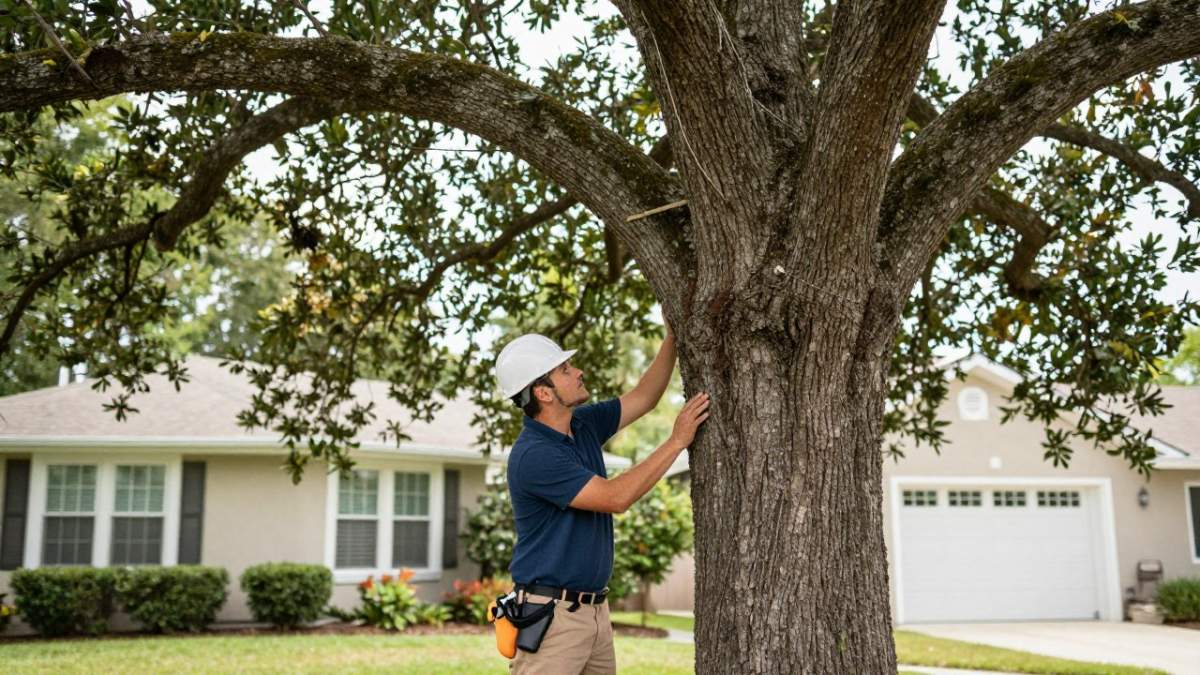
The ISA's Tree Risk Assessment Qualification (TRAQ) is the credential to look for when a company says it evaluates risk (ISA Tree Risk Assessment Qualification). Ask whether the assessor holds it and whether the report uses a recognized rating system. A written report that names specific hazards, their likelihood, and their consequences is a good sign. A verbal "it looks fine" is not.
Tree Pruning for Storm Preparation: What to Cut and What to Leave
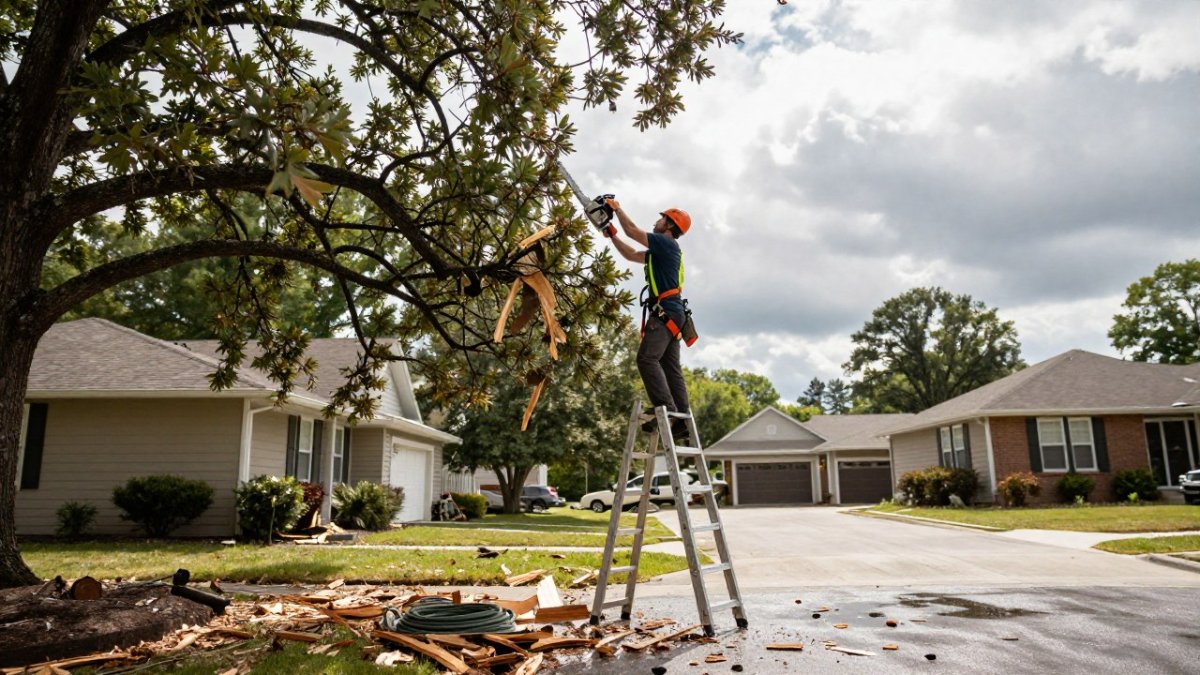
Pruning before a storm should remove dead, cracked, or weakly attached limbs and reduce excessive weight at the ends of long branches. It should not strip the canopy. Heavy topping makes a tree produce weak regrowth that breaks more easily in the next storm.
A common mistake is cutting too much at once. Removing more than about a quarter of the living canopy in one session stresses the tree and can invite new hazards. A good arborist will explain which cuts reduce risk and which ones only make the yard look neater.
How to Choose a Tree Service Company in South Florida
Start with local credentials, not the nearest flyer. You can also compare an overview of the best tree maintenance services in Miami to build your shortlist. Seven questions to ask local tree removal experts can help you vet each company before you commit. Check whether the company is licensed for tree work where you live, carries general liability and workers' compensation insurance, and can name the certified arborist who will actually perform the work. Ask for their Better Business Bureau profile and recent reviews that mention storm work specifically.
Also ask about availability. Companies that promise 24/7 emergency response may be overloaded during a named storm, so plan your assessment before the season starts.
Hiring Checklist: Credentials, Insurance, and Written Estimates
Use this checklist before you sign anything:
- Certified arborist name and ISA certification number, verifiable online
- Current general liability insurance and workers' compensation certificates, sent directly from the insurer
- Local business license or permits for tree work
- Written estimate with a clear scope of work, listing each tree and each planned cut
- Disposal and debris cleanup included in the price
- Written statement of what the company will not do, such as removing a protected tree without permits
- At least two references from recent storm or hazard work
Be cautious of any crew that wants payment in full before work starts, or that offers to "take care of the insurance" for you. Verify everything yourself.
Arborist Inspection Cost and How to Compare Estimates
Storm mitigation pricing depends on a handful of cost drivers, and understanding them is what lets you compare bids fairly. The main factors are the number of trees assessed, trunk diameter and height, how close the tree sits to a structure, power line, or fence, whether the work requires climbing, a bucket truck, or a crane, and how much debris must be hauled off. A written risk assessment with photos and a hazard rating takes more arborist time than a walk-through, so documentation level is its own line item.
Expect the estimate to be itemized rather than a single lump sum. A useful bid separates assessment, pruning or removal per tree, stump grinding, debris hauling, and any permit or mitigation cost. When you put two bids side by side, line up the same trees and the same cuts; a lower total that omits debris removal or stump grinding is not actually cheaper. Ask each company to state what is excluded, often the answer reveals the real difference between bids.
Watch out: a quote that is dramatically below the others usually means either uninsured labor or a scope that quietly drops cleanup and disposal.
Payment terms matter as much as the number. A common and reasonable pattern is a deposit with the balance due after the work is completed and debris is gone; be cautious of any request for full payment up front. Get the estimate in writing, confirm the certified arborist named on it is the person doing the assessment, and keep the signed scope with your insurance file. Because pricing depends on quantity, dates, and site conditions, the only reliable comparison is between itemized scopes for your specific property. For current prices or a quote, contact P&P Landscaping and Tree Service through its website.
The article breaks down what drives an arborist estimate and what a fair itemized bid should include.
| Cost driver | What it affects | Why it matters |
|---|---|---|
| Number of trees assessed | Total assessment time | More trees means more time on site |
| Trunk diameter and height | Equipment and labor needed | Larger trees need more rigging |
| Proximity to structures or lines | Work method and risk | Close targets raise complexity |
| Climbing, bucket truck, or crane | Equipment charges | Access method changes the price |
| Debris hauling volume | Cleanup line item | Often omitted from cheap bids |
| Written risk report with photos | Documentation time | Takes more arborist time than a walk-through |
Permits, Protected Trees, and Insurance Documentation
Before a single cut is made in North Miami, confirm which local rules apply. Tree removal and heavy pruning in Miami-Dade County are governed at both the county and municipal level, and the rules are not uniform across jurisdictions (Miami-Dade County Permit). Confirm with the relevant county or city authority which rules apply to your address before any work begins. A tree that is legal to remove in one jurisdiction may require a permit, a mitigation plan, or replacement plantings in the next.
A professional arborist should be able to tell you, in writing, which authority has jurisdiction over your address and whether the tree in question is protected. Protected categories are set by the applicable code, so verify the exact list and thresholds against the current ordinance rather than a blog post. If a permit is required, the arborist typically prepares the tree survey, photographs, and removal justification that accompany the application.
Watch out: a crew that offers to remove a protected tree "without the paperwork" is exposing you, not just itself.
Insurance documentation runs alongside permitting. Keep dated photos of each tree before mitigation work, the arborist's written risk assessment, the permit or approval if one was required, and every invoice. If you are unsure whether storm damage to trees is covered, see whether hurricane-damaged trees are covered by insurance. If a later storm causes damage, this file shows the tree was inspected and maintained, which supports a claim and can matter if an insurer questions whether the loss was preventable. Read your policy's tree and debris-removal language before the season, because coverage for removal, hauling, and replacement differs by carrier and by whether the tree hit a covered structure.
Booking Your Storm Mitigation Assessment Before Hurricane Season
The best time to book an assessment is before the season's first named storm, when you have time to weigh your options. Waiting until a storm is forecast puts you in a rush and reduces your choices.
Request an on-site estimate from P&P Landscaping and Tree Service to have a qualified assessment of your trees before storm season begins, or check the company's website for current scheduling and quote details.
Frequently Asked Questions
How much do arborists charge per hour?
Arborist rates vary with the size of the job, the equipment needed, the tree's height and location, and whether crews must work around power lines or structures. Hourly rates for certified arborists are generally higher than for general laborers because of their training and insurance. Pricing depends on the scope of work, so ask for a written estimate that lists the labor, equipment, and cleanup separately. P&P Landscaping and Tree Service can provide a current quote after an on-site review.
Is hiring an arborist worth it before a storm?
For trees near homes, driveways, or power lines, a professional assessment is usually worth the cost. An arborist can spot structural weaknesses, included bark, deadwood, and root damage that a homeowner may miss. Early pruning and risk reduction often cost less than emergency removal after a storm. A qualified arborist can also tell you when a tree is better left alone, which protects both your property and your budget.
What is the difference between an arborist and a certified arborist?
The term arborist describes anyone who works with trees, and it is not regulated in every case. A certified arborist has passed an examination administered by the International Society of Arboriculture (ISA) and must complete continuing education to keep the credential. Ask for the certificate number and verify it on the ISA website. For storm work, look for certified arborists who also hold a Tree Risk Assessment Qualification (TRAQ).
How much does it cost for an arborist to come look at a tree?
Many arborists charge for an inspection or assessment visit, while others credit that fee toward the work if you hire them. The cost depends on the number of trees, their size, and how detailed the written report needs to be. Some companies offer free estimates for routine tree work but charge for formal risk assessments. Ask before the visit whether the fee is waived if you book the recommended work.