 how-to
How to Prune Overgrown Hibiscus for Better Blooms
Quick Summary
To handle how to prune overgrown hibiscus for better blooms, remove dead wood, damaged branches and crossing stems first, then shape the bush to open its center to light. Prune in early spring before the heaviest new growth, since hibiscus flowers form on fresh wood. Cut cleanly with sharp tools and avoid removing too much living growth at once.
- Hibiscus flowers form on new growth, so pruning timing matters.
- Remove dead, damaged and crossing branches before shaping the plant.
- Cut back to a leaf node or healthy side branch, favoring outward-facing buds.
- Avoid heavy cuts in late fall, when cold snaps can damage fresh growth.
- Spread severe pruning over two seasons to protect the plant.
Table of Contents
- Why Overgrown Hibiscus Stops Blooming
- When to Prune Hibiscus in Florida
- Tools You Need for Pruning Hibiscus
- Step-by-Step: Cutting Back an Overgrown Hibiscus
- How Much to Cut Back Hibiscus Without Killing It
- Common Pruning Mistakes That Cost You Blooms
- Hibiscus Care After Pruning for Faster Regrowth
- Book an On-Site Estimate for Your Hibiscus and Landscape
- Frequently Asked Questions
Why Overgrown Hibiscus Stops Blooming
Hibiscus flowers form on new growth, so knowing how to prune overgrown hibiscus for better blooms starts with understanding this. When branches grow thick, tangled and shaded, fewer flower buds develop, and the ones that do form tend to sit deep inside the plant where they get little sun.
Several problems usually build up together:
- Crowded interior: Branches cross and rub, so the center of the bush stays dark and weak.
- Dead or damaged wood: Old stems divert energy away from healthy growth.
- Leggy stems: Long, bare branches put leaves and blooms only at the tips.
Thinning the interior lets light and air reach the whole plant. That alone often brings flowering back within a season.
When to Prune Hibiscus in Florida
Hibiscus blooms on fresh wood, so pruning before the plant pushes its heaviest new growth gives it time to produce flowering shoots as temperatures rise. For guidance on how often woody plants should be professionally pruned, see that page.
Light trimming of spent flowers and stray stems can happen anytime during the growing season. Avoid heavy cuts in the late fall, when fresh growth can be damaged by the first cold snaps.
Tools You Need for Pruning Hibiscus
Clean, sharp tools make a clean cut that heals faster. Gather these before you start:
- Bypass pruners for stems up to about 3/4 inch thick
- Loppers for thicker branches
- A pruning saw for anything larger than about 1 1/2 inches
- Rubbing alcohol or a diluted bleach solution to clean blades between plants
- Heavy gloves to protect against scratches and sap
Sharpen blades before you begin. Dull blades crush stems and leave ragged wounds that invite disease.
Step-by-Step: Cutting Back an Overgrown Hibiscus
Work in this order so you remove the problem wood first and shape the plant last.
Removing Dead, Damaged and Crossing Branches
Start by removing what the plant does not need:
- Cut out dead wood. Dead stems are brittle and often gray or brown inside. Cut back to healthy, green tissue.
- Remove damaged branches. Take out anything broken, cracked or infected.
- Eliminate crossing branches. Where two stems rub, remove the weaker one.
A common mistake when learning how to prune overgrown hibiscus for better blooms is leaving these stems in place because they still look alive. Crossing branches create wounds that let disease in, so take them out.
Shaping a Leggy Bush
Once the dead and crossing wood is gone, shape the plant:
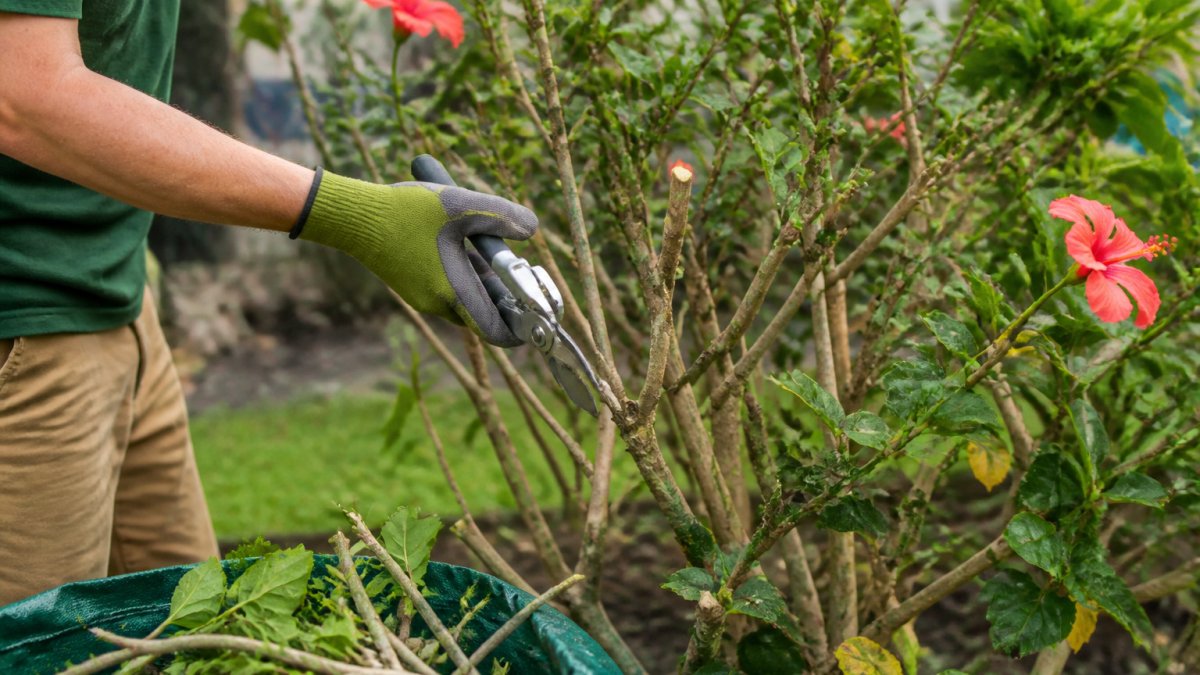
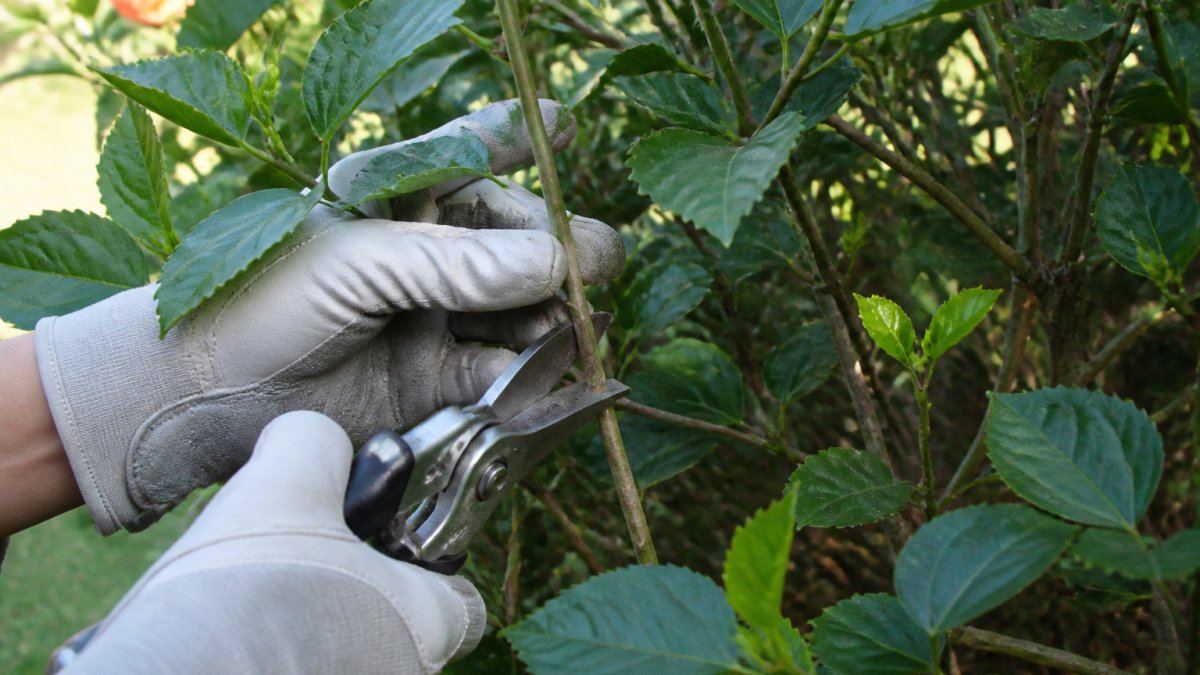
- Cut stems back to a leaf node or a healthy side branch, leaving a clean angle.
- Favor outward-facing buds so the new growth opens the center.
- Aim for a rounded, open shape rather than a flat-topped block.
!Gloved hands using bypass pruners to cut a green branch just above an outward-facing leaf node on a hibiscus bush in a South Florida yard
The removal order below follows the article's sequence, moving from dead wood to crossing branches before shaping.
| Step | What to do | Why it matters |
|---|---|---|
| Cut out dead wood | Cut back to healthy, green tissue | Dead stems are brittle and gray or brown inside |
| Remove damaged branches | Take out broken, cracked or infected stems | Removes infection sources |
| Eliminate crossing branches | Remove the weaker of two rubbing stems | Crossing wounds let disease in |
| Shape the bush | Cut to a leaf node or healthy side branch | Opens the center to light and air |
How Much to Cut Back Hibiscus Without Killing It
Hibiscus recovers well from hard pruning, but there are limits. Spreading a severe cut over two seasons is gentler and safer.
Taking too much of the living growth in one session leaves the plant without enough leaves to make food, and recovery slows down or fails. Read about the damage over-pruning causes and how to recover from it.
Common Pruning Mistakes That Cost You Blooms
Most failed attempts come down to a few errors:
- Pruning too late: Cutting in summer or fall removes buds that were already forming.
- Cutting too little: Light trims leave the tangled center untouched.
- Cutting too much at once: A bare, stripped plant may struggle to recover.
- Leaving stubs: Cuts that stop short of a node leave wood that dies back and invites rot.
- Using dull or dirty tools: These spread disease from one plant to the next.
Hibiscus Care After Pruning for Faster Regrowth
After pruning, water the plant deeply if the weather is dry, but avoid soggy soil. Hold off on heavy fertilizing for a couple of weeks, then feed with a balanced fertilizer to support new growth.
Watch for new shoots within a few weeks. Once they appear, the plant is recovering. Most hibiscus begin flowering again as the new growth matures.
Book an On-Site Estimate for Your Hibiscus and Landscape
If your hibiscus is too large, tangled or tall to handle safely, or if the rest of your landscape needs attention too, P&P Landscaping and Tree Service can help. Our family-owned business has over two decades of experience with landscaping and tree care.
Pricing depends on the size of the job, the access to the plant and the work needed, so we recommend requesting an on-site estimate for an accurate quote. Book an on-site estimate to have a professional look at your plants and walk you through the options.
Frequently Asked Questions
When should you prune hibiscus in North Miami?
Pruning before new growth starts lets the plant push fresh shoots that carry the next round of flowers. Avoid heavy cuts when the plant is stressed. Light tidying of dead wood can be done any time of year.
How much can you cut back an overgrown hibiscus?
For a badly overgrown shrub, it is better to spread the work over two seasons rather than cutting everything at once. Start by removing dead, damaged and crossing branches, then reduce the height and width of the remaining stems. Hibiscus responds well to hard pruning and usually sends up new growth within a few weeks when cut correctly.
Can you prune hibiscus while it is blooming?
Yes, you can prune hibiscus while it is blooming, and light deadheading of spent flowers actually encourages more buds. Avoid large structural cuts during peak bloom, because removing a large share of foliage at that point reduces the plant's energy for flowering. If you need to reduce size significantly, wait until the plant has finished its main flush or until late winter. Deadheading faded blooms every few days keeps the bush looking tidy and continuing to produce.
Will hibiscus grow back after a hard pruning?
Hibiscus is one of the more forgiving flowering shrubs and generally regrows after a hard prune, provided it has healthy roots and at least some living wood. Keep the plant watered and fed moderately during recovery, and expect flowering to return once the new growth matures. Severely neglected plants may need two or three seasons of progressive pruning to rebuild a balanced shape.