 Ultimate guide
Best Practices for Commercial Grounds Maintenance Contracts
Quick Summary
The best practices for grounds maintenance contracts are to define the scope of work by zone, set a measurable service schedule, write service-level standards with numbers, and allocate risk for storm damage. A clear contract built on a site map prevents disputes over what was included, how often work happens, and who pays for extras.
- Attach a site map and list every service against named zones such as turf, beds, hedgerows, and irrigation.
- Replace vague terms like maintain grounds with measurable standards, such as a turf height maximum of 4 inches.
- Calendar the non-renewal deadline the day you sign, since auto-renewal windows can run 60 to 90 days.
- Require current general liability and workers' compensation coverage, and name the property owner as an additional insured.
- Define storm preparation, post-storm response timing, and who pays for emergency work before hurricane season begins.
Table of Contents
- What a Commercial Grounds Maintenance Contract Covers
- Defining the Commercial Landscape Maintenance Scope of Work
- Building a Commercial Grounds Maintenance Schedule for South Florida
- Step-by-Step: Drafting a Commercial Landscaping Contract Template
- Setting Commercial Landscaping Contract Pricing That Holds Up
- Pros and Cons of Common Contract Types
- Common Contract Pitfalls and Service-Level Standards to Put in Writing
- Requesting an On-Site Estimate for Your Property
- Frequently Asked Questions
What a Commercial Grounds Maintenance Contract Covers
A commercial grounds maintenance contract is the written agreement that defines exactly what a landscaping provider will do on a commercial property, how often, and to what standard. For practical tips on the service contract itself, see contract tips for commercial landscaping services.
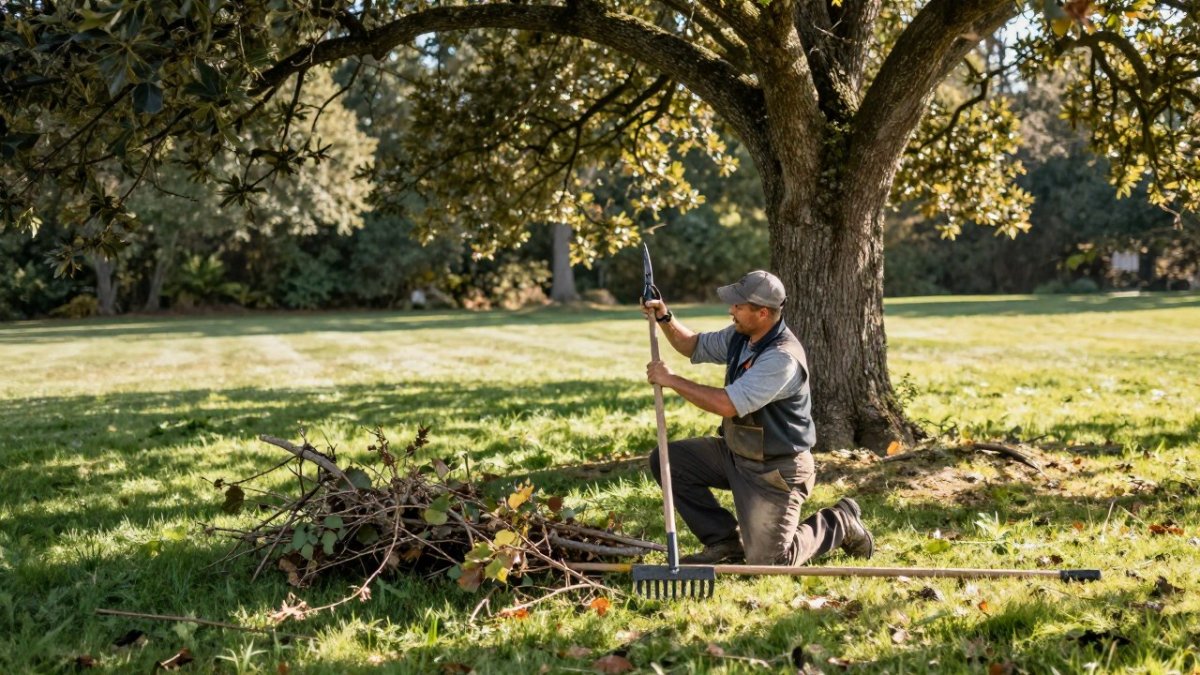
Most contracts cover routine services such as mowing, edging, weed control, bed maintenance, irrigation checks, and debris removal, along with a schedule for tree and shrub care. Good contracts also address seasonal work, response times for emergencies, and how additional services are priced.
Defining the Commercial Landscape Maintenance Scope of Work
The scope of work is the most important part of any maintenance agreement. It should list each service, the areas it applies to, and the expected frequency.
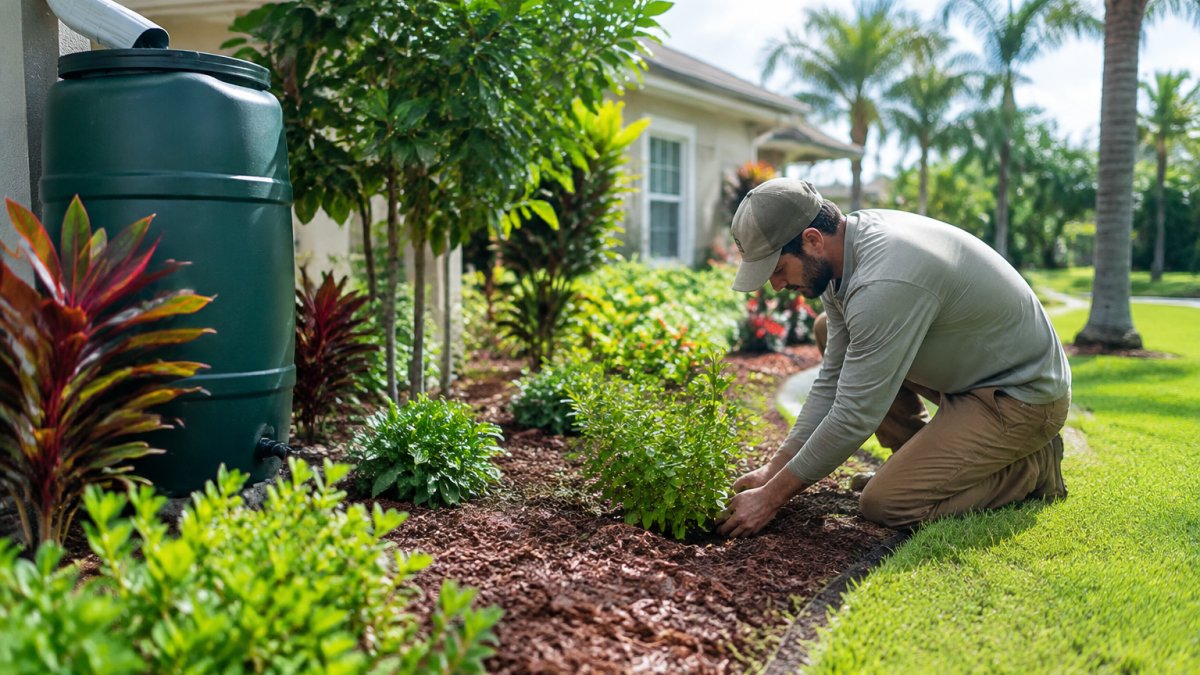
Attach a site plan that marks turf areas, planting beds, hedgerows, trees, and irrigation zones. Check the Florida landlord lawn care duties that the scope must satisfy. Then define each service against those zones so that nothing is assumed.
Mowing, Edging and Turf Care Requirements
Specify mowing height, mowing frequency, and whether clippings are bagged or mulched. Edging should be defined along hardscapes, curbs, and walkways, and turf care should name any fertilization, aeration, or weed-control programs included. For South Florida's warm-season turf, such as St. Augustine and Bermuda grass, mowing frequency typically increases during the rainy months, so the contract should state how that adjustment is handled.
Tree, Shrub and Hedge Trimming Limits
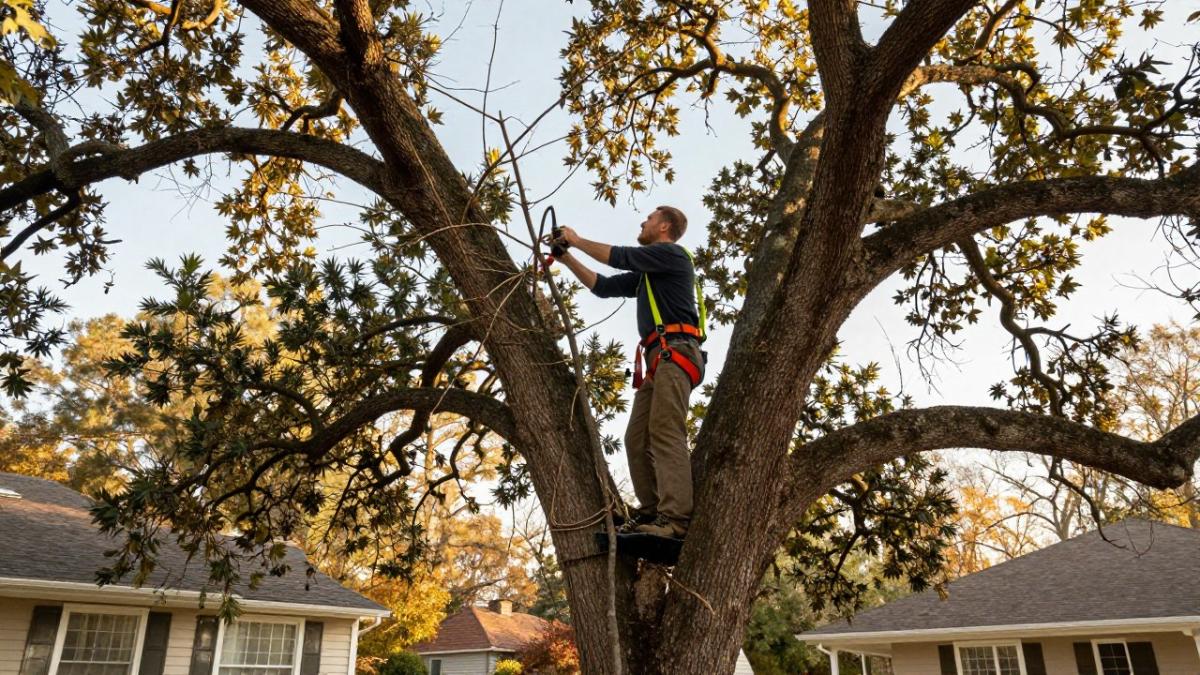
Trimming disputes are common, so the contract should set clear limits. State the maximum height for hedges, whether trimming is shaping only or includes structural pruning, and who handles debris. Hazardous tree removal and large limb work are typically separate line items, and the agreement should say so explicitly.
Building a Commercial Grounds Maintenance Schedule for South Florida
A schedule translates the scope into dates. In South Florida, growth is fast year-round, so weekly mowing is common from spring through early fall, with less frequent visits during the cooler, drier months.
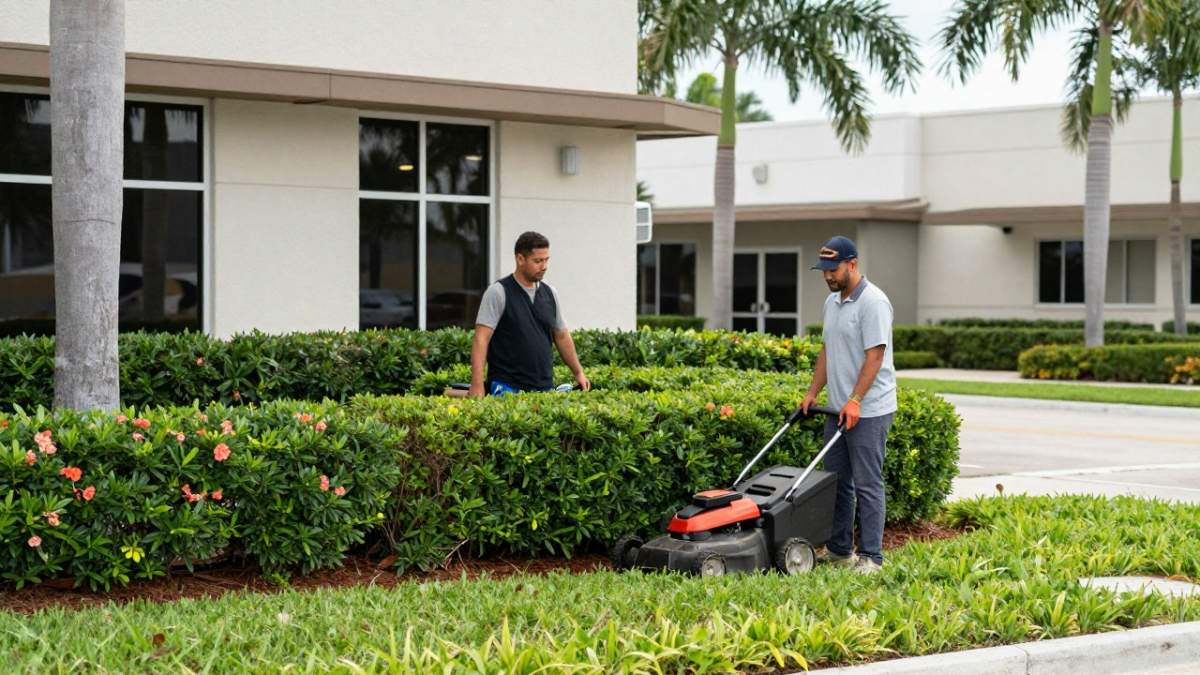
A useful schedule lists weekly tasks (mowing, edging, blowing hard surfaces), monthly tasks (bed weeding, mulch checks, irrigation inspection), and seasonal tasks (pruning, fertilization, pest monitoring). Include a reporting method, such as a signed service log or photo documentation, so the property manager can verify completed work.
Seasonal Adjustments for Hurricane Season and the Rainy Months
Hurricane season runs from June through November. The contract should define pre-storm tasks, such as securing loose debris and trimming weak limbs, and post-storm response, including the timeline for cleanup and who pays for emergency work. The rainy months bring faster growth and more standing water, so the schedule should allow for added mowing and drainage checks.
Step-by-Step: Drafting a Commercial Landscaping Contract Template
A workable commercial landscaping contract template follows a logical order, but the steps that separate a strong agreement from a weak one are the ones most templates skip: measurable service standards, local compliance obligations, and risk allocation.
- Identify the parties and property. Include the legal name of the property owner or management company, the provider's business name, and the full service address. For multi-building or multi-parcel sites, list every parcel and attach the site map as an exhibit.
- Define the term and renewal. State the start date, length, renewal terms, and the exact notice window for non-renewal. Calendar the cancellation deadline the day you sign, because auto-renewal clauses with 60- to 90-day notice windows are a common trap.
- Attach the scope of work by zone. Reference the site map and list services against named zones (turf, beds, hedgerows, tree canopy, irrigation). A vague scope such as "maintain grounds" invites disputes.
- Set the service schedule and weather flexibility. Include frequencies, service days, and how rain days are made up. In South Florida, specify that missed visits due to heavy rain are rescheduled within a set number of business days rather than skipped.
- Establish price, payment terms, and change-order pricing. State the base monthly fee, invoice timing, late-payment terms, and a written rate for extras such as storm debris hauling, sod replacement, or irrigation repairs. Require written approval before any extra exceeds an agreed dollar threshold.
- Write measurable service-level standards. Replace adjectives with numbers: turf height not to exceed a stated maximum, edging tolerance, response time for irrigation failures, and the percentage of scheduled tasks that must be completed per visit. Require a monthly walk-through with the account manager and a written inspection score.
- Address local compliance and environmental rules. Require the contractor to follow applicable Miami-Dade County landscape irrigation rules and any current water-shortage restrictions. Require compliance with applicable fertilizer, stormwater and yard-waste disposal rules, and ask the contractor to provide proof of any required pesticide applicator licensing.
- Verify insurance, licensing, and worker safety. Require current general liability and workers' compensation coverage, and name the property owner as an additional insured. Ask for certificates of insurance at signing and at each renewal, and confirm the contractor's pesticide applicators hold the licenses required for the products they apply.
- Allocate risk for damage and storm response. State who pays for damage to irrigation, lighting, pavement, or vehicles; who handles pre-storm securing of loose debris and weak limbs; and what the post-storm response timeline and emergency callout rate are. Clarify that large limb and hazardous tree removal are separate line items.
- Include termination and dispute clauses. Specify notice periods, cure periods for repeated service failures, and how disagreements are resolved. Have an attorney review the final template, particularly the indemnity and insurance language, because requirements vary by property type and by the owner's lender or insurer.
Watch out: a template copied from another state often omits Florida-specific irrigation, fertilizer, and storm-response terms, which leaves the property manager holding the compliance risk.
Setting Commercial Landscaping Contract Pricing That Holds Up
Commercial grounds pricing is usually built from labor hours, equipment, materials, and overhead, plus a margin. Many providers quote a fixed monthly fee for the base scope and a separate rate for extras, which keeps the contract predictable for the property manager and fair for the provider.
Price transparency reduces disputes. Break the fee into line items so the client can see what drives the cost, and define how seasonal changes or added acreage will be adjusted. A current commercial maintenance pricing guide can help you benchmark those quotes.
Pros and Cons of Common Contract Types
Commercial maintenance is usually sold under one of three structures, and the right choice depends on how much budget predictability, storm exposure, and quality control your North Miami property needs. Each has trade-offs:
- Fixed-price monthly contracts. Pros: predictable budgeting, a single invoice, and easier comparison across bids. Cons: extras can generate disputes if the scope is loosely written, and the price may not flex when a rainy season drives faster growth. Best for properties with stable, well-mapped turf and bed areas. For a sense of how these arrangements work in practice, see lawn care for rental properties.
- Per-visit or time-and-materials contracts. Pros: flexibility and pay-for-what-you-use billing, which suits properties with irregular needs or heavy seasonal variation. Cons: harder to budget and more prone to scope creep, because every visit is a billable event. Require a written rate sheet and a cap on hours per visit.
- Annual or multi-year agreements. Pros: price stability and a committed provider relationship, which matters when you need priority storm response. Cons: less flexibility to switch if service quality slips, unless termination and cure clauses are strong. Negotiate a performance-based termination right tied to measurable standards.
Whichever structure you choose, tie payment to measurable service levels rather than to promises. A practical service-level agreement for a commercial grounds contract includes:
- Response times. A stated window for irrigation failures, storm damage, and safety hazards, with a separate after-hours emergency callout rate.
- Inspection scores. A monthly walk-through scored against a written checklist, with a minimum passing score and a cure period for repeated misses.
- Missed-service resolution. A rule that rain days are rescheduled within a set number of business days and that skipped visits are credited or made up.
Pricing for these structures is driven by acreage, site complexity, service frequency, labor, equipment, materials, and add-on work such as storm debris hauling or irrigation repair.
Watch out: a multi-year agreement without a performance-based termination right can lock a property manager into a provider whose service quality slips after year one.
The three common contract structures compare as follows, based on the trade-offs described above.
| Contract type | Best for | Key trade-off |
|---|---|---|
| Fixed-price monthly | Stable, well-mapped turf and beds | Extras can cause disputes if scope is loose |
| Per-visit or time-and-materials | Irregular needs or heavy seasonal variation | Harder to budget; prone to scope creep |
| Annual or multi-year | Price stability and priority storm response | Less flexibility if service quality slips |
Common Contract Pitfalls and Service-Level Standards to Put in Writing
The most frequent contract problems come from missing details. Watch for these:
- No defined response time for storm damage or irrigation failures
- No measurable quality standard, such as "turf height not to exceed 4 inches"
- No inspection or verification process
Service-level standards turn these into measurable terms. Specify mowing height, edging tolerance, response time, and the percentage of tasks that must be completed per visit. Require a monthly walk-through with the account manager to review performance.
Watch out: auto-renewal clauses with 90-day notice windows often catch property managers by surprise. Calendar the cancellation deadline the day you sign.
Requesting an On-Site Estimate for Your Property
The most accurate contract starts with a site visit. A provider who walks the property can measure turf and bed areas, identify irrigation zones, assess tree health, and flag drainage or access issues that affect pricing.
At P&P Landscaping and Tree Service, we recommend that property managers bring a current site map, a list of problem areas, and any existing contracts to the estimate visit. You can request an on-site estimate for your property to start that process.
Ready to write a commercial grounds maintenance contract that holds up? Book an on-site estimate with P&P Landscaping and Tree Service and get a scope tailored to your South Florida property.
Frequently Asked Questions
What should be included in a commercial landscaping maintenance contract?
A solid maintenance contract names the property, lists every service (mowing, edging, turf care, shrub and hedge trimming, weeding, mulching, irrigation checks and debris removal), and states how often each one happens. It should also define the service frequency, the seasonal adjustments, the pricing and payment terms, the contract duration, the renewal and termination terms, and how change orders for extra work are approved and billed. Writing these down before work starts prevents most disputes.
How should a commercial landscaping contract define the scope of work?
Define the scope by listing each task by area and frequency rather than using general phrases like 'maintain grounds.' Include a site map or a list of zones, specify which beds, turf areas and trees are covered, and state what is excluded, such as major tree removal or irrigation repairs. A clear scope of work gives property managers a checklist for inspections and gives the provider a fair basis for bidding.
How often should commercial grounds maintenance services be scheduled?
Most commercial properties in North Miami need weekly mowing and edging during the growing season, which runs roughly from spring through early fall in South Florida. Bed weeding, debris removal and irrigation checks are often scheduled weekly or biweekly, while fertilization, mulching and hedge trimming follow a seasonal calendar. Schedules should be adjusted before hurricane season, when pre-storm and post-storm response terms should be written into the contract.
What service standards and performance measures should a grounds maintenance contract include?
Useful measures include mowing height ranges, maximum response time for complaints, the number of missed visits allowed per month, and clean-up standards after each visit. Some property managers also ask for digital service verification, such as GPS-tracked visit logs or photo reports. Measurable standards make it possible to judge performance during quarterly reviews instead of arguing about what 'well maintained' means.
How should property managers handle extra work and change orders?
Extra work such as storm clean-up, additional mulch or unplanned tree trimming should be handled through a written change-order process. The contract should state who can approve extra work, the rate or the method used to price it, and how long approval takes. Requiring a signed estimate before work begins keeps invoices predictable and protects both the property owner and the service provider.
What should a commercial landscaping contract say about insurance and liability?
The contract should require the provider to carry general liability and workers' compensation coverage and to provide certificates of insurance before work starts. It should also address indemnity, meaning which party is responsible for property damage or injuries caused during routine work, and how tree-related risks are allocated. Property managers should have counsel review these clauses for their specific property and state requirements.
How can property managers compare commercial landscaping bids?
Compare bids on the same scope of work, not on the lowest total price. Check that each bid lists the same services, frequencies, seasonal terms and exclusions, then compare licensing, insurance, references and the service standards offered. A very low bid often leaves out items like irrigation checks or post-storm clean-up, which may be billed later as change orders. Pricing depends on property size, service frequency and access, so ask for a site visit before comparing numbers.
Can P&P Landscaping and Tree Service provide a maintenance contract for a commercial property?
P&P Landscaping and Tree Service works with homeowners, residential property owners, landlords and commercial property managers in Miami-Dade and Broward County. Because each property has different turf, tree and irrigation needs, contract terms and pricing depend on the specific site. To request an on-site estimate, contact P&P Landscaping and Tree Service and schedule a visit so the scope of work can be written around your property.