 How-to
Landlord Lawn Care Duties in Florida: What the Law Requires
Last Updated: November 4, 2026
Quick Summary
In Florida, landlord lawn care duties depend mainly on the written lease, not a state rule that says landlords must mow. Florida Statute 83.51 sets baseline duties and lets landlords and tenants agree in writing that the tenant handles specified maintenance. HOA rules and code enforcement can still hold the owner responsible.
- Florida Statute 83.51 does not say landlords must mow; yards are covered indirectly through code violations.
- A tenant lawn clause must list specific tasks, frequency, and equipment to be defensible.
- A lease clause shifting lawn care does not shift HOA fines or code enforcement citations away from the owner.
- Attach the HOA landscaping rules to the lease so the tenant can actually follow them.
- Document the lawn, beds, trees, and irrigation with dated photos before the tenant moves in.
Table of Contents
- Who Handles Lawn Care at a Florida Rental Property
- Florida Statute 83.51 and Landlord Duties for the Property
- Routine Lawn Maintenance: Mowing, Weeding and Edging
- Irrigation, Tree Trimming and Hazard Trees
- Writing a Tenant Lawn Maintenance Agreement
- Tenant Yard Maintenance Responsibilities Template and Move-In Records
- Scheduling Your Rental's Lawn Care With Our Team
- Frequently Asked Questions
Florida landlords often assume lawn care is the tenant's job, but the answer depends heavily on the lease, and the state statute says less than most people think. Landlord lawn care in Florida is one of the most common sources of disputes between owners and renters, and it is worth getting right before the first mower starts. P&P Landscaping and Tree Service works with rental owners across South Florida.
Who Handles Lawn Care at a Florida Rental Property
Lawn care at a Florida rental belongs to whoever the lease says it belongs to. For a deeper look at the landlord's side of rental lawn care, read Lawn Care for Rental Properties: A Landlord's Guide. That is the short answer, and it is where most landlords should start.
Florida law sets a baseline, but the lease fills in the details. Without clear wording, both sides tend to point at each other when the grass turns brown.
- The lease decides: Written terms control who mows, waters, and trims.
- The statute sets a floor: Certain duties apply even when the lease is silent.
- Local rules add more: HOA covenants and city code can add requirements for both parties.
If you want a rental where lawn care is the owner's job, say so in writing. Landlords who hire out the work often find it simpler to keep control of the schedule and the vendor.
Florida Statute 83.51 and Landlord Duties for the Property
Florida Statute 83.51 is the state law that sets a landlord's baseline duties for a residential rental (Statutes & Constitution :View Statutes : Online Sunshine). It is not a lawn care statute, and it does not say "the landlord mows the grass." Yards and exterior areas get pulled into that duty indirectly: when overgrowth, standing water, or debris creates a code violation or a hazard, the landlord is the party the code enforcement officer will cite.
The statute also contains the provision that matters most for lawn care disputes: the landlord and tenant may agree in writing that the tenant performs specified maintenance, and that written agreement shifts the duty. The catch is that the agreement has to be specific. A lease clause that says the tenant will "maintain the landscaping" is the kind of language that ends up in front of a county judge, and judges tend to read it narrowly. A clause that lists mowing frequency, edging, bed weeding, irrigation timer checks, and who pays for repairs is far more defensible.
Two other mechanics in Chapter 83 are worth knowing because they shape how a lawn dispute actually plays out:
- The written-agreement carve-out is not unlimited. The landlord cannot use a tenant-maintenance clause to escape duties tied to building, housing, or health codes. If the city cites the property for a code violation, the citation may still follow the owner, even if the lease says the tenant mows.
For the exact current wording, read the statute on the Florida Statutes, Chapter 83 Landlord and Tenant, Section 83.51. A Florida landlord-tenant attorney can confirm how it applies to a specific lease.
HOA rules can override the lease. This is the layer most articles skip, and it is the one that causes the most trouble in South Florida rentals. Many single-family rentals in South Florida sit inside mandatory HOAs, and the HOA's declaration and rules run with the land. If the HOA requires weekly mowing, edging, and a specific turf height, the owner is on the hook for the fine regardless of what the lease says. A tenant who lets the lawn go can generate an HOA violation letter addressed to the owner, and the owner's remedy is against the tenant under the lease, not against the HOA. Before signing a lease on an HOA property, pull the HOA's landscaping and architectural rules and attach the relevant pages to the lease as an exhibit.
Watch out: a lease clause that shifts lawn care to the tenant does not shift HOA fines or code enforcement citations. Those stay with the owner of record, and recovery from the tenant depends on what the lease actually says about fines and reimbursement.
Routine Lawn Maintenance: Mowing, Weeding and Edging
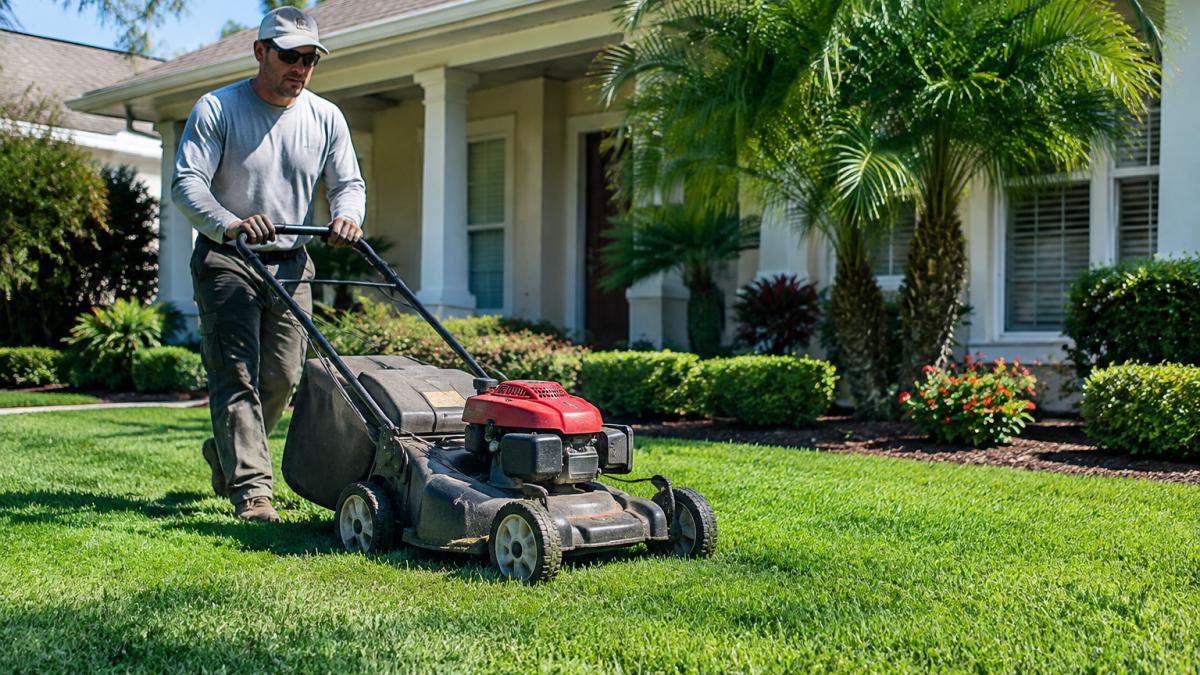
Routine maintenance covers the work that keeps a yard looking decent between seasons. In South Florida, that usually means regular mowing, weed control, and edging along walkways and driveways.
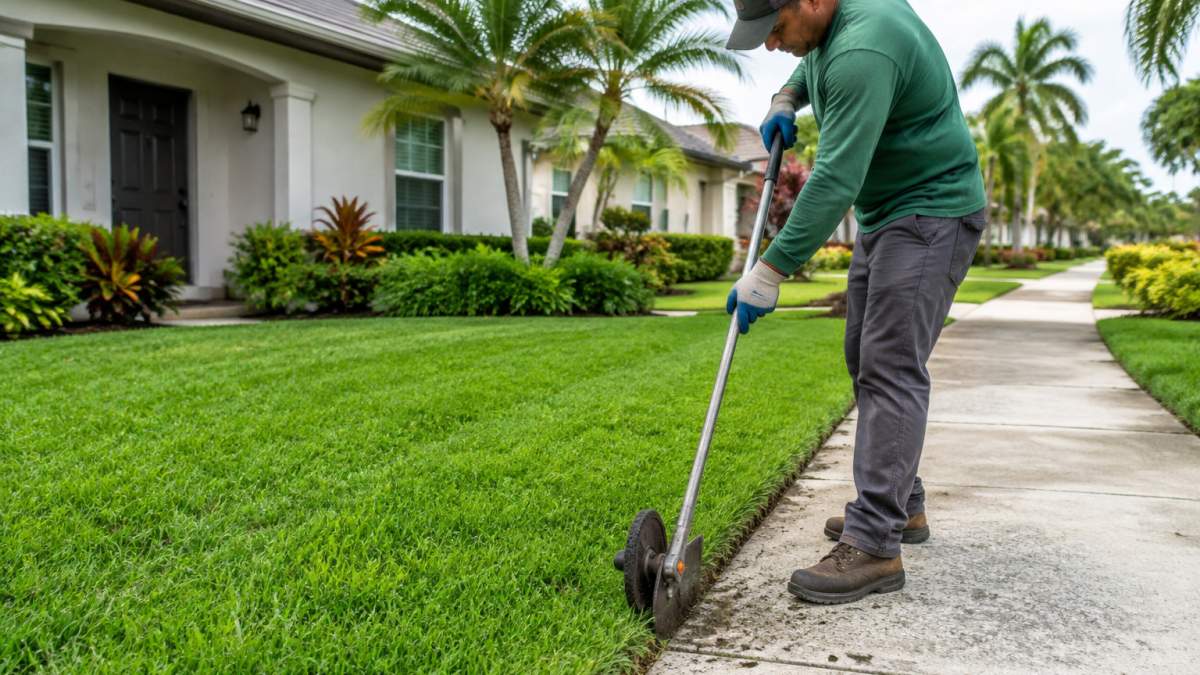
A common mistake is treating mowing as a one-time task. Grass in this climate grows fast during the rainy months, and a missed cycle can leave a lawn that is hard to recover.
Here is a simple baseline schedule many rental owners use:
| Task | Typical Frequency | Who Often Handles It |
|---|---|---|
| Mowing | Weekly in peak growing season | Landscaper or tenant |
| Edging and trimming | Every other mowing | Landscaper or tenant |
| Weeding beds | Monthly | Landscaper or tenant |
| Fertilizing and pest checks | Seasonal | Usually the landlord's vendor |
If you hire a crew, a University of Florida IFAS extension guide to lawn care in Florida is a useful reference for matching the schedule to local grass types.
Irrigation, Tree Trimming and Hazard Trees
Irrigation and trees cause more disputes than mowing ever does. A broken sprinkler head can soak a driveway for weeks, and an overgrown tree can damage a roof or block a sidewalk.
For irrigation, decide in the lease who pays for repairs and who controls the timer. For trees, be specific about who trims, how often, and who pays if a branch falls. Hazard trees, meaning trees with rot, lean, or large dead limbs, should always be inspected by a qualified arborist, not trimmed by a tenant with a borrowed saw.
Landlords should document the condition of large trees before storm season and keep records of any inspections.
Writing a Tenant Lawn Maintenance Agreement
A tenant lawn maintenance agreement is the document that turns vague expectations into an enforceable duty. Under Florida law, the landlord and tenant can agree in writing that the tenant handles specified maintenance, but the agreement only works if it is specific, signed, and attached to the lease rather than buried in an addendum nobody reads.
Build the agreement around five elements:
- The exact tasks. Name mowing, edging, string trimming, bed weeding, leaf and debris removal, and irrigation timer checks individually. Do not use "landscaping" or "yard work" as a catch-all.
- The frequency and the trigger. "Weekly during the growing season" is better than "regularly," but the strongest version ties the schedule to a measurable trigger, for example, mowing when turf reaches a stated height, or a set weekly day during April through October and every other week from November through March.
- Equipment and supplies. State who provides the mower, trimmer, fuel, and bags, and who pays for them. A tenant responsible for mowing without a working mower is a dispute waiting to happen.
- The carve-outs. Irrigation repairs, tree trimming above a stated height, palm frond removal, and anything requiring a licensed arborist stay with the landlord unless the agreement says otherwise. Hazard trees, trees with rot, lean, or large dead limbs, should never be assigned to a tenant.
- Failure and cure. State the notice period (a written notice, a set number of days to cure, and the landlord's right to send a vendor and bill the tenant or deduct from the security deposit as the lease allows). Without a cure mechanism, the clause is hard to enforce.
Attach the HOA rules as an exhibit. If the property is in an HOA, the tenant's obligations under the HOA's landscaping rules should be attached to the lease and referenced in the maintenance agreement. The HOA's rules, turf height, edging standards, tree and palm maintenance, irrigation restrictions during dry season, are the real operating standard, and a tenant who has never seen them cannot follow them.
Pair the agreement with a move-in condition record. Before the tenant takes possession, walk the property and document the lawn, beds, trees, irrigation heads, and timer with dated photos. Note bare patches, weeds, dead shrubs, and any visible limb damage. Have the tenant sign the responsibilities page and the condition record on the same day. If the tenant later claims the lawn was already dead or the sprinkler was already broken, the dated record is the evidence that decides the security deposit dispute.
Watch out: a maintenance agreement that assigns mowing to the tenant but is silent on HOA fines and code citations can leave the owner holding the bill. Consider adding a line that makes the tenant responsible for reimbursing HOA fines and code enforcement penalties caused by the tenant's failure to perform, and confirm that the lease's security deposit and deduction language supports it.
Tenant Yard Maintenance Responsibilities Template and Move-In Records
A tenant yard maintenance responsibilities template works best when paired with move-in documentation. Before a tenant takes possession, walk the property with a camera and photograph the lawn, beds, trees, and any existing damage.
Use this checklist:
- Photos of each lawn area, dated and labeled
- Notes on bare patches, weeds, or dead shrubs
- Condition of irrigation heads and timer
- Photos of large trees and any visible limb damage
- Signed copy of the tenant's responsibilities page
These records protect both sides. If the tenant later claims the lawn was already dead, you have proof of its condition on day one.
Scheduling Your Rental's Lawn Care With Our Team
Once the lease and the responsibilities are clear, the next step is making sure the work actually happens on schedule.
P&P Landscaping and Tree Service can help with lawn care and tree services for rental properties. Call us to request an on-site estimate.
Frequently Asked Questions
Are landlords responsible for mowing in Florida?
Florida has no single statute that assigns mowing to either party by default. Florida landlords are generally expected to keep the property fit for habitation and comply with applicable building and housing codes. Whether the lawn is included in that duty depends on the lease. If the lease is silent, the landlord is generally treated as responsible for the exterior. If you want the tenant to mow, state it in writing, including frequency, the mowing height and who supplies the equipment.
Who is responsible for lawn care in a Florida rental property?
It depends on the written lease. Leases commonly divide routine mowing, weeding and watering from tree trimming, irrigation repairs and hazard tree removal, but the split varies. Landlords generally remain exposed to code fines for overgrown yards even when the tenant agreed to mow. Spell out each task, who performs it and who pays for it so the split is enforceable.
What should a Florida lease say about lawn maintenance?
A solid lawn clause names each task (mowing, edging, weeding, shrub trimming, irrigation checks), sets a frequency such as weekly during the growing season, and states who pays for water, equipment and any contracted service. It should describe the condition the yard must be in at move-out and reference any HOA rules that apply. Attach a move-in photo record so both parties can show the lawn's starting condition later.
Can a landlord charge a tenant for lawn care in Florida?
A landlord can charge for lawn care only if the lease allows it, and the charge should be stated clearly. If the tenant fails to maintain the yard and the landlord hires a service, the landlord can typically pass that cost through, but the amount should reflect the actual invoice. Keep the contractor's receipts and dated photos to support any deduction from the security deposit.