 How-to
7 Steps to Prevent Root Rot in Tropical Garden Soil
Quick Summary
Root rot is prevented by keeping roots out of standing water, which means improving soil drainage and watering only when the soil needs it. In South Florida's humid climate, that means amending heavy soil with coarse material such as perlite or pumice, and adjusting irrigation for the wet and dry seasons.
- Overwatering on a fixed schedule is the most common cause of root rot in tropical gardens.
- Add coarse perlite or pumice at about one part to four parts soil by volume.
- Raise planting beds 6 to 12 inches above grade where water pools.
- Push a finger about two inches into the soil and skip watering if it feels damp.
- Water established tropical plants deeply once a week during the dry season instead of daily.
Table of Contents
- Why Root Rot Takes Hold in Tropical Garden Soil
- How to Inspect Root Systems and Spot Early Signs
- Watering Tropical Plants During the Florida Rainy Season
- Trimming Damaged Roots and Sanitizing Your Tools
- How to Fix and Treat Root Rot in Outdoor Plants
- Your Next Step: Schedule a Soil and Drainage Check
- Frequently Asked Questions
Why Root Rot Takes Hold in Tropical Garden Soil
Root rot is a fungal or bacterial problem that starts when roots sit in wet soil too long. In South Florida's warm, humid climate, that moisture rarely dries out, especially in yards with heavy clay or poor drainage.
Root rot is a condition where plant roots decay because they cannot get enough oxygen. Healthy roots need air pockets in the soil. When water fills those pockets, roots suffocate and pathogens move in.
University of Florida IFAS Extension guidance on root diseases in landscape plants
The role of overwatering and waterlogged soil
Overwatering is the most common cause of root rot in tropical gardens. Many homeowners water on a fixed schedule, not based on what the soil actually needs.
- Sprinklers run even after a heavy rain
- Plants sit in saucers that hold standing water
- Clay soil holds water for days after a storm
- Shade from buildings slows evaporation
Waterlogged soil cuts off oxygen. Within a few days, roots begin to break down. The plant may look fine at first, then wilt even though the soil is wet.
How to Inspect Root Systems and Spot Early Signs
Check roots before the top of the plant shows damage. By the time leaves yellow, the rot is often well underway.
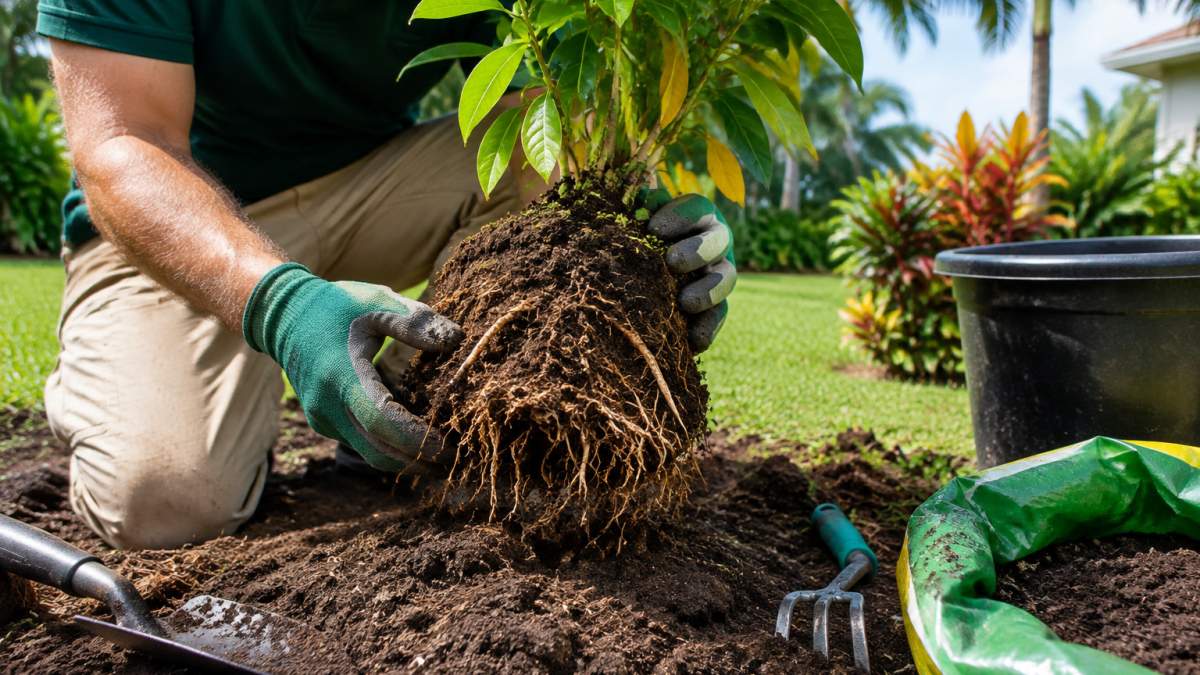
Plants, palms, sod, and mulch can be ordered with delivery and installation from our shop if you prefer professional help.
Amendment ratios for tropical garden beds
Coarse materials such as perlite or pumice are the key to opening up heavy soil, because they create air pockets that hold up better when wet than sand alone.
- Mix compost or aged bark mulch into the top 8 to 12 inches
- Add coarse perlite or pumice at about one part to four parts soil by volume
- Avoid adding sand alone, which can create a concrete-like texture when it mixes with clay
- Raise planting beds 6 to 12 inches above grade where water pools
- Keep foot traffic off wet beds so the structure does not compact
Watch out: Do not till wet clay. Working saturated soil smears the particles and makes the drainage problem worse; wait until the bed is moist but not muddy.
Amendment ratios for containers and raised beds
Container tropicals need a faster-draining mix than in-ground plants because there is no surrounding soil to wick away excess water.
A reader dealing with clay or compacted soil can compare mulch and gravel options for backyard drainage before making changes.
Why the particle size matters
Drainage is about pore space, not just the amount of organic matter. Fine compost holds water tightly, while coarse perlite, pumice, and bark create the larger pores that let gravity pull water down and air back in. That is why a bed that is 100 percent compost can still drown a tropical plant. The mix needs both: fine material to hold moisture and coarse material to keep air moving. In South Florida's humidity, that balance is what keeps roots breathing between storms.
The amendment ratios and particle-size points below summarise how to open up tropical garden soil so water drains.
| Bed type | Amendment | Note |
|---|---|---|
| In-ground beds | Compost or aged bark mulch | Mix into top 8 to 12 inches |
| In-ground beds | Coarse perlite or pumice | About one part to four parts soil by volume |
| In-ground beds | Raised height | 6 to 12 inches above grade where water pools |
| Containers and raised beds | Faster-draining mix | Needed because no surrounding soil wicks water away |
| Any bed | Sand alone | Avoid; can harden like concrete when mixed with clay |
| Any bed | Tilling | Do not till wet clay; wait until moist, not muddy |
Watering Tropical Plants During the Florida Rainy Season
South Florida's climate runs on a wet season and a dry season, and that swing has a large effect on root rot risk in tropical gardens. A watering schedule that works in the dry months can overwater plants during the rains.
The wet season: June through September
During the rainy season, most tropical plants need little or no supplemental water. Afternoon thunderstorms can drop an inch or more in an hour, and the soil may stay saturated for days in shaded or low-lying areas. The job in this window is to get water out, not add more.
- Turn off irrigation timers during heavy rain and check them after storms
- Water in the morning only if the soil is dry two inches down, so leaves dry before evening
- Reduce watering in shaded areas, which stay wet longer than full-sun beds
- Watch for standing water that lasts more than a day; that is a drainage signal, not a watering one
- Keep mulch pulled back a few inches from trunks and stems so the crown can dry
Check soil moisture before watering. Push a finger about two inches down. If the soil feels damp, skip the watering.
Watch out: Do not trust a sprinkler schedule set in spring. Timers that ran fine in the dry season will overwater a tropical bed within a week of the first summer storms.
The dry season: October through May
The dry season is when tropical plants actually need irrigation, and it is also when homeowners overcorrect and swing back to daily watering. Established tropical plants generally need deep, infrequent watering in the dry season rather than daily light watering. Newly planted material needs more frequent, lighter watering until roots establish.
- Water deeply once a week rather than lightly every day
- Water at the base, not over the foliage, to keep the crown dry
- Adjust again when the summer rains return
- Recheck container plants more often; they dry faster than beds
Pay attention to how fast water drains after a storm. Standing water for more than a day is a sign that drainage needs attention, and that same bed will need less irrigation in the dry season than a sandy, fast-draining one.
Reading the soil, not the calendar
The reliable rule in both seasons is to water based on what the soil needs, not what the calendar says. A bed amended with perlite or pumice drains faster and may need more frequent dry-season water; a bed on heavy fill dirt holds water longer and needs less. That is why the amendment work in the drainage section and the watering schedule here are really one decision, not two.
Trimming Damaged Roots and Sanitizing Your Tools
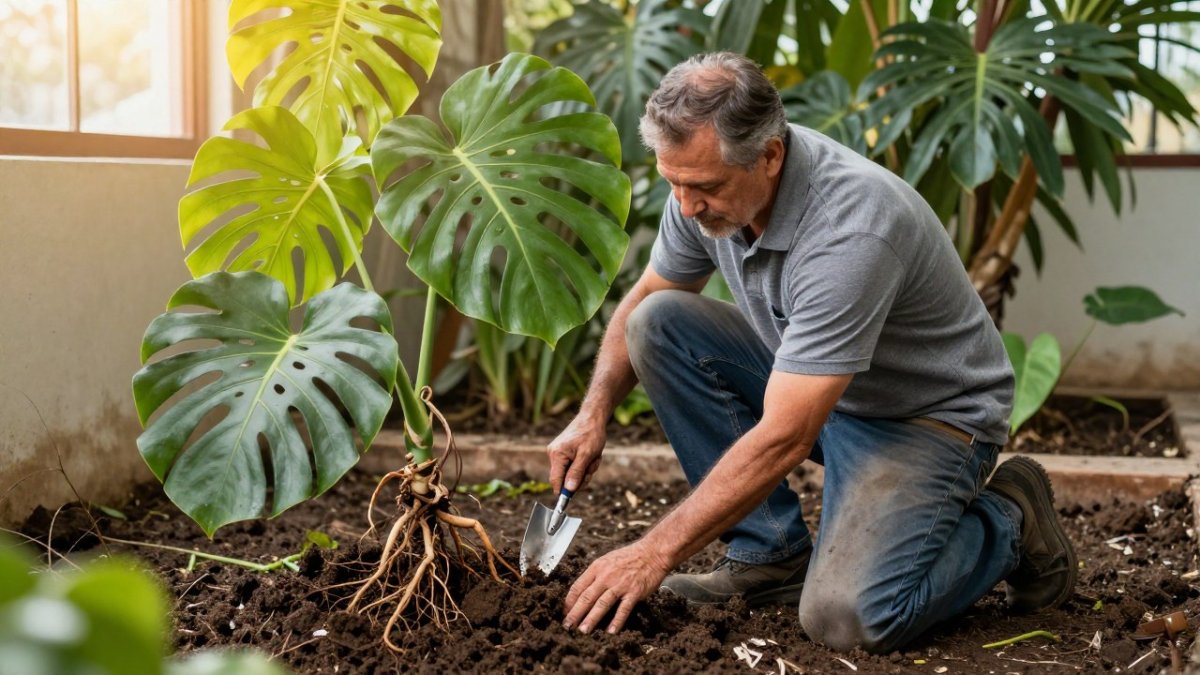
If you find rotting roots, cut them away. Use clean, sharp tools, and sanitize them between cuts.
Wipe blades between cuts with a sanitizing solution to help keep the fungus from spreading from one plant to the next.
Penn State Extension guide on sanitizing pruning tools
Cut back to firm, healthy tissue. Remove as little as possible, since a smaller root system can still support the plant if it has good drainage.
Over-pruning can also stress a tree or shrub. A reader worried about cutting too much can learn how over-pruning damages trees and how to recover.
How to Fix and Treat Root Rot in Outdoor Plants
Treatment depends on how far the rot has spread. Mild cases can often be helped with better watering and drainage.
Treating root rot in plants growing in the ground
- Stop watering until the soil dries
- Remove mulch piled against the trunk or stem
- Cut away rotted roots and sanitize tools
- Improve drainage around the root zone
EPA guidance on selecting and using pesticides safely
Your Next Step: Schedule a Soil and Drainage Check
Root rot is easier to prevent than to fix. If your yard floods after storms or your plants keep struggling, the soil may be the real problem.
At P&P Landscaping and Tree Service, we can review your soil, drainage, and planting areas. Book On-site Estimate Now! to have your property checked.
Frequently Asked Questions
What to put in soil to prevent root rot?
Mix coarse materials such as perlite, pumice or small gravel into heavy soil to open air pockets and speed drainage. In South Florida, where summer rains are heavy, aim for a loose mix that drains freely after watering. Avoid dense topsoil alone, and keep mulch a few inches away from the root flare so the crown stays dry and well aerated.
Can hydrogen peroxide prevent or treat root rot in garden soil?
Hydrogen peroxide can help in limited situations, such as a light soil drench on a plant with early, mild rot, because it adds oxygen and can reduce some surface pathogens. It does not fix poor drainage, and it cannot restore roots that are already mushy and dark. Treat it as a supplement to drainage correction and root pruning, not a standalone cure, and test it on a small area first.
How do I know if an outdoor tropical plant has root rot?
Look for yellowing or drooping leaves even though the soil is wet, slow growth, and a sour or musty smell at the base. Dig gently near the root flare and check the roots: healthy roots are firm and pale, while rotted roots are brown or black, soft and fall apart when squeezed. If more than about a third of the root mass is affected, focus on pruning and improving the planting site.
How should I water tropical plants during South Florida's rainy season?
Stop using a fixed watering schedule once the summer rains start. Check soil moisture two to three inches down before watering, and skip irrigation if the soil still feels wet. Confirm that beds drain within a few hours after heavy storms, since standing water for more than a day is the most common trigger for root rot in the rainy months.